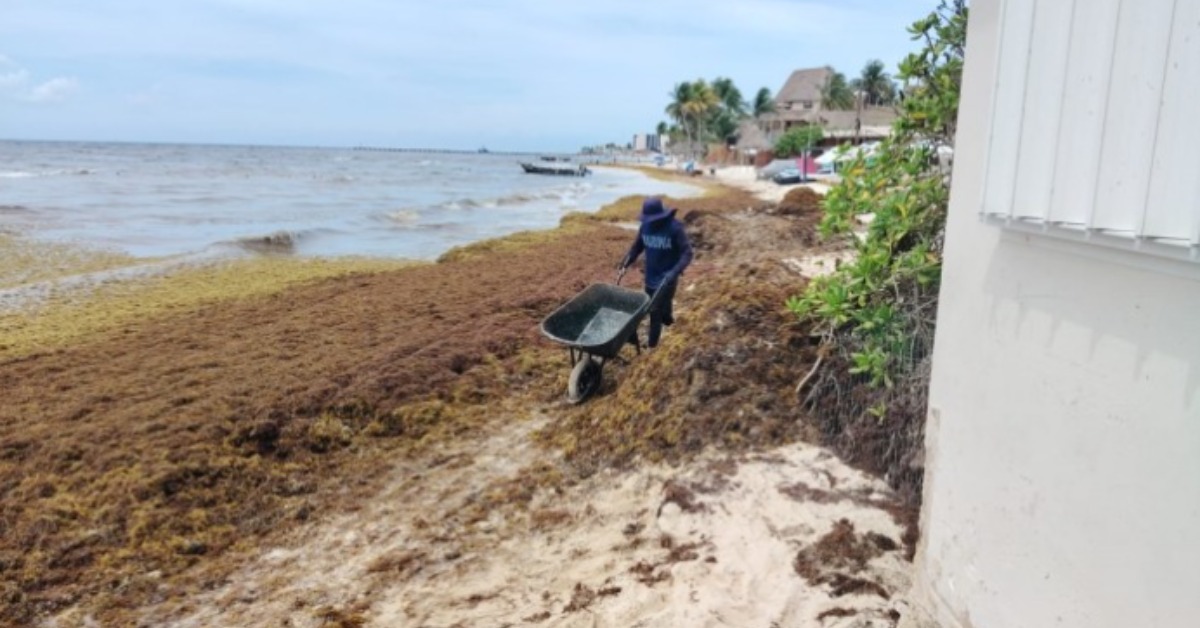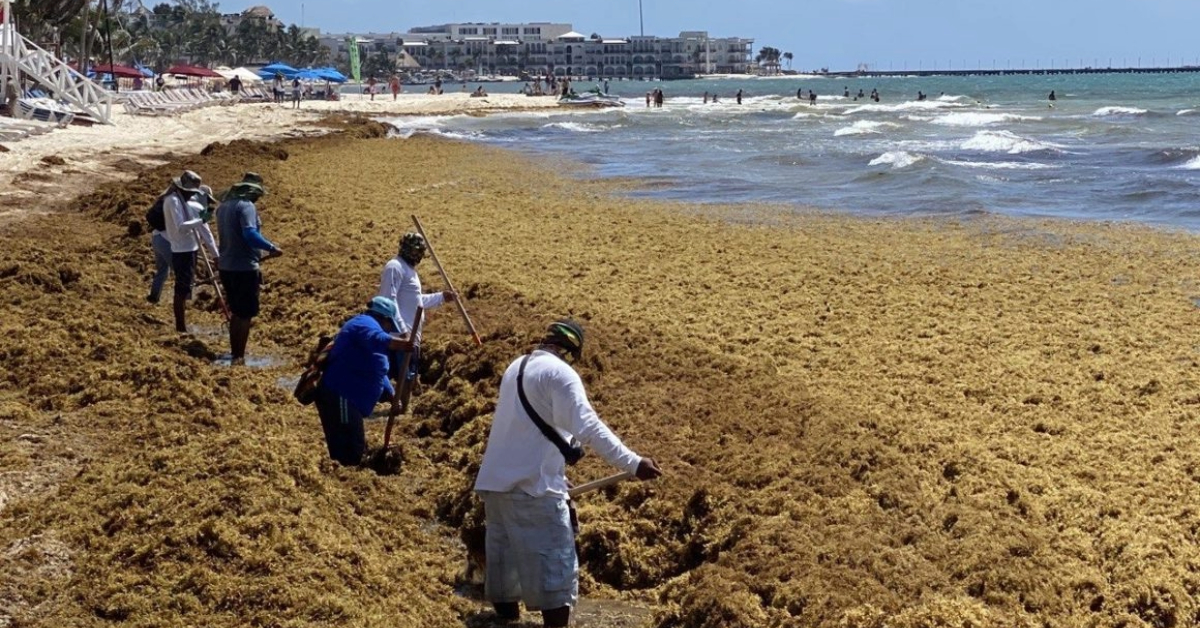
Cancún News – The beaches of the Mexican Caribbean face an unprecedented threat this summer as sargassum threatens Mexican Caribbean tourism, washing ashore in massive amounts. The seaweed covers vast stretches of sand and darkens the water. It carries a strong, unpleasant odor that deters visitors. Summer vacations are underway, but many tourists face cancellations or cut their stays short.
Esteban Jesús Amaro Mauricio, director of the Sargassum Monitoring Center, warned that this cycle has been the most intense in history. He explained that the most critical sargassum cycles last three to four years. The first massive washout occurred in 2015, followed by peaks in 2018 and 2022. This year has already surpassed all previous records.
Sargassum threatens Mexican Caribbean tourism
Researchers from the University of South Florida and NASA use satellite data and ocean current models. They expect sargassum arrivals to rise in July 2025 after a dip in June. In Mahahual, hotels report a 70 percent occupancy rate. They face a 5 percent cancellation rate due to seaweed.
Local hotel managers report that rising cancellations have cost them millions in lost revenue. Some operators offer price discounts or inland excursions to offset the impact. But many guests still choose other destinations with cleaner beaches. Tourism officials warn that prolonged blooms could slow the region’s recovery from the pandemic downturn.
Scientific teams deploy drones and sampling buoys to track sargassum movements. These tools help predict washouts and guide cleanup efforts. The Sargassum Monitoring Center publishes daily maps showing concentration hotspots. Communities use these updates to plan beach days and tourism events.
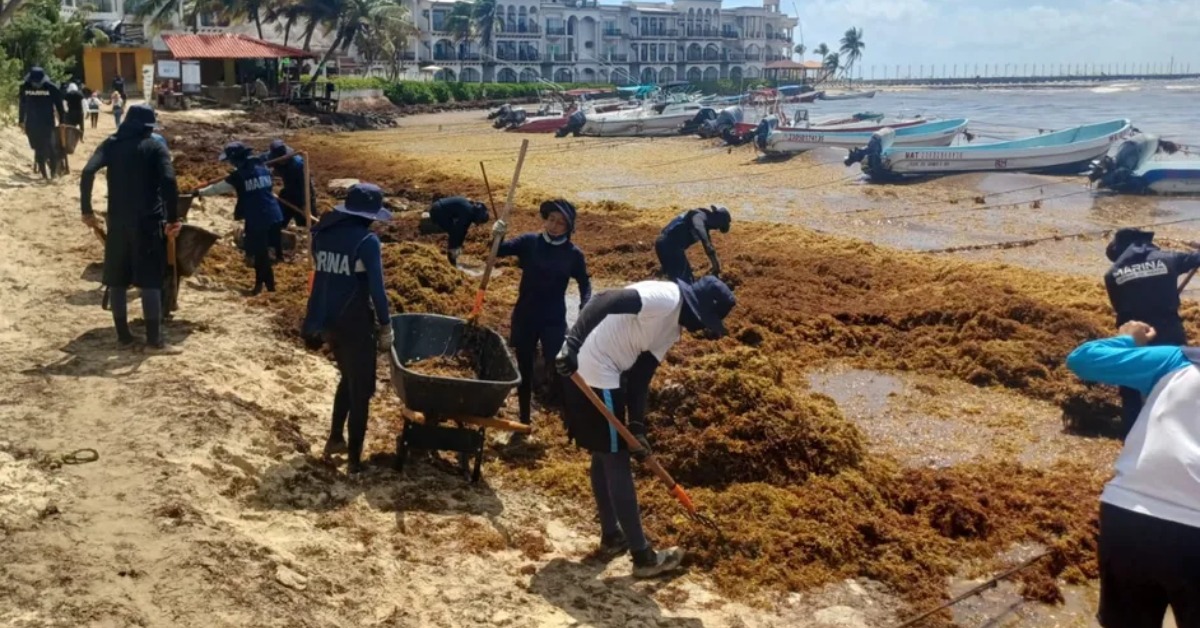
52,000 tons of seaweed have been cleared this year
The Ministry of the Navy (Semar) has led removal efforts along Quintana Roo’s coast. Semar crews have cleared 52,000 tons of seaweed during the first half of the year. They use boats and heavy machinery to clear beaches and maintain access. Officials call this season unprecedented in scope and scale.
Beyond tourism, sargassum also damages marine life. When the seaweed decomposes, it depletes oxygen and kills fish. It darkens waters and harms snorkeling and diving operations. Fishermen fear a sharper drop in catches if the bloom continues.
Decomposing sargassum produces gases such as hydrogen sulfide that irritate the skin and lungs. Health authorities advise tourists with respiratory issues to avoid direct contact with rotting seaweed. Some beachgoers report headaches and nausea near large piles. These health concerns add to the economic strain on coastal communities.
Local authorities and private groups coordinate to monitor and remove seaweed. They schedule daily cleaning and set up barriers offshore. Tour operators adapt by changing routes and offering inland activities. These measures aim to protect both the economy and the environment.
As the season peaks, communities brace for more sargassum landings. Experts will update forecasts through September and October. For now, hotels and businesses must stay alert and flexible. The success of cleaning efforts may determine tourism’s recovery this year.