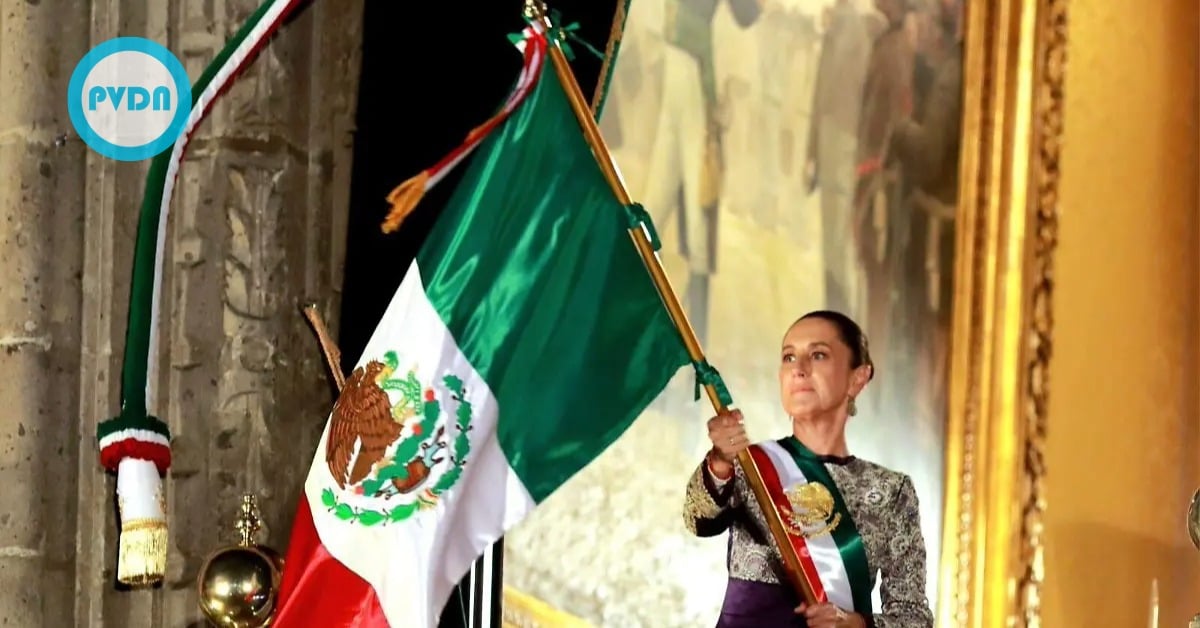
On the night of September 15, Claudia Sheinbaum stood on the National Palace balcony and made history. Her first Grito, the first led by a woman president, lifted the crowd with a simple through-line: women and sovereignty. She saluted the women who “gave the nation” and called for a Mexico “free, independent, and sovereign.” The symbolism continued below, where a ceremonial escort of all-women cadets presented the flag before fireworks lit the Zócalo. It was a landmark Independence cry and a clear statement of priorities.
Sheinbaum first Grito
Claudia Sheinbaum delivered her first Independence Day cry from the National Palace balcony late Monday, marking the first Grito led by a woman president. In her message, she dedicated the moment to women who gave the nation and placed a strong emphasis on national sovereignty—a line that drew a loud response from the Zócalo crowd. Sheinbaum first Grito set a historic frame around a familiar ritual and gave it new focus.
Sheinbaum’s wording made the theme unmistakable. She offered “vivas” for the women of the independence struggle, naming figures highlighted by Mexican historians and the press—among them Josefa Ortiz de Domínguez, Leona Vicario, and Manuela Molina “La Capitana.” Those invocations underscored the decision to center women not as an aside, but as protagonists of the national story.
Women and sovereignty on the balcony
The tone was direct. “¡Viva México libre, independiente y soberano!” Sheinbaum cried, along with calls to freedom, equality, democracy, justice, and dignity. The lines were brief and punchy, and the crowd answered them in kind. The cadence echoed through the square before the fireworks and concert program resumed.
Symbolism extended to the ceremonial details. On the palace patio, Sheinbaum received the flag from an escort made up exclusively of women cadets from the Heroic Military College, a striking visual that matched the balcony message. That image—flag in hand, women cadets formed up below—bookended the most photographed moments of the night.
For the capital, the night carried the usual spectacle—music, lights, and a packed plaza—but the milestone was clear: for the first time, a woman led the national ritual and framed it around women’s place in the independence narrative and a forthright “viva” to sovereignty. Mexico’s national ceremony advanced with tradition intact, but with a shift in emphasis that felt both overdue and intentional.