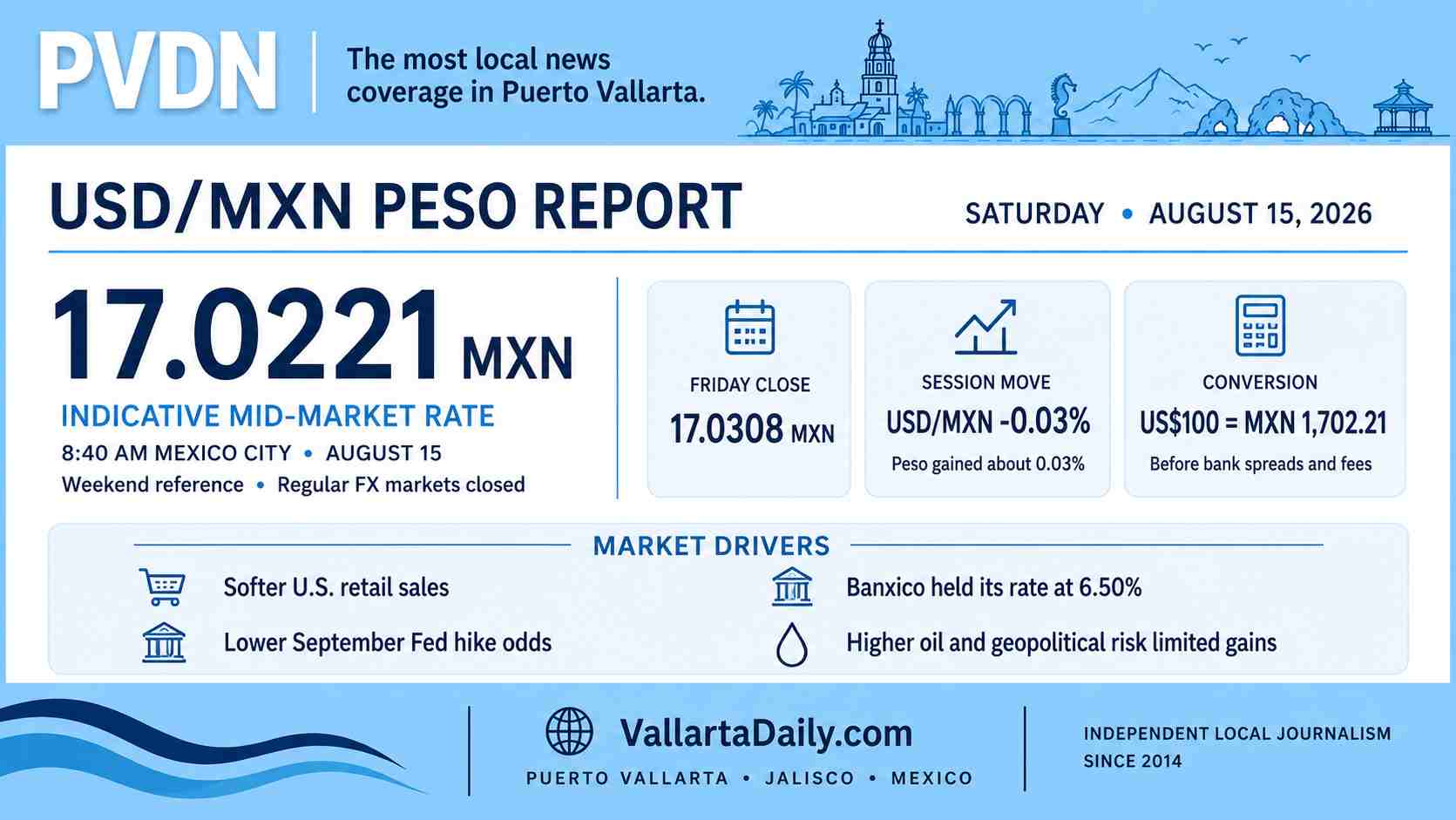
Puerto Vallarta, Jalisco, August 15, 2026 – The U.S. dollar was quoted at 17.0221 Mexican pesos at 8:40 a.m. Mexico City time Saturday, based on the latest available indicative mid-market rate. Regular foreign exchange trading is closed for the weekend, so the figure is a reference rather than a live session price.
Banco de México’s official market data placed Friday’s closing exchange rate at 17.0308 pesos per dollar. The central bank calculated Friday’s FIX at 17.0218 and lists 17.0530 as the rate for dollar obligations payable in Mexico on Saturday.
Friday’s market quote finished near 17.0240, down about 0.03% in USD/MXN from Thursday, according to historical session data. A lower USD/MXN rate represents a stronger peso. The pair moved between 16.9755 and 17.0575 during the session.
Differences among the closing, FIX and mid-market figures reflect separate calculation methods and cutoff times. They do not indicate a large disagreement over the peso’s value.
Softer U.S. data weakened the dollar
The main late-week pressure on the dollar came after U.S. retail sales fell 0.6% in July, their first decline in nine months. Economists had expected a 0.1% increase.
Traders reduced the probability of a Federal Reserve rate increase in September to about 31%, down from 34% a day earlier and 50% one month ago. The dollar index, which tracks the U.S. currency against several major counterparts, fell 0.25% to 99.67.
The Federal Reserve’s current target range remains 3.50% to 3.75%. Weaker consumer spending data reduced expectations that policymakers will raise rates at their September 15–16 meeting, although upcoming inflation and employment reports could shift those expectations again.
Lower U.S. rate expectations can reduce demand for dollars and support emerging-market currencies. That was one influence on Friday’s peso trading, rather than a single explanation for the move.
Banxico’s policy pause remains a peso anchor
Mexico’s central bank kept its benchmark interest rate at 6.50% on August 6. The unanimous decision extended the pause that began in June.
Mexico’s rate remains 2.75 to 3 percentage points above the Federal Reserve’s target range. That gap can support demand for peso-denominated assets, although it does not prevent losses when investors reduce exposure to emerging markets.
Domestic economic figures have been mixed. Annual inflation eased to 3.12% in July, while preliminary data showed Mexico’s economy expanded 1.5% during the second quarter after contracting in the first.
Banxico has said inflation is still expected to decline, but more slowly than previously forecast. The bank now expects headline inflation to return to its 3% target in the fourth quarter of 2027.
Oil and geopolitical risk pulled in opposite directions
Oil prices rose Friday as stalled U.S.-Iran negotiations and renewed tanker attacks increased concern about supplies moving through the Strait of Hormuz.
Brent crude settled at $88.52 a barrel, up 1.67%, while U.S. crude gained 1.42% to $82.40.
Higher oil prices can support Mexico’s trade position as an oil producer. At the same time, an energy-driven rise in inflation could affect interest-rate expectations and weaken demand for risk-sensitive currencies. Those competing effects limited oil’s usefulness as a direct explanation for Friday’s peso movement.
Converting dollars and pesos this weekend
At the indicative rate of 17.0221 pesos per dollar:
- US$100 converts to about MXN 1,702.21.
- US$500 converts to about MXN 8,511.05.
- US$1,000 converts to about MXN 17,022.10.
- MXN 10,000 converts to about US$587.47.
The week’s mid-market high was 17.1436 pesos per dollar. Compared with that level, US$1,000 now converts to about 121.50 fewer pesos.
That difference reduces peso buying power for residents receiving income, pensions or savings in dollars. People earning pesos and paying dollar-denominated expenses face a slightly lower dollar cost.
Banks, ATMs, credit cards and Puerto Vallarta exchange counters will apply their own spreads and fees. Weekend cash rates can be wider than weekday market rates, and card transactions may post using a later exchange rate.
Monday Trading Will Test the 17-Peso Area
Normal currency trading resumes late Sunday and becomes more active Monday morning. Oil prices, developments involving Iran and changes in Federal Reserve expectations could move USD/MXN away from the weekend reference.
Banco de México is scheduled to publish minutes from its August policy meeting on Thursday, August 20. The document may provide more detail about how policymakers view inflation, economic growth and the peso after deciding to keep the benchmark rate at 6.50%.