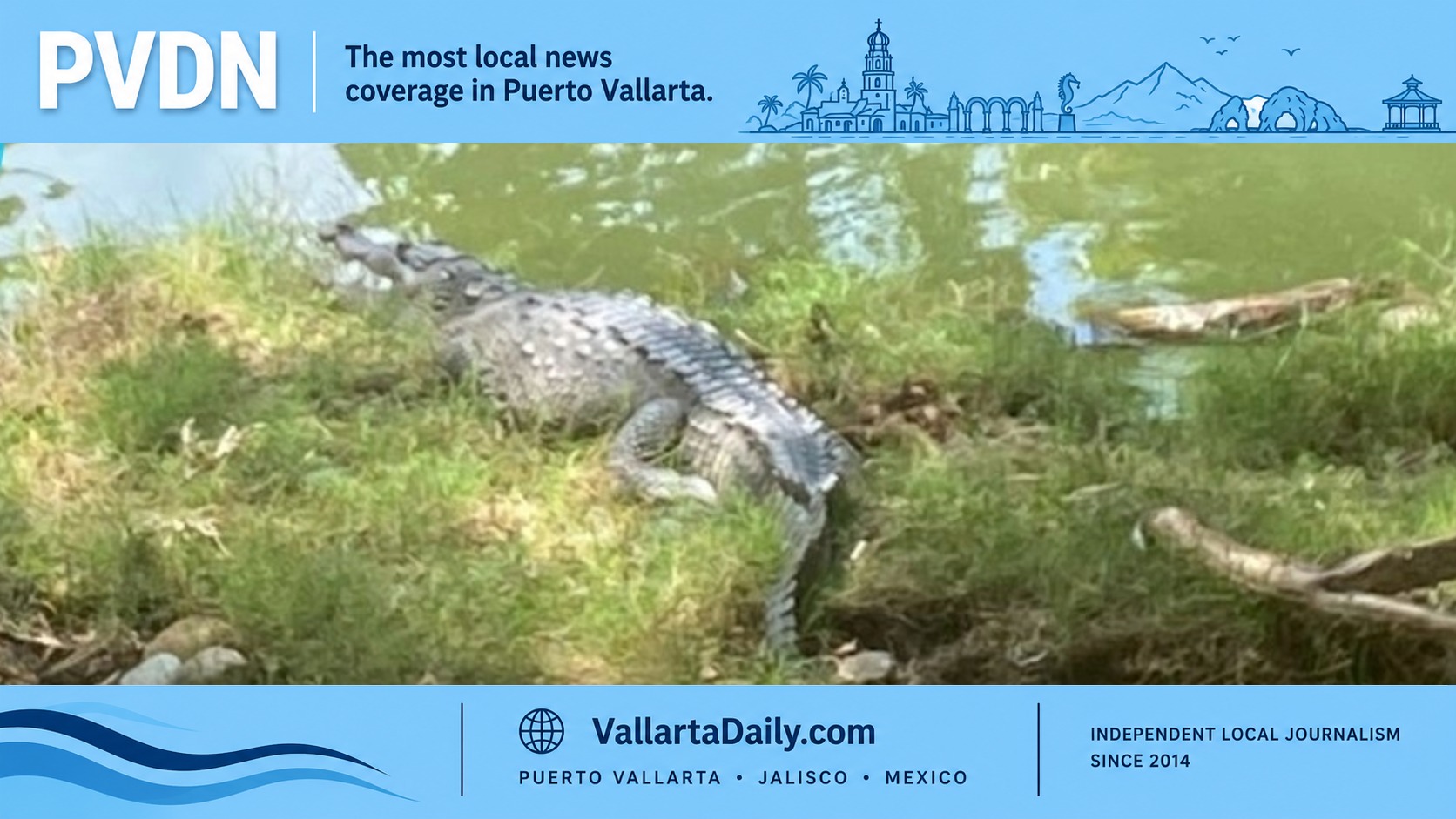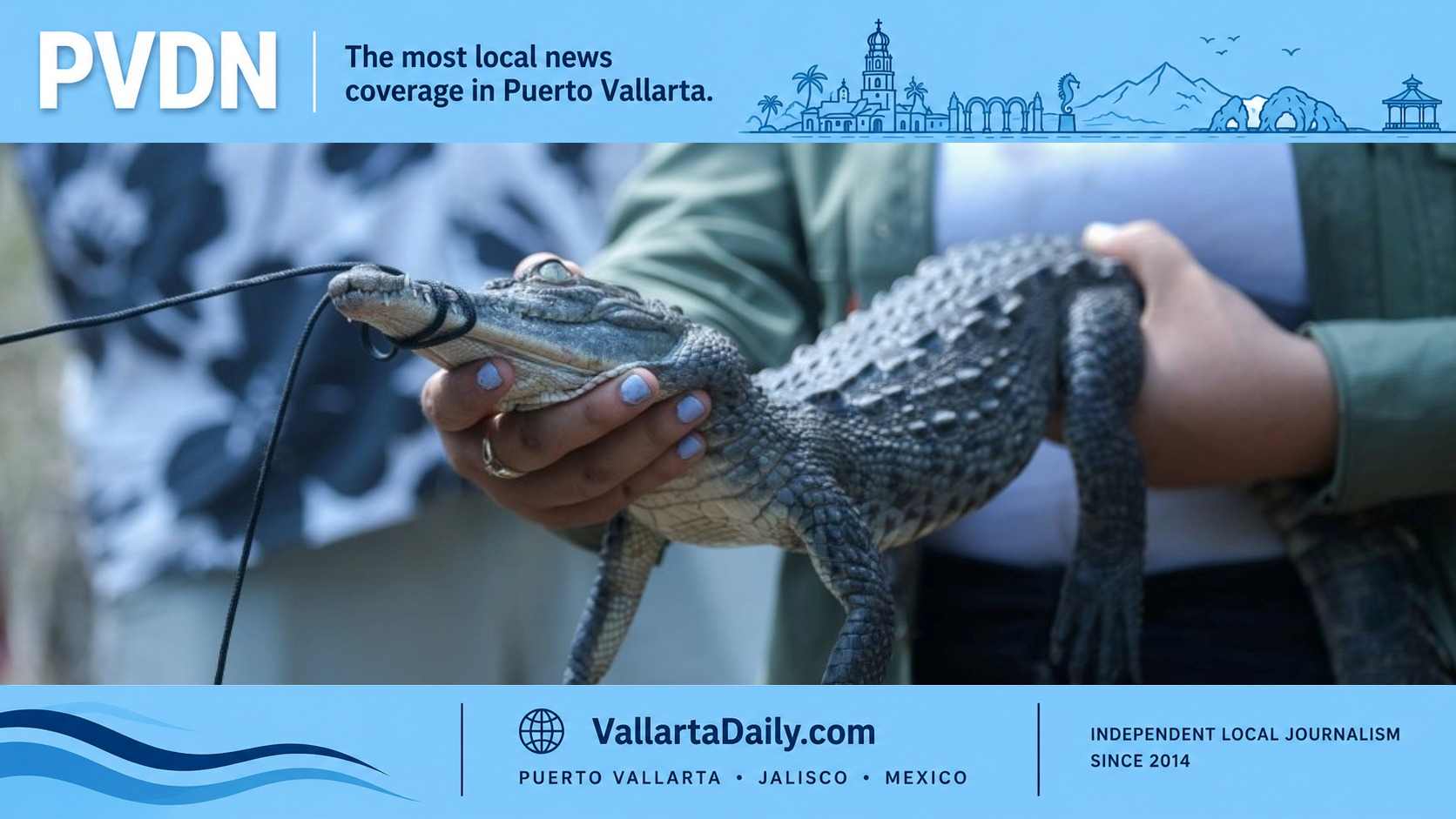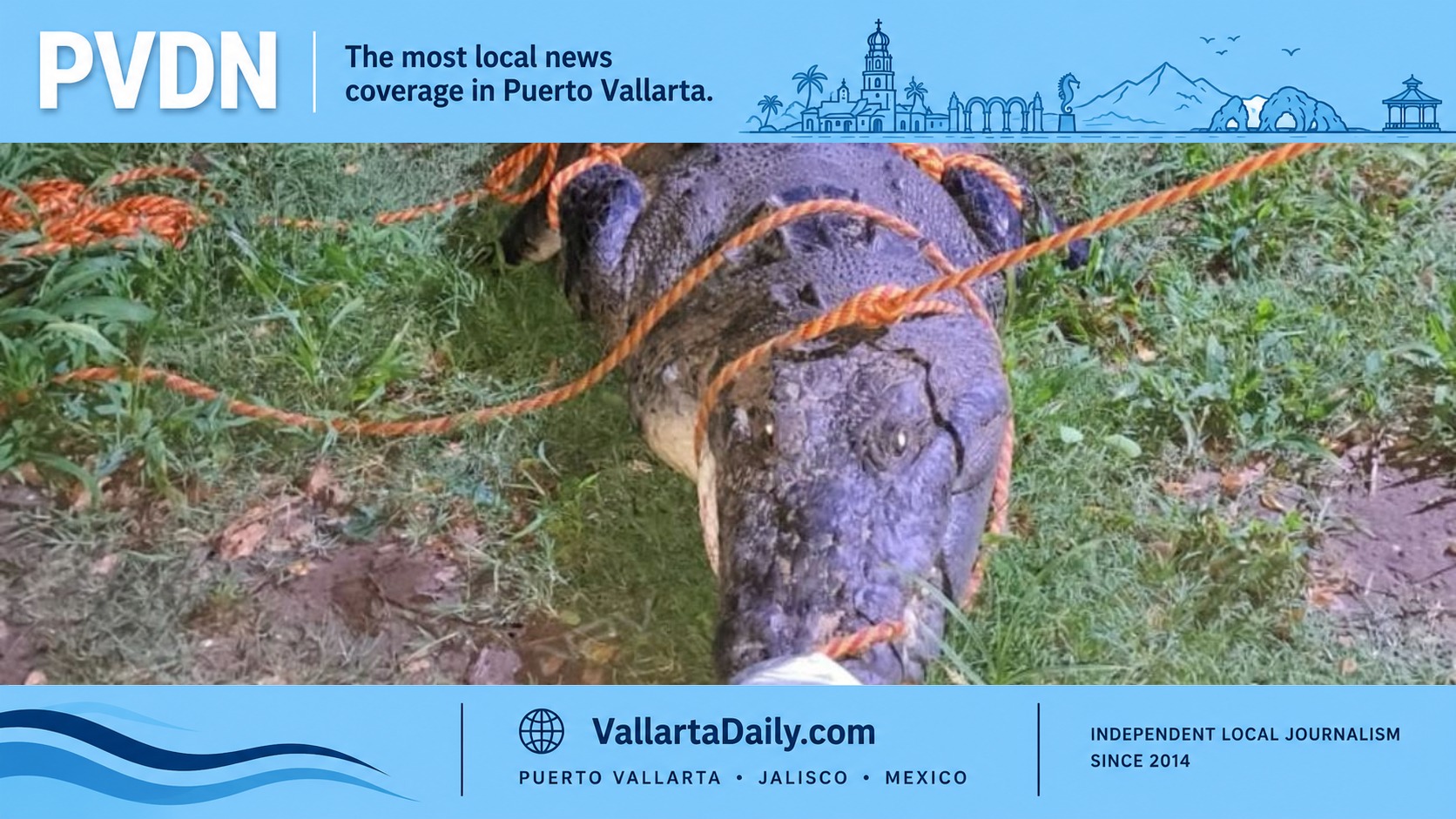
Puerto Vallarta, Jalisco, July 16, 2026 — A tagged crocodile measuring nearly three meters was captured on the beach in front of the Molino de Agua condominium complex after moving from the Río Cuale into the bay and returning to shore.
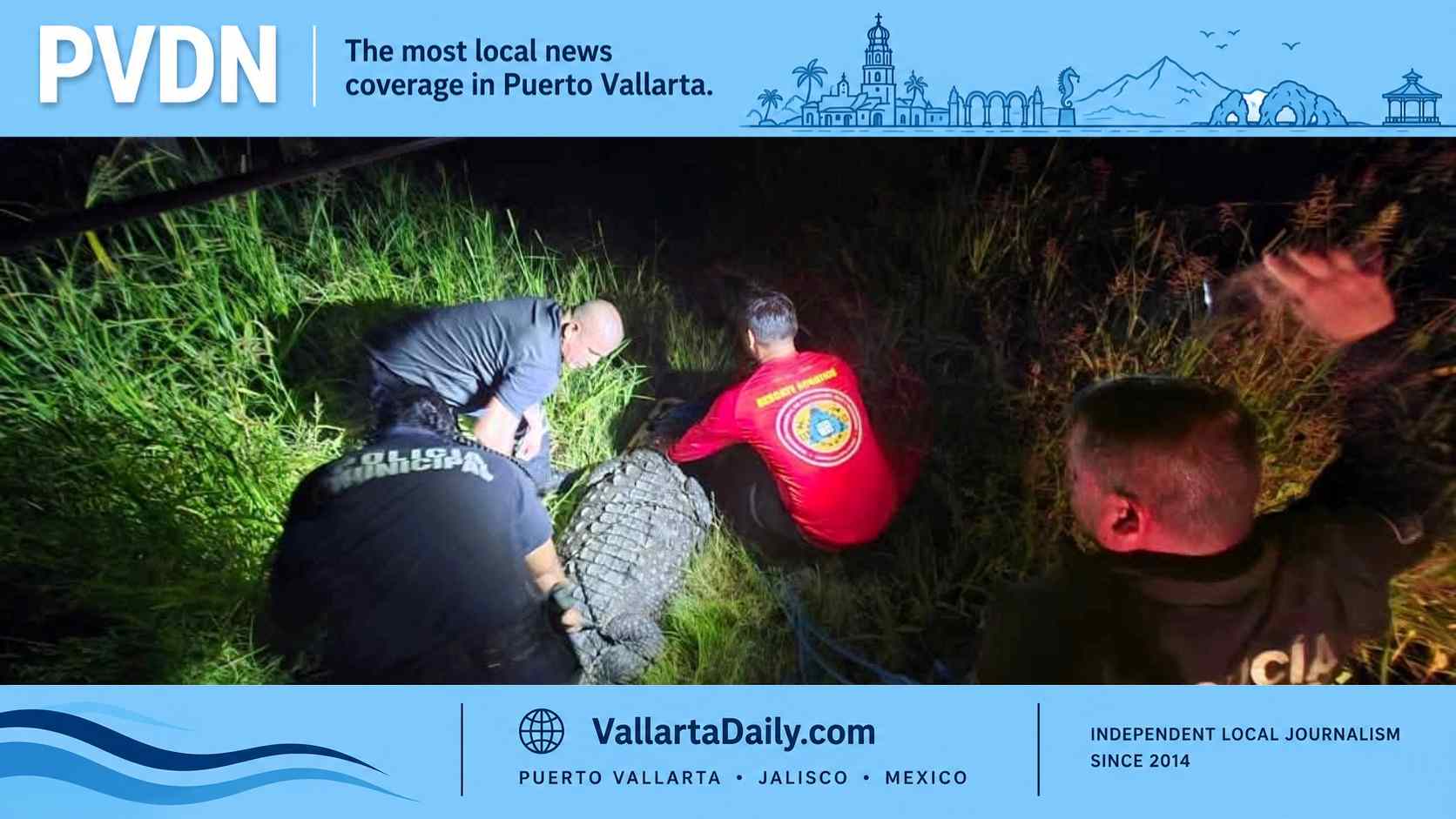
Puerto Vallarta Civil Protection and Fire Department personnel restrained the animal without reported injuries. Municipal Green Patrol officers then helped secure it for transportation before it was released near the Río Ameca.
The crocodile measured 2.93 meters and carried identification number 546. The identification showed that the animal was already part of a wildlife monitoring program, although officials did not disclose when it was tagged, where it had previously been recorded, or whether it had been relocated before.
Officers aboard municipal unit PV-395 were conducting a patrol when they received a radio request for assistance. Firefighters, led at the scene by Commander Gabriel García Martínez, had already immobilized the crocodile on the sand. Police checked the restraints and contacted environmental personnel to determine where it should be released.
In an earlier Puerto Vallarta relocation, the Federal Attorney for Environmental Protection identified the river as natural habitat for the American crocodile, or Crocodylus acutus, a species protected under Mexico’s NOM-059 wildlife standard.
The capture follows another operation reported eight days earlier, in which a 3.5-meter crocodile was found near condominium entrances in Marina Vallarta and released into the Río Ameca. There is no public information indicating that the two captures involved the same animal.
The two relocations also do not demonstrate that the local crocodile population is increasing rapidly. A recent expert estimate reported by VallartaDaily placed the coastal population from Puerto Vallarta to Barra de Navidad at fewer than 1,000 crocodiles. Encounters can nevertheless become more visible when heavy rain raises rivers and canals and carries animals toward the bay.
The latest capture took place less than three weeks after a 28-year-old tourist was killed in a crocodile attack near Marina Vallarta, increasing scrutiny of beach warnings and the city’s response to animals moving through densely used coastal areas.
Puerto Vallarta’s lifeguard chief has identified the mouths of the Río Cuale and Río Pitillal, along with the coastline from Marina Vallarta to the Río Ameca, as areas with permanent wildlife-warning flags. During the rainy season, stronger river flows can push crocodiles into the bay before they move along nearby beaches.
People should not approach, feed, or attempt to restrain a crocodile. Sightings can be reported through 911, and swimmers should remain out of the water when wildlife flags are posted, or lifeguards close an area near a river mouth.