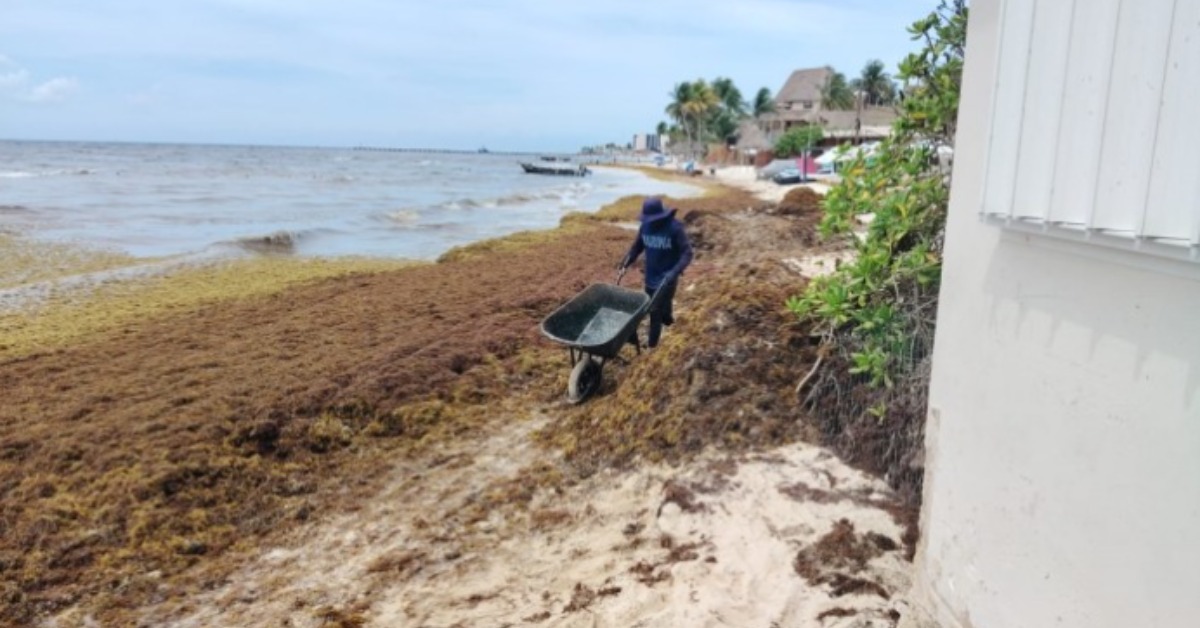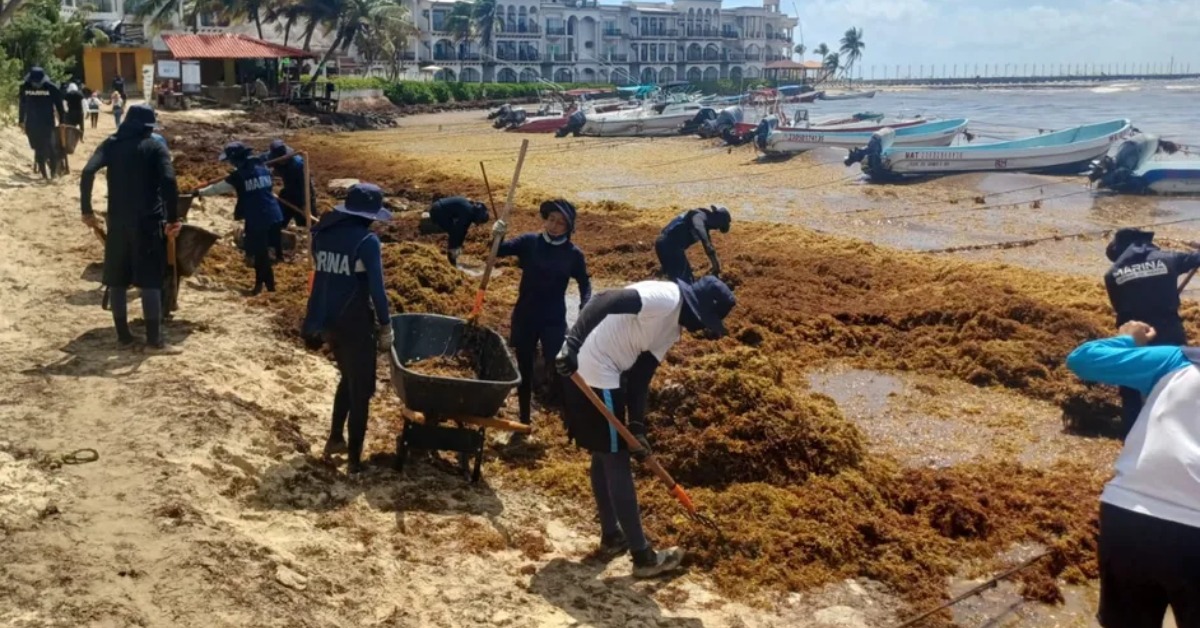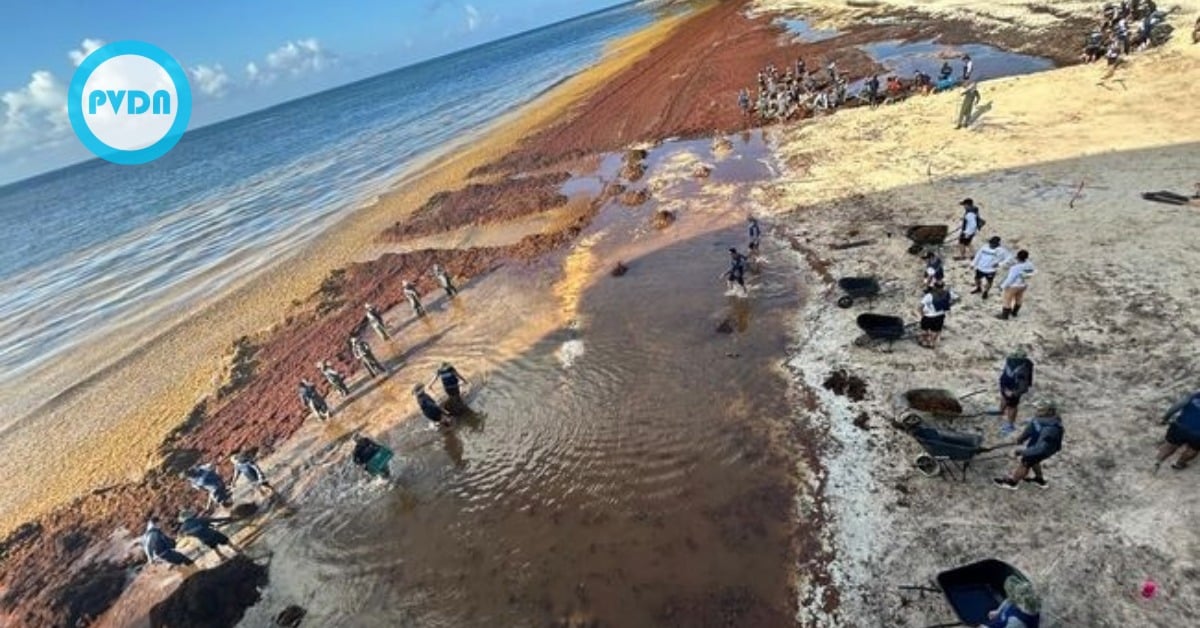
Tulum has deployed 45 extra hands on the sand to speed up sargassum removal as the late-season surge continues. City officials say September alone is nearing last year’s total beach haul, and they’re asking hotels to step up on their frontages. The move comes as Mexico’s Navy reports a record collection of macroalgae across Quintana Roo this year, and local monitors flag persistent landings. What will the added crews change on the ground—and how much help will the private sector bring as shoreline work gets more complicated and pricier?
Tulum sargassum cleanup
Tulum is hiring 45 temporary beach cleaners to keep up with a late-season wave of sargassum, the city’s beach authority confirmed this weekend. The push adds manpower to daily brigades that start at first light and attempt to clear public access points before the heat and foot traffic intensify. Officials say Tulum sargassum cleanup needs the extra help now because September’s haul is edging toward last year’s full-year total for the town.
The announcement came with two key markers: in 2024, Tulum collected 1,325 tons of beached algae; in September 2025 alone, crews are on track to surpass 1,000 tons. That kind of month compresses a season’s worth of work into a few sticky weeks, and it exposes the limits of rakes, trucks, and volunteer days when the mats keep arriving overnight.
City leaders also repeated a direct ask to hotels and beach clubs: tend your frontage. Public crews focus on public beaches and access ways, but private properties control long stretches of shoreline where visitors get their first impression of Tulum. The city says clean beaches require coordination among the government, the hospitality sector, and residents.
What the surge looks like beyond Tulum
The bigger picture backs up the local scramble. Mexico’s Navy, which operates the state’s anti-sargassum barriers and collection boats, reported stepped-up operations this season along the Quintana Roo coast. Their September update underscored the ongoing at-sea removal to prevent decomposing algae from reaching the sand in the first place, a shift officials say reduces odors and protects nearshore ecosystems.
Independent and local outlets have tracked heavy strandings in late September on Tulum’s beaches, with daily counts suggesting the town could break its own monthly collection marks. That aligns with regional reports of near-record landings in 2025 and persistent arrivals along the Riviera Maya.
Scientists warned back in June that the Atlantic’s sargassum belt looked primed for a harsh year. Satellite monitoring by UNAM researchers indicated the presence of large rafts moving toward the Caribbean. At the same time, state and federal agencies prepared a combination of offshore interception, shoreline cleanup, and pilot projects for reuse. For tourism towns, that means planning for staffing spikes, such as the one Tulum has just experienced.
What changes on the beach now
More hands will speed up morning passes, which matters for both water quality and visitor experience. When sargassum sits in the heat, it breaks down, darkens the sand, and leaves a sulfur smell that lingers even after removal. Clearing early reduces that effect and keeps turtles and nesting zones safer through the tail end of the season. The city says the temporary jobs also put money in local pockets while protecting the shoreline that drives much of Tulum’s economy.
The ask to hotels isn’t just optics. Private crews working in sync with public brigades help move tonnage more efficiently and prevent trucks from double-backing. Industry groups along the coast have pressed for a long-term financing model since 2021, arguing that cleanup costs should not fluctuate wildly with each landing cycle. In practice, that means more reliable staffing, better equipment, and a plan to handle the waste stream responsibly.
Tulum’s beaches sit beside a national park and fragile coastal systems. Every hour removed from the algae’s decay onshore is an hour gained for dunes, seagrass, and nearshore water clarity. The season usually tapers in late fall, but landings can pulse with wind and current shifts. For now, the message from City Hall is simple: more crews are coming, and they want the hotel sector on the sand with them.