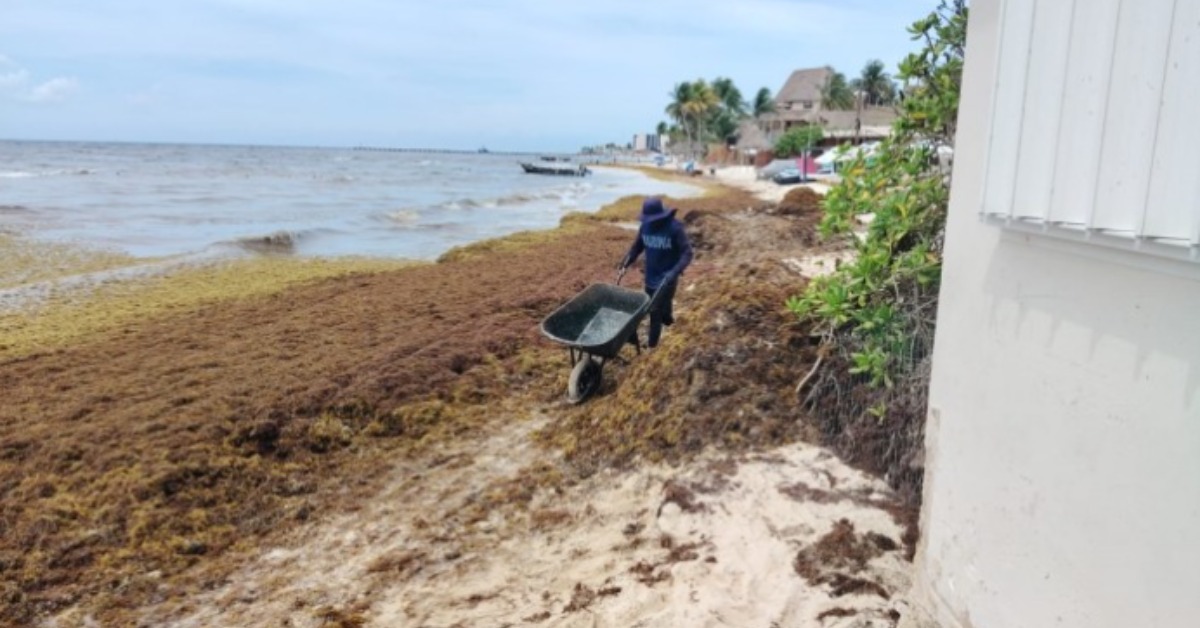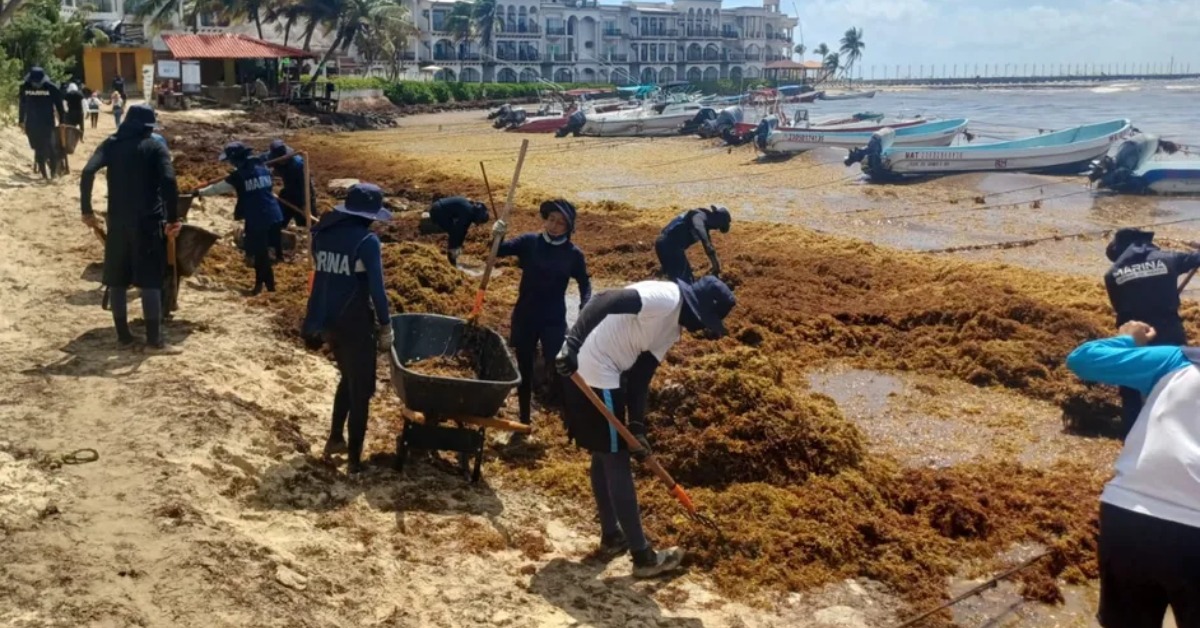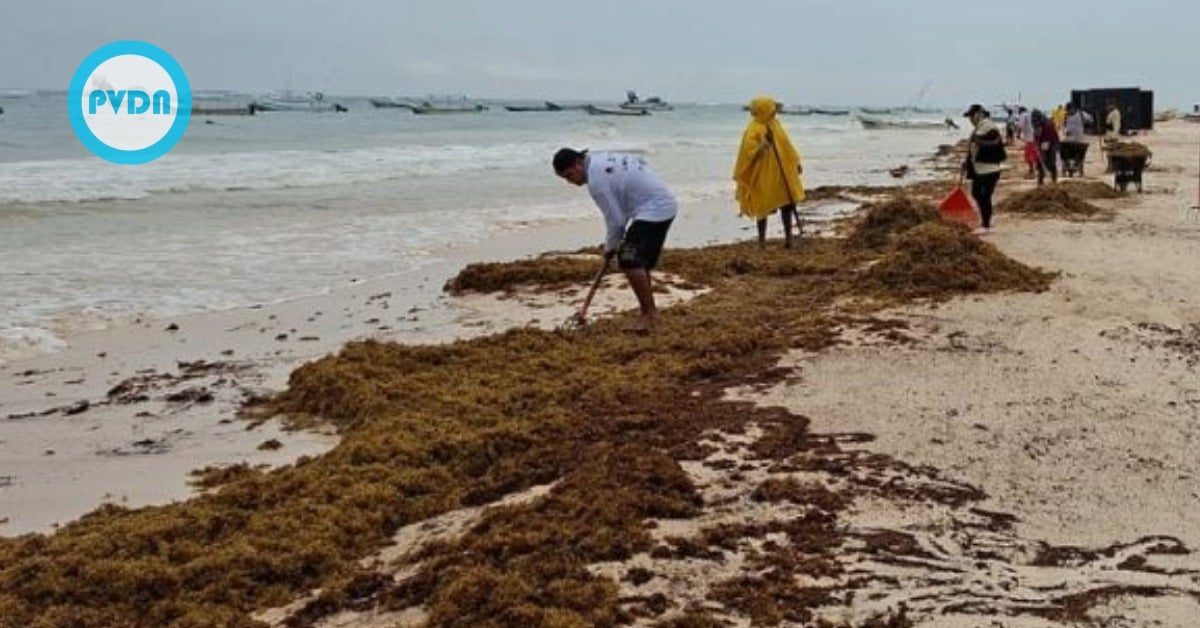
After several clear days, seaweed is back on Tulum’s beaches. Municipal crews moved in at first light, backed by the Navy, to keep new mats from piling up—especially near Santa Fe inside the national park, where the rocky shoreline often traps the algae. Officials say the lull owed much to weather and currents, which can change overnight—the result: turquoise one day, murky the next. The latest arrivals don’t alter the long grind of daily cleanup, but they do show how fast conditions can swing.
Tulum sargassum returns
After a handful of calm days, Tulum sargassum returns to the shoreline. Beachgoers woke to fresh bands of brown algae rolling in and clumping along the high-tide line. Municipal officials said crews were out early, raking and hauling to keep the piles from rotting on the sand. The work has become routine in Tulum’s long fight to keep beaches swimmable and businesses open.
ZOFEMAT director David Buchanan tied the fresh landings to a quick turn in wind and currents after days of rain and cloud. Those conditions had scattered the seaweed and let the water clear. Then new mats drifted in overnight, reversing the scene many visitors saw earlier this week. It’s a familiar cycle here: the sea can look different every morning.
One stretch drew special attention again. Santa Fe, inside the national park, tends to trap algae against its rocks and shallow breaks. The color shifts fast there when the seaweed hits. Officials said Navy-supported crews helped clear that area early, a visible push to keep one of Tulum’s most photographed beaches looking like itself.
What changed on the water
The weather did much of the work. The rain and cloud cover that tempered arrivals also helped keep mats moving offshore. Then the pattern flipped. Winds turned and currents pushed loose patches back toward shore. That’s why residents woke up to a very different beach today. It’s also why the municipality keeps daily brigades ready, even after a string of clear mornings.
The cleanup muscle is broader than a single department. Quintana Roo’s sargassum strategy for 2025 was set up with state and federal partners, including the Navy, to support beach teams and keep up barrier and collection work at sea when possible. On the ground, ZOFEMAT handles the early starts, the hauling, and the constant grooming that keeps the smell down and the sand usable.
This isn’t a surge on the scale of early summer, but it lands on top of a heavy year. By mid-July, officials counted thousands of tons removed in Tulum alone, with July itself approaching the thousand-ton mark as crews worked through peak weeks. The numbers shift by month, yet the pattern holds: long stretches of hard work punctuated by quick turns in the weather that can make a clean coast look messy again in a day.
Checking conditions and what comes next
Today’s landings are a reminder to check conditions daily. Citizen monitoring maps for the Riviera Maya are updated often and, along with official notices, help show whether a beach day means turquoise or brown. They are not perfect forecasts, but they capture the swing locals know well.
For now, Tulum’s plan remains the same. Crews will continue to hit the shoreline at dawn. Navy-backed support will help in trouble spots like Santa Fe when the seaweed stacks up. And visitors will keep waking to a coastline that can change overnight—calm and clear one day, a cleanup zone the next—until the season eases and the wind turns in the town’s favor.