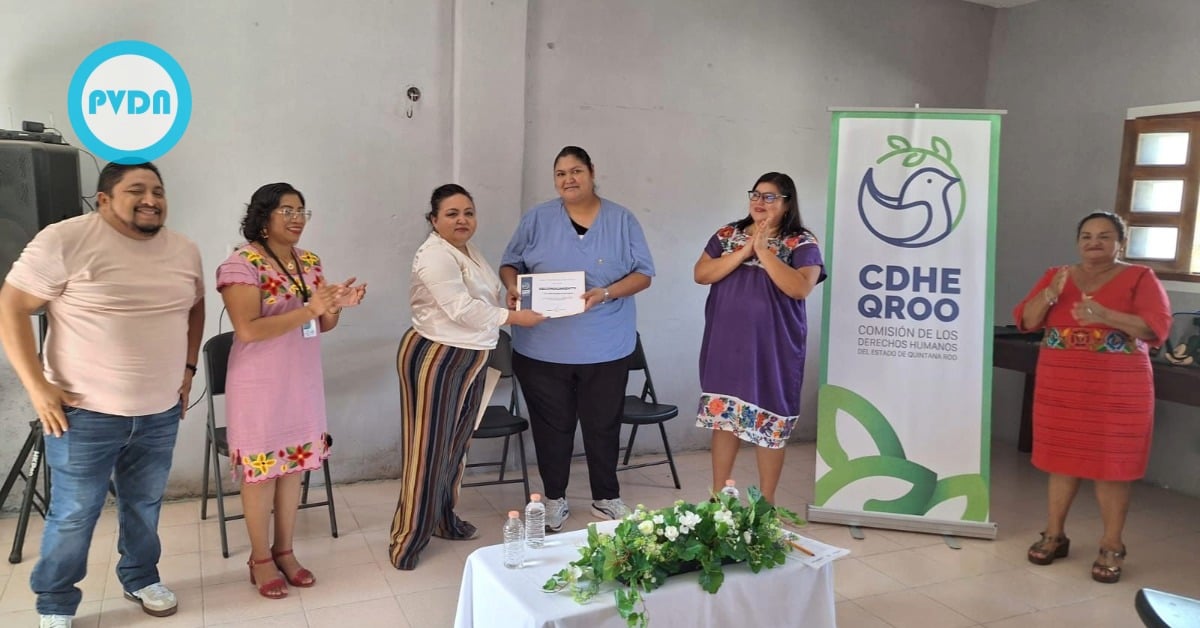
In a Maya community outside Tulum, women sat in a circle and passed down what their mothers taught: remedies, care, and dignity. The “Rueda de saberes” in Francisco Uh May wasn’t a folkloric show. It was a working session about health—how traditional practices and public clinics can meet women where they are. Local authorities emphasized the importance of respecting ancestral knowledge and the need to make these services accessible, safe, and integrated. It’s a small room, but it signals a bigger shift in how care is delivered.
The women arrived with stories and remedies, some learned at home and others in the milpa. In Francisco Uh May, a community north of Tulum, residents gathered for a “Rueda de saberes,” a workshop designed to share traditional medicine and explore how it can complement public health services for women. Local health officials framed the session as part of a broader push to recognize ancestral care as a living part of the health system, not a relic.
Tulum traditional medicine
At the meeting, Tulum’s health director, Dr. Sonia Vargas, emphasized the importance of medicinal plants, cultural continuity, and what she referred to as “mestizaje médico,” a practical blending of approaches that patients already employ at home. The host institution—the state human rights commission—presented the circle as a rights-based space, where women should receive respectful, informed care, whether they choose a clinic, a midwife, a healer, or a combination of these. The point was not the ceremony. It was a service.
The timing matters. In Quintana Roo and across Mexico, public agencies have been trying to formalize collaboration with traditional practitioners, particularly midwives. IMSS-Bienestar, which now provides first- and second-level services in multiple states, has repeatedly emphasized that conventional medicine is an integral part of its intercultural agenda. National statements and reports outline the goal: to identify and accompany traditional healers and midwives, acknowledge their community role, and establish referral paths to clinics when necessary.
That policy lens aligns with what happened at the community center in Francisco Uh May. Organizers described the gathering as a space to strengthen traditional medicine and dignify services focused on indigenous women. A similar call, made just days earlier and also tied to the International Day of Indigenous Women, carried the same message: integrate tradition with the public system without stripping it of its identity.
Inside the circle, participants compared notes on common ailments and care during pregnancy and postpartum. The conversation turned to practical questions: who to call, when to refer, which clinics offer services, and how to keep choices in women’s hands. For many attendees, the idea wasn’t to replace biomedical care, but to make the hand-off smoother—so a grandmother’s plant-based remedy and a nurse’s follow-up can live in the same plan of care.
Public agencies have reason to listen. IMSS has recognized thousands of traditional midwives nationwide and documents their role in low-risk births, early detection of complications, and timely referrals—critical work in rural areas where a trusted midwife may be the first responder. When those pathways function, outcomes improve, and conflicts at the clinic door fade.
What this means for women in Tulum
Francisco Uh May is not an abstraction on a map. It’s a community where distance, language, and trust can decide whether a woman seeks care. Circles like this one make the clinic less distant and traditional knowledge less invisible. They also clarify expectations on both sides: healers are respected, providers are partners, and women are the decision-makers. That framing is consistent with Quintana Roo’s recent public invitations to traditional-medicine gatherings and women’s assemblies, which emphasize dialogue rather than tokenism.
The workshop’s message also travels. A week earlier, local media in Tulum flagged the same “Rueda de Saberes” theme—dignifying ancestral knowledge within today’s health system—underscoring that this is not a one-off photo op. It’s a programmatic thread, and it has traction among state institutions and civic groups.
If that thread holds, future sessions could expand beyond introductions to establish clear referral protocols, shared antenatal checklists, and safe transportation plans for emergencies. IMSS-Bienestar’s planning documents already anticipate identifying traditional practitioners and midwives at the local level—a step that, if paired with real collaboration in Tulum, would help make the circle’s promises tangible.
In the end, the women in the room weren’t debating models. They had trading experience. The questions were concrete: which plants are helpful, when to rest, how to manage pain, when to seek medical help, and who will listen without judgment. That’s the measure that matters. If traditional medicine in Tulum continues to meet public providers at eye level, the system becomes simpler where it counts—at home, in Maya, and on time.