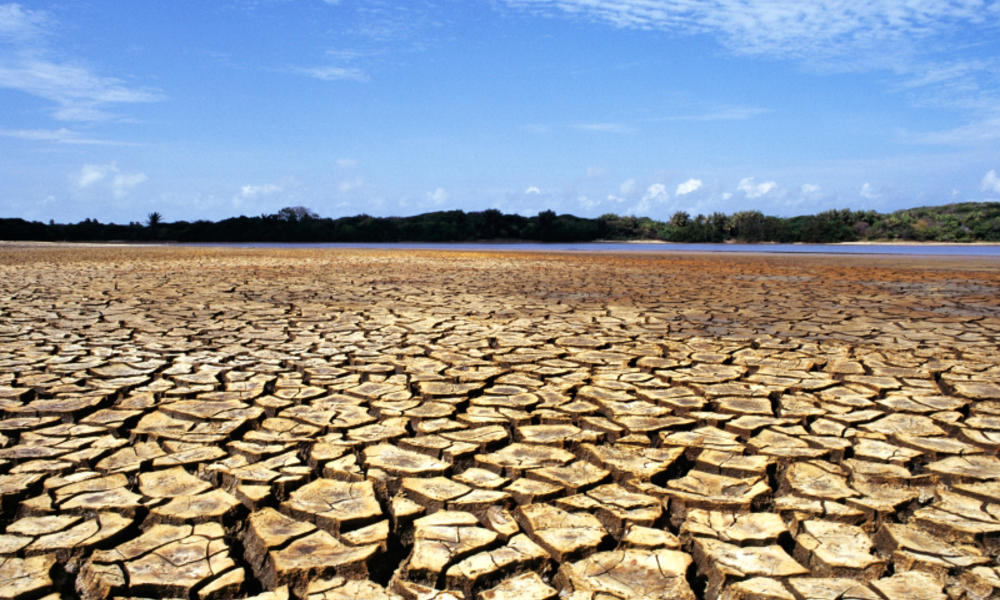
Poor harvests caused by drought in parts of Central America could leave more than two million people hungry, the World Food Programme (WFP) said on Friday, warning climate change was creating drier conditions in the region.
Lower than average rainfall in June and July has led to major crop losses for small-scale maize and bean farmers in Central America’s “Dry Corridor”, which runs through Guatemala, El Salvador, Honduras and Nicaragua.
This means subsistence farmers will not have enough food to eat or sell in the coming months, and have no food supplies to see them through the lean time between harvests.
“Climate-related disasters are clearly becoming more frequent and causing more damage,” Miguel Barreto, WFP’s regional director for Latin America and the Caribbean, told the Thomson Reuters Foundation by email.
“Projected temperature increases and rainfall shortages in the Dry Corridor are of particular concern.”
The United Nations says Central America is one of the regions most vulnerable to extreme weather linked to climate change.
The region was hit hard by consecutive years of drought from 2014 to mid-2016, which left millions in need of food aid.
“The warning this year is that in the poor areas, that is the dry corridor, people have already used their (food) stock,” said Oscar Rojas, natural resources officer with the U.N. Food and Agriculture Organization (FAO).
“There will be people in the dry corridor that will have problems in terms of food security.”
In response, El Salvador declared a red alert in July, and Honduras declared an emergency in its Dry Corridor in August where about 80 percent of maize and bean crops have been lost.
The governments of Guatemala, El Salvador and Honduras, have reported losses of 281,000 hectares of bean and maize crops.
Miguel Angel Garcia, regional director in Central America for Action Against Hunger, said poor crop harvests caused already vulnerable families to incur a spiral of debt and sell off land.
“The loss of harvests is linked in many cases to the loss of land or the sale of other assets that families have,” he said.
The El Nino weather phenomenon – a warming of the Pacific Ocean’s surface that causes hot and drier conditions – is expected to hit Central America by the end of the year.
Even if El Nino turns out to be weak, it will have a significant impact on the outcome of the second food crop harvest in November, worsening the plight faced by farmers, the FAO and WFP said.
—
Reporting by Anastasia Moloney @anastasiabogota, Editing by Claire Cozens. Please credit the Thomson Reuters Foundation, the charitable arm of Thomson Reuters, that covers humanitarian news, women’s rights, trafficking, property rights, climate change and resilience.