Washington and Mexico City say they have reached a new lane in security work, one they both describe as tighter and more operational than before. After a meeting in the capital, senior officials unveiled a high-level mechanism meant to coordinate action against cartels, with fentanyl and gunrunning in sharp focus. The language is confident. The guardrails are strict. And the timing is not accidental. What actually changes on the ground, and what both governments refused to put on paper, is where today’s story begins.
US Mexico cooperation
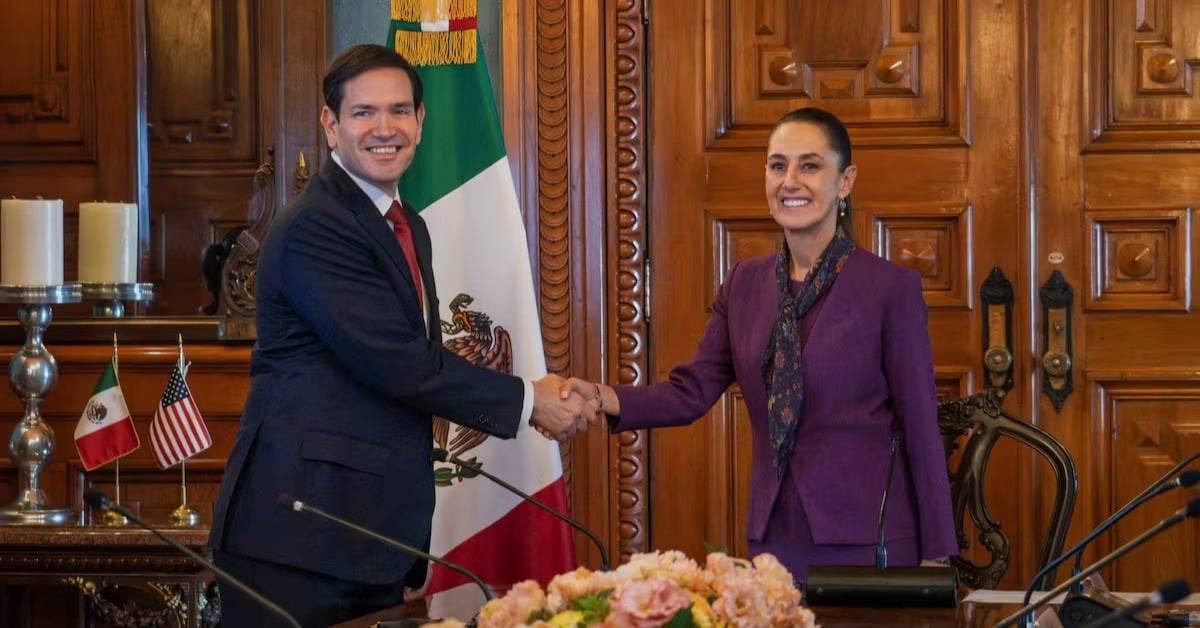
U.S. Secretary of State Marco Rubio said the United States and Mexico have reached a “historic” level of cooperation after meeting President Claudia Sheinbaum in Mexico City. Rubio and Foreign Minister Juan Ramón de la Fuente framed the talks as an operational push against organized crime within a standing bilateral framework. They spoke in the SRE offices after a session at the National Palace.
Both governments announced a new high-level group that will meet regularly to steer joint work. Priorities include fentanyl, arms trafficking, fuel theft, human smuggling, and illicit finance. The emphasis is on coordination, not a brand-new treaty. That matters because it sets expectations and timelines without reopening legal debate.
What the new framework actually adds
Officials cast the mechanism as a way to make existing cooperation faster. It is meant to align prosecutors, police, and financial units and to track tasks between meetings. The State Department described principles that will guide this work: reciprocity, respect for sovereignty and territory, shared responsibility, and mutual trust. Those guardrails shape what the group can or cannot do.
Rubio underlined the results to date. He pointed to actions on Mexico’s side, while stressing U.S. duties to curb the southbound flow of weapons. Mexican coverage highlighted a recent transfer of 55 alleged cartel leaders to face U.S. charges. That figure, cited domestically, signals deeper prosecutorial coordination than the public has seen in years.
Sovereignty sets the guardrails
Both governments said the work will happen from their own sides of the border. That phrasing is not a throwaway line. It is the core political promise to Mexican voters that no foreign forces will operate on national soil. It is also the U.S. assurance that cooperation need not cross constitutional red lines to be effective.
The sovereignty message also responds to regional anxiety after a recent U.S. military strike on a drug-smuggling boat in the Caribbean. Rubio’s visit was partly about lowering that temperature and keeping security talks insulated from the shock waves of Washington’s harder line on cartels.
Why this matters now
Mexico’s next phase of security policy carries two linked tests: stopping synthetic opioids and cutting the financial oxygen to the groups that move them. The “historic” claim will be judged on seizures, arrests, extraditions, and the pace of asset forfeitures tied to trafficking networks. The new high-level group is designed to make those outcomes easier to measure and harder to stall inside bureaucracies.
Trade and migration sit in the background of any security meeting. Officials avoided detailed promises on tariffs or broader economic frictions, but they know progress against crime eases pressure on both. The optics in Mexico City suggested a reset toward steady, professional collaboration rather than headline-driven deals.
What to watch next
First, whether the group publishes a short, public scorecard. Even a modest dashboard—fentanyl precursors seized, guns traced to U.S. dealers, extradition timelines—would turn the word “historic” into a trackable claim. Second, whether the United States steps up outbound gun prosecutions in tandem with Mexico’s cases. Third, whether joint financial targeting starts to bite, especially against shell companies tied to fuel theft.
Rubio’s remarks set a high bar. Mexico’s insistence on sovereignty sets a clear line. If both hold, this effort can move faster without inviting a political backlash on either side of the border. The following weeks will tell if the new mechanism is a meeting calendar or a results engine.