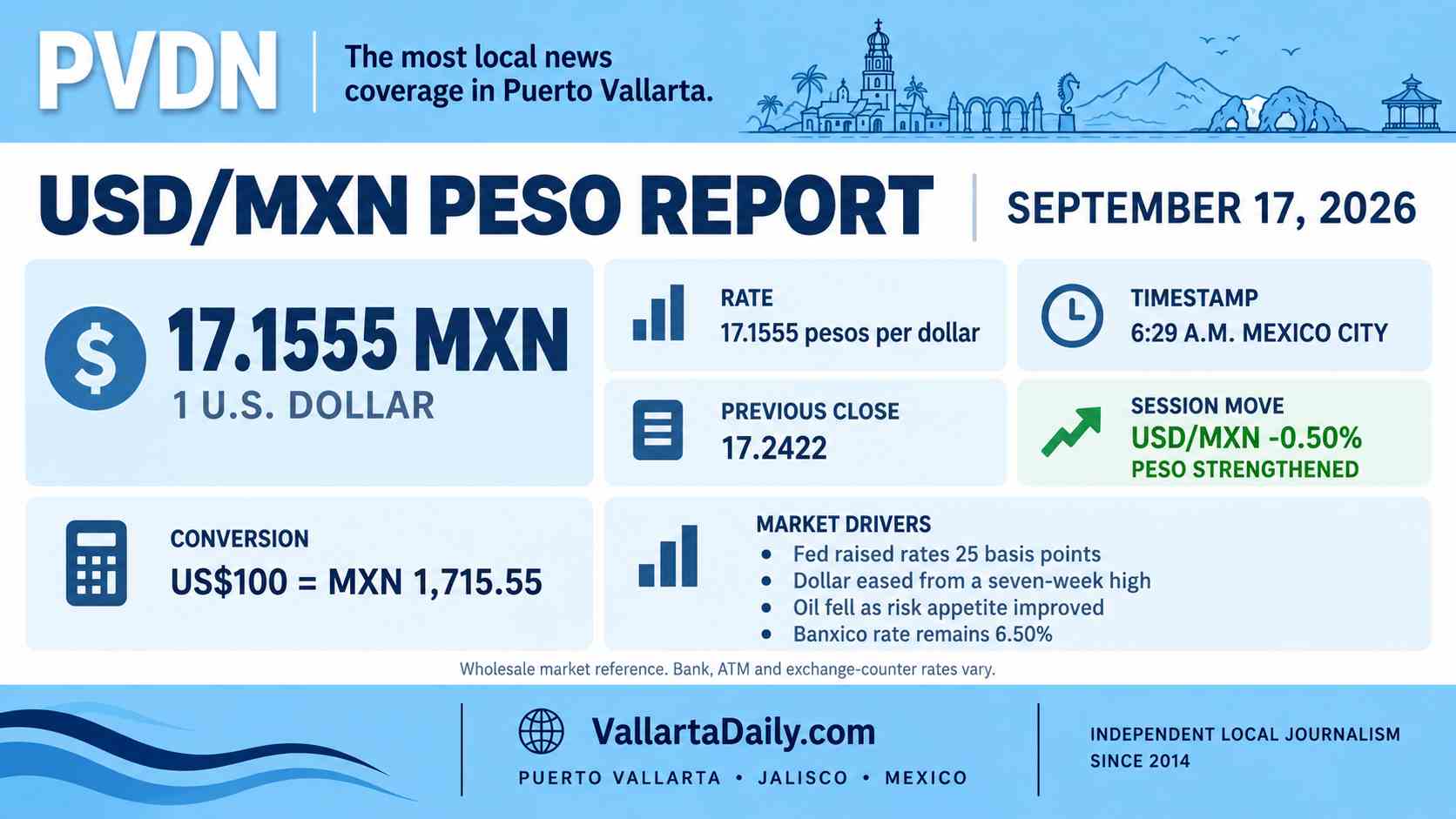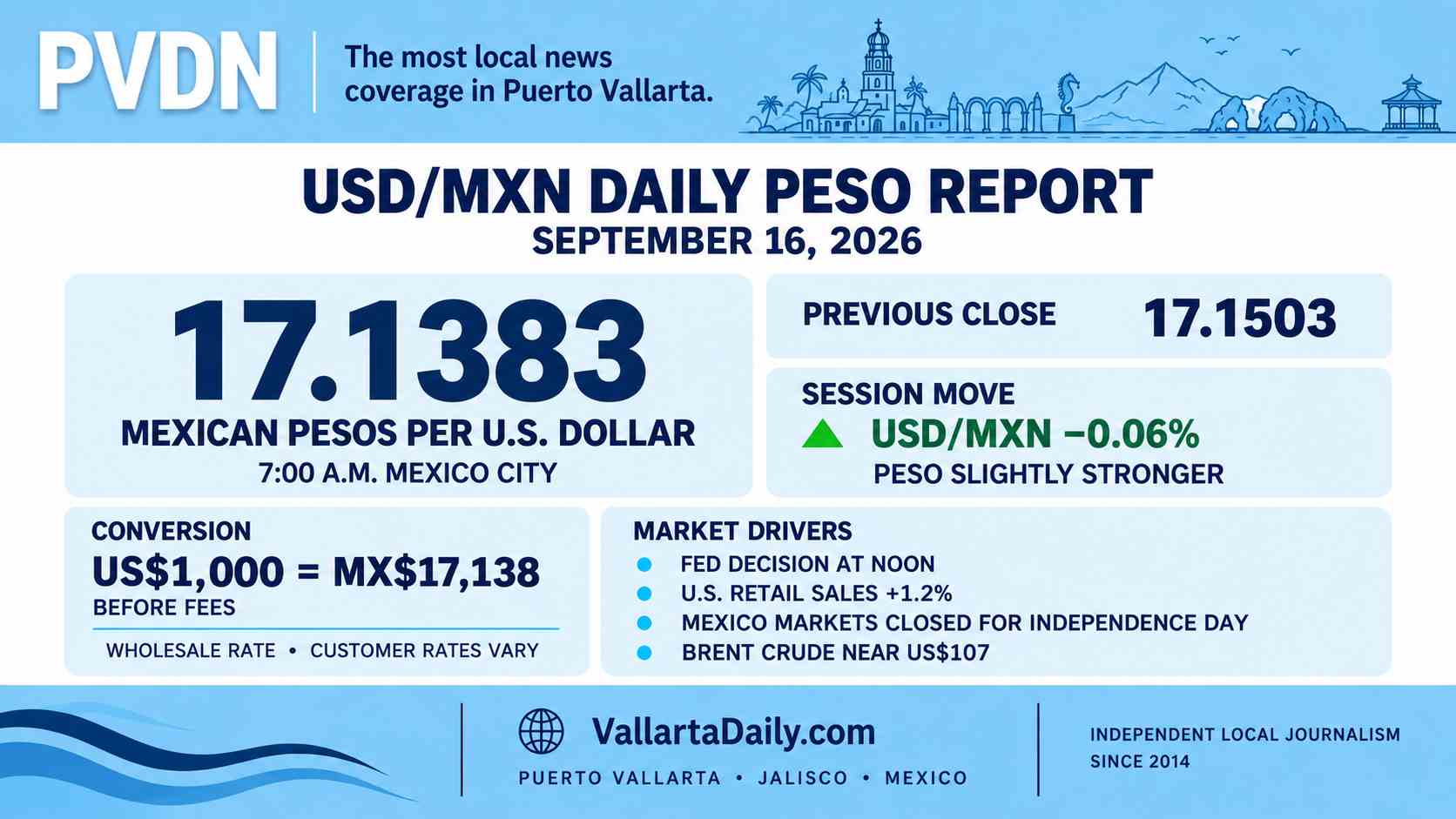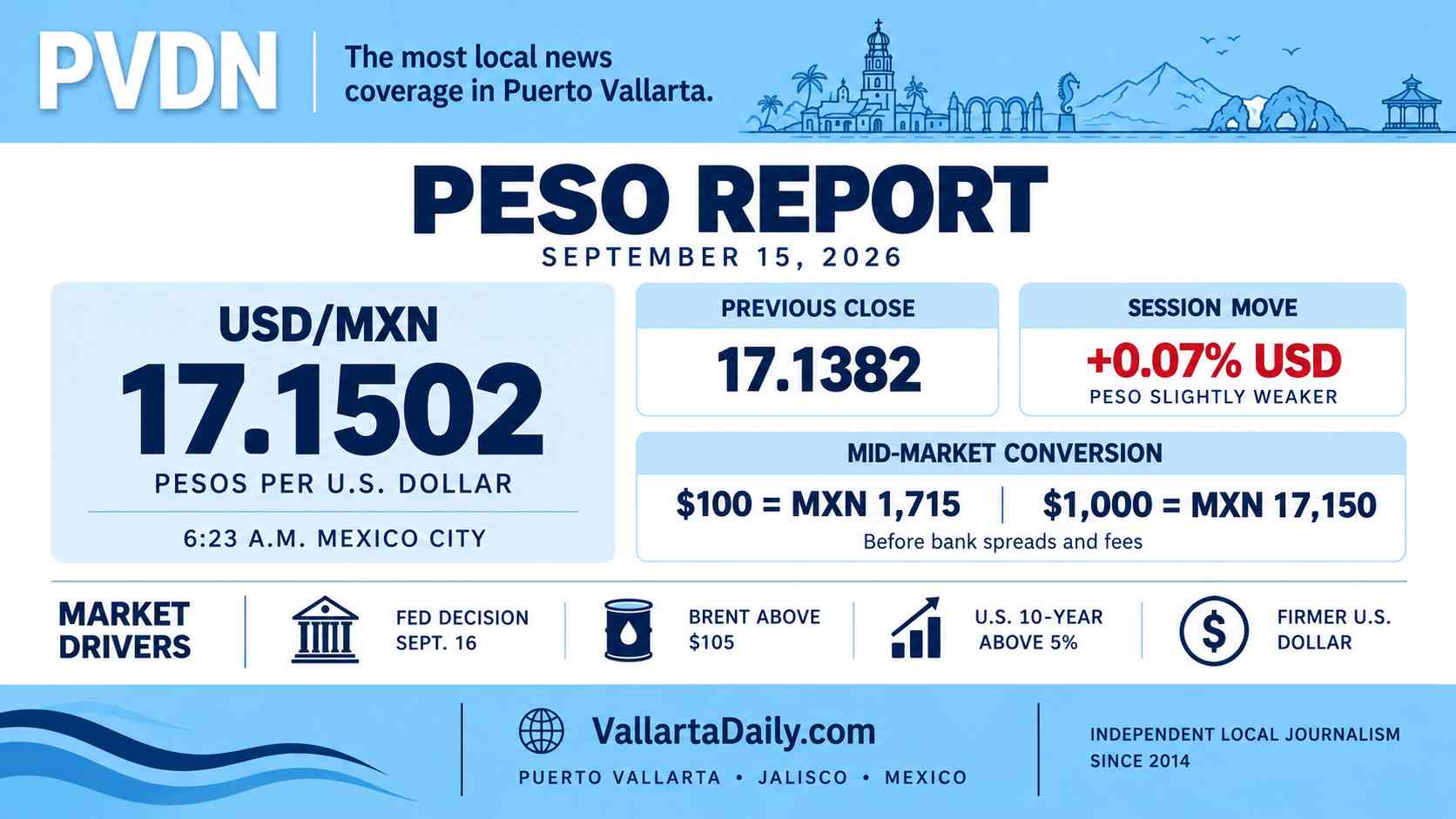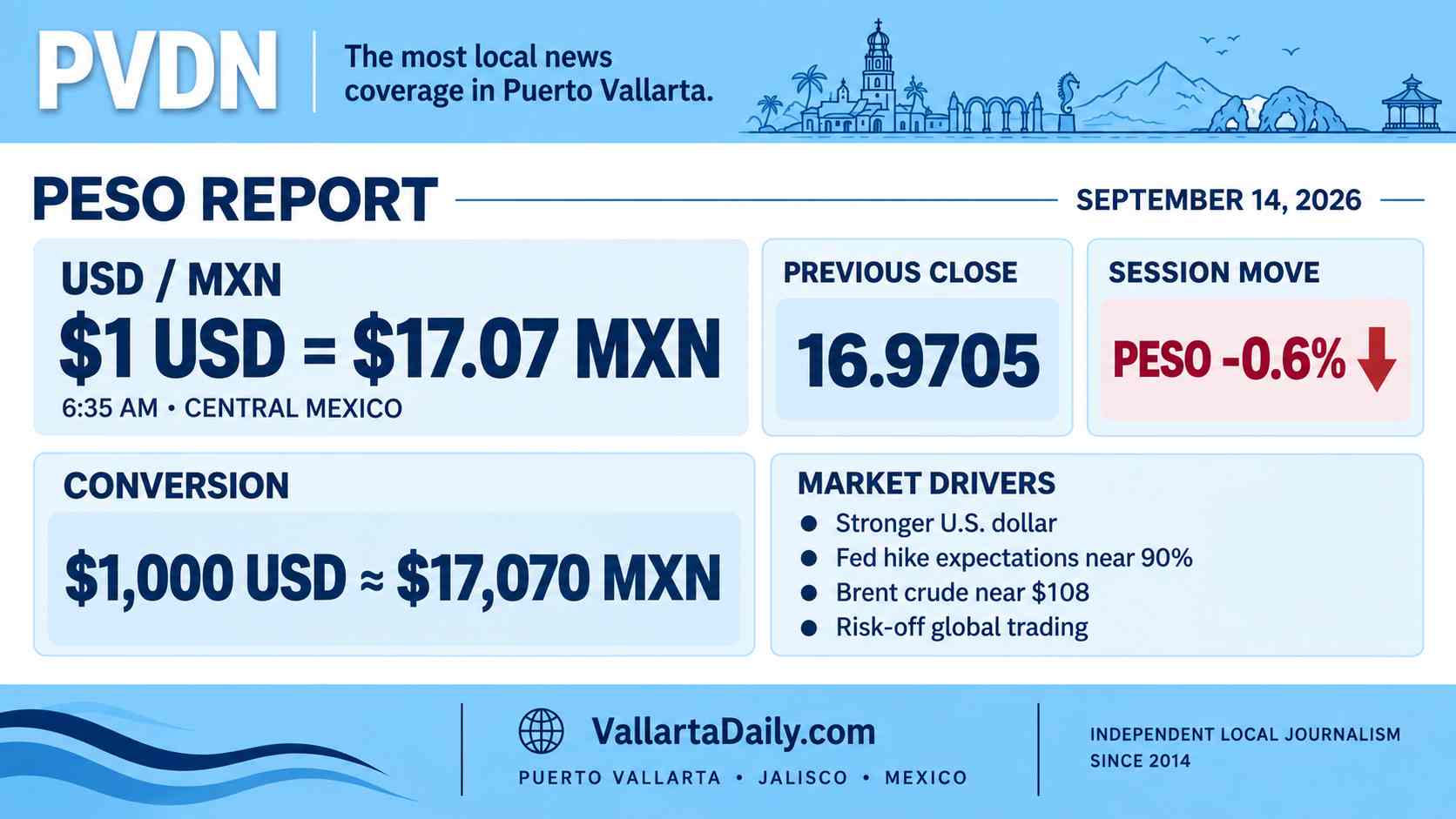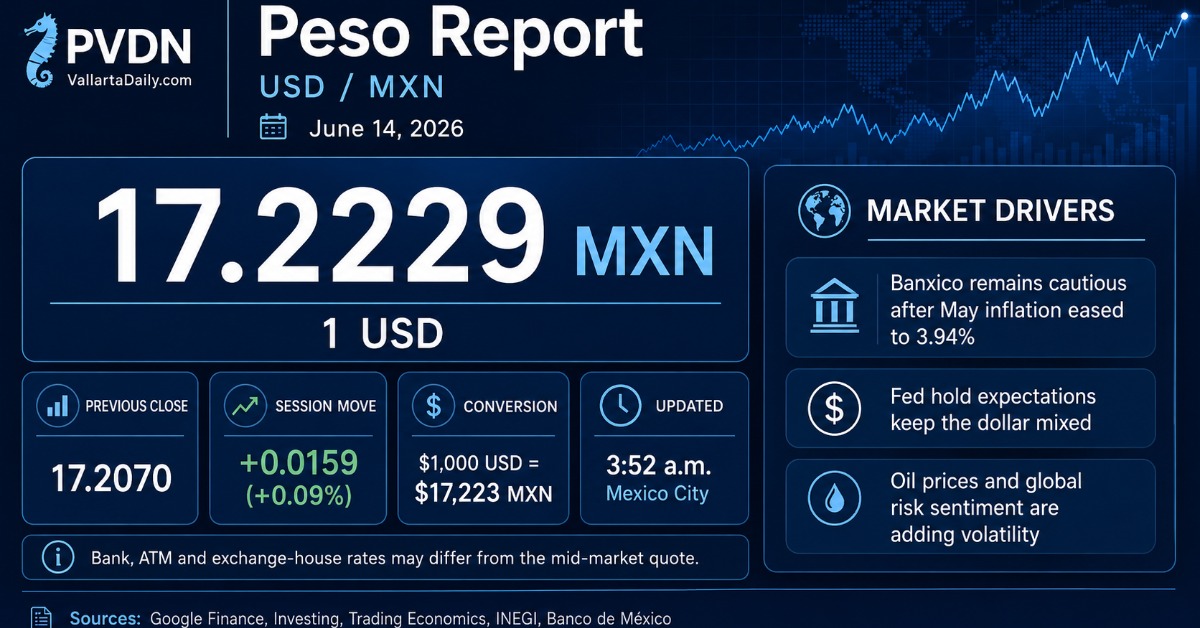
The U.S. dollar was quoted near 17.22 Mexican pesos early Sunday, June 14, with weekend market boards showing little fresh movement after Friday’s session.
A live USD/MXN quote showed the pair at 17.2229 pesos per dollar at 9:52 UTC, or 3:52 a.m. Mexico City time. Another market quote board listed USD/MXN at 17.2210, compared with a previous close of 17.2070, a move of about 0.08% in favor of the dollar.
Because Sunday morning quotes can reflect limited weekend liquidity, the rates quoted by banks, ATMs, remittance apps, credit cards, and exchange houses may differ from the mid-market number. Fees and spreads matter more for most household transactions than a small overnight move.
The peso came into the weekend after a stronger late-week stretch. Trading Economics listed USD/MXN at 17.2076 on June 12, down 0.14% from the previous session, meaning fewer pesos were needed to buy one dollar. That kept the peso near the stronger end of its recent range, even as global markets continued to watch U.S. interest-rate expectations and energy prices.
For Mexico, the next major domestic focus is inflation and Banco de México policy. INEGI reported that annual inflation slowed to 3.94% in May, back inside Banco de México’s 3% target range plus or minus one percentage point. Core inflation remained firmer at 4.19%, which keeps the central bank cautious even after headline inflation improved.
Banco de México cut its benchmark rate by 25 basis points to 6.50% on May 7 and said the move concluded the easing cycle that began in March 2024. In that policy statement, the bank said it considered the current rate appropriate for the inflation outlook and the uncertain global backdrop. Its next scheduled monetary policy announcement is on June 25 at 1:00 p.m., according to the Banco de México calendar.
On the U.S. side, the dollar remains tied to expectations for the Federal Reserve’s June meeting and the path of inflation. A recent market report said U.S. consumer inflation rose 4.2% annually in May, while the dollar slipped after the data, as the report did not immediately strengthen the case for a near-term rate hike. The U.S. Dollar Index ended June 12 at 99.8070, down slightly on the session but still higher over the past month.
Oil and geopolitical headlines remain part of the peso backdrop, but their effect is not one-way. Higher energy prices can support inflation concerns and the dollar through Fed expectations. At the same time, lower risk appetite can pressure emerging-market currencies, including the peso. For now, USD/MXN is moving more like a rate-and-risk story than a sharp local shock.
For Puerto Vallarta residents and frequent visitors who pay in dollars, a $1,000 budget converts to about 17,220 pesos before fees at today’s mid-market rate. At last week’s high near 17.49, the same $1,000 would have been worth roughly 17,490 pesos, a difference of about 270 pesos before spreads.
For people earning pesos and paying dollar costs, the stronger peso compared with last year’s weaker levels still helps with dollar-linked expenses. For people earning dollars and spending in pesos, the exchange-rate cushion is smaller than it was during periods when USD/MXN was closer to 18 or 19.
This is a budgeting snapshot, not investment advice. The practical items to watch this week are the Federal Reserve meeting, U.S. data, oil-market headlines, and Banco de México’s June 25 decision. Small daily changes can be erased by exchange-house spreads, ATM fees, or card conversion rates, so readers moving money should check the final rate they are actually being offered before making a transfer.