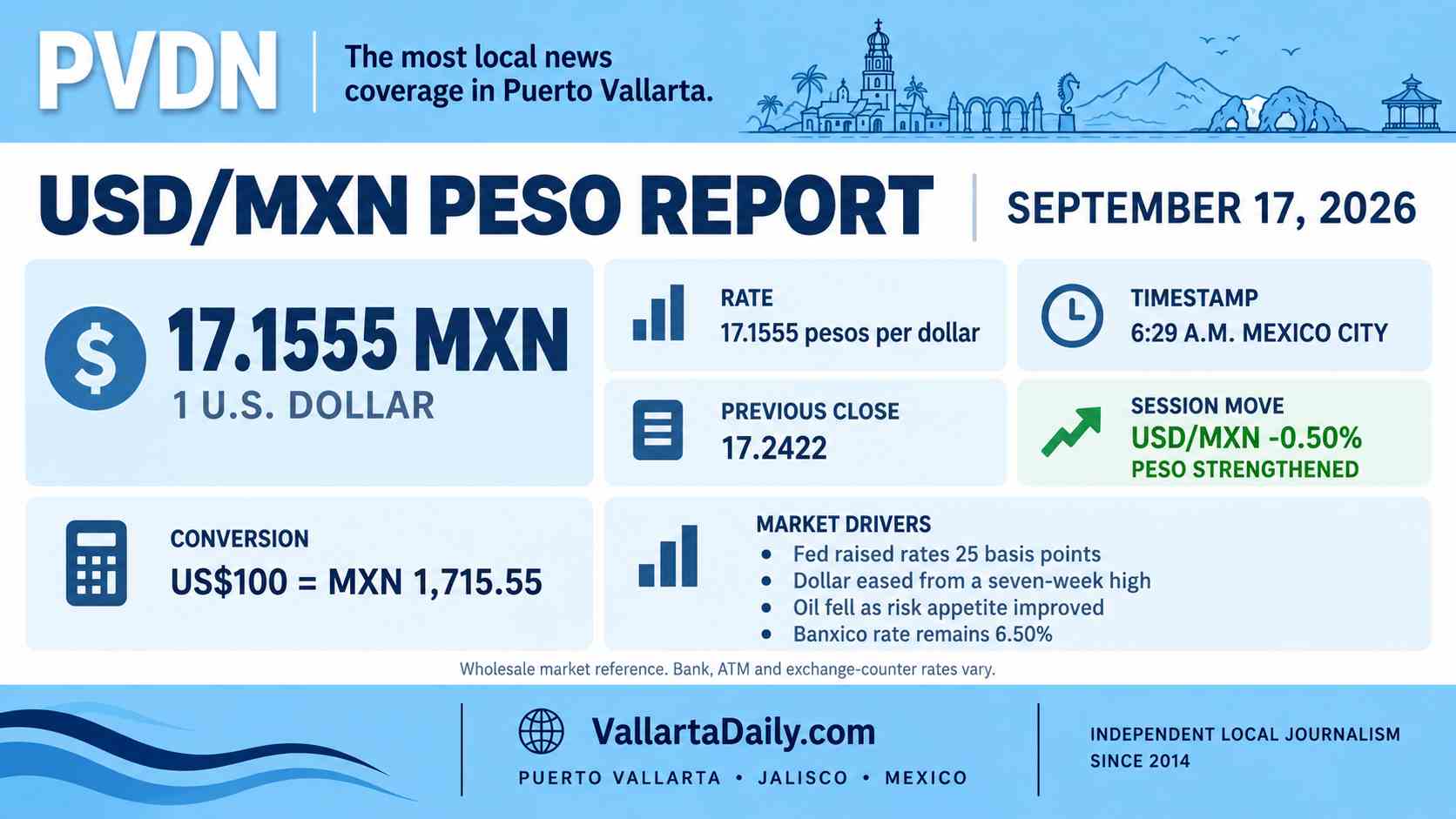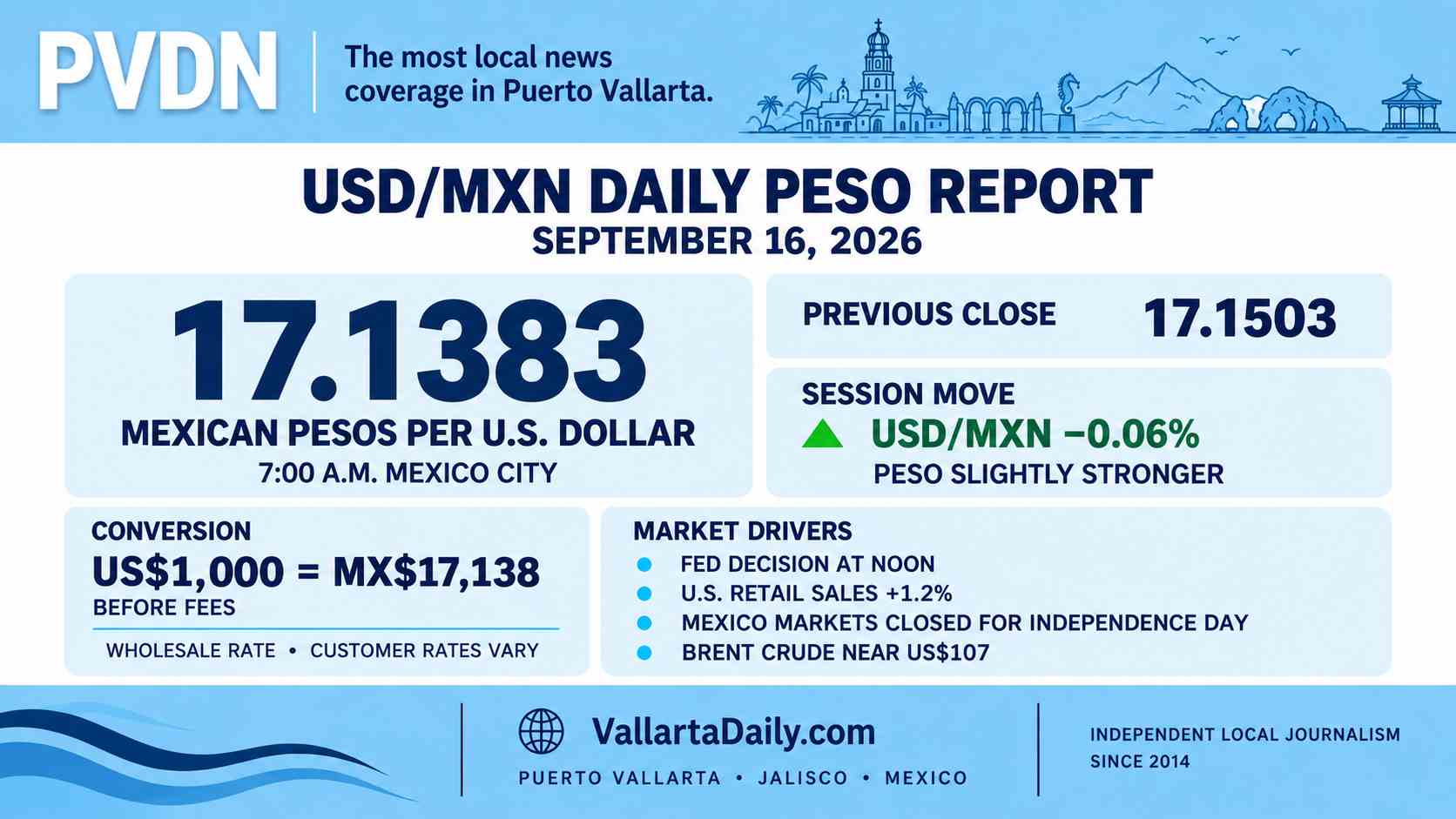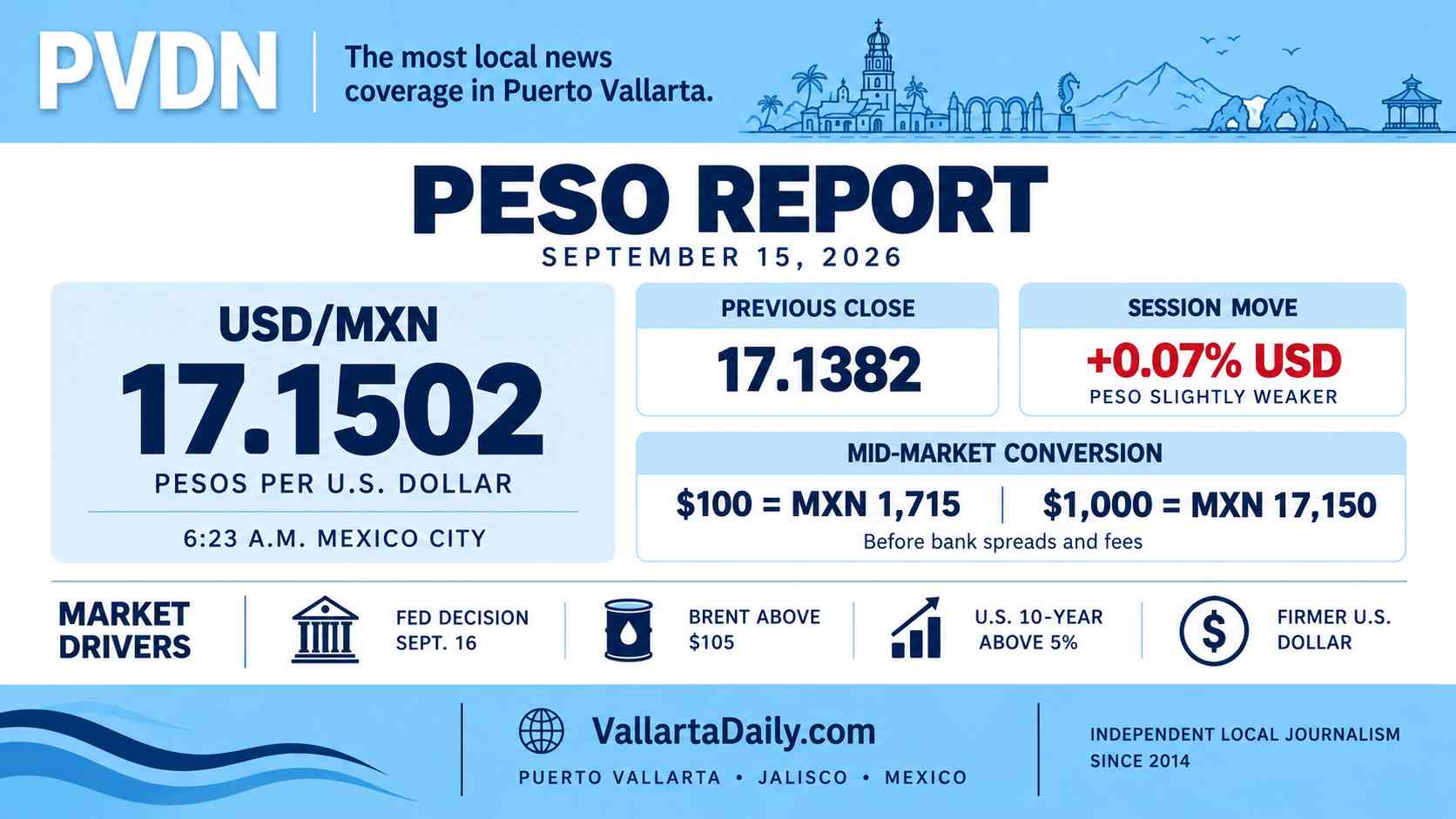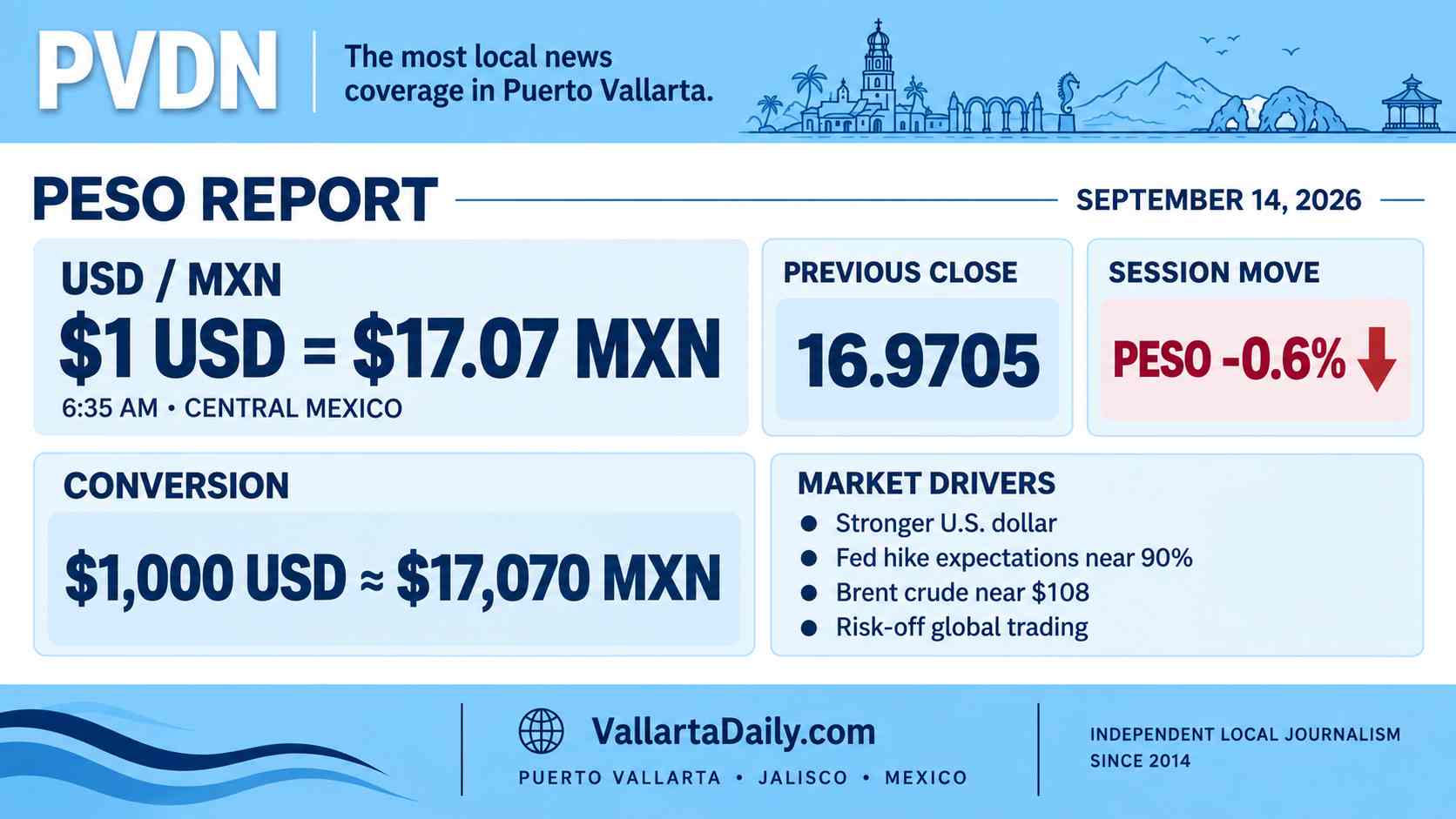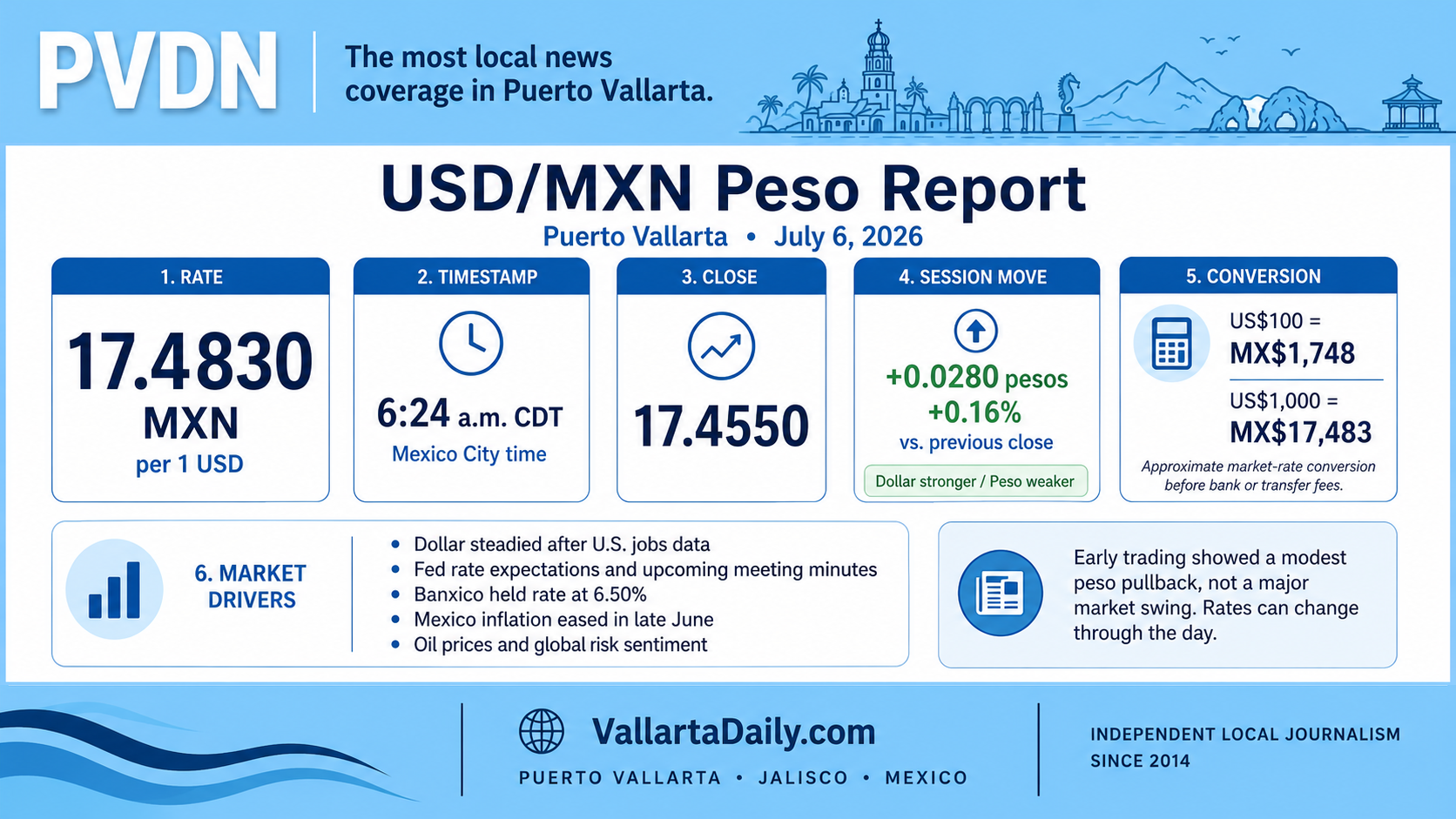
Puerto Vallarta, Jalisco, July 6, 2026 – The Mexican peso traded slightly weaker early Monday, with USD/MXN quoted at 17.4830 pesos per dollar at 6:24 a.m. Mexico City time, according to Investing.com’s live USD/MXN market quote.
That was about 2.8 centavos above the previous close of 17.4550, a move of roughly 0.16% in favor of the dollar. The pair was moving in a narrow early range between 17.4633 and 17.4877, suggesting a modest morning adjustment rather than a sharp peso move.
The early rate is a market quote, not the official daily FIX rate. Banco de México publishes the FIX after 12:00 p.m. on business days, so the official July 6 reference rate was not yet available at the time of publication.
Dollar steadies after U.S. jobs report
The dollar was firmer Monday after losing ground last week, when U.S. labor data reduced expectations for an immediate Federal Reserve rate hike. The U.S. Bureau of Labor Statistics reported that nonfarm payroll employment rose by 57,000 in June, while the unemployment rate was little changed at 4.2%. April and May payrolls were revised down by a combined 74,000 jobs.
Markets are now looking ahead to the Federal Reserve’s June meeting minutes, due Wednesday, for a clearer read on interest-rate expectations. Reuters reported Monday that the dollar had steadied after the weaker jobs report and that traders had scaled back bets on a July Fed rate increase.
Oil also remained part of the global backdrop. Reuters reported that Brent crude slipped toward four-month lows near $71.95 as supply expectations improved, helping to support broader market sentiment and easing some inflation concerns.
Mexico’s rate pause remains central for the peso
In Mexico, the peso is still being watched through the lens of Banxico’s rate path, inflation, and trade risk. Banco de México kept its overnight interbank rate at 6.50% on June 25, saying the Mexican economy was expected to expand in the second quarter after contracting in the previous one, while economic slack and downside risks to activity remained.
Banxico also said headline inflation fell from 4.45% in April to 3.55% in the first half of June, while core inflation eased more slowly, from 4.26% to 4.12%. That mix gives the central bank less pressure to raise rates, but not enough comfort to ignore persistent price risks.
The next major data point for Mexico is inflation. INEGI’s CPI calendar lists the next update for July 9, which could affect expectations for whether Banxico keeps its current pause in place.
Trade uncertainty still sits in the background
A Reuters poll published last week found analysts expected the peso to remain near the middle of its long-running trading range, with a median forecast of 17.78 per dollar in 12 months. The same report noted that the peso has been supported by expectations for U.S. economic resilience, but that uncertainty over the future of the USMCA trade framework remains a risk for Mexico’s outlook.
For now, Monday’s early move does not point to a major peso break. It reflects a market balancing stronger dollar demand, softer U.S. jobs data, lower oil, and Mexico’s own rate-and-inflation calendar.
For dollar and peso budgets in Puerto Vallarta
For people earning in dollars and spending in pesos, a rate near 17.48 means $100 converts to about 1,748 pesos before fees or exchange spreads. A $1,000 transfer would be about 17,483 pesos at the quoted market rate, though banks, ATMs, exchange houses, and transfer services usually offer different rates.
For people earning in pesos and paying dollar-linked costs, the small early move makes dollar expenses slightly more expensive than at the previous close. The change is limited, but it matters for rent, tuition, medical bills, travel, and larger transfers.
Rates can move through the day, especially around U.S. data, Fed comments, Banxico signals, and Mexico inflation updates. This report is for budgeting and news context, not investment advice.