Puerto Vallarta, Jalisco, October 22, 2026 — SEAPAL’s director reportedly acknowledged a 160-million-peso shortfall for Versalles sewage works, as a broken pipe cut water to the southern hotel zone Thursday.
Director Carlos Ruiz told residents that resolving their sewage problem required money the utility does not have. He explained that drinking-water emergencies had taken priority.
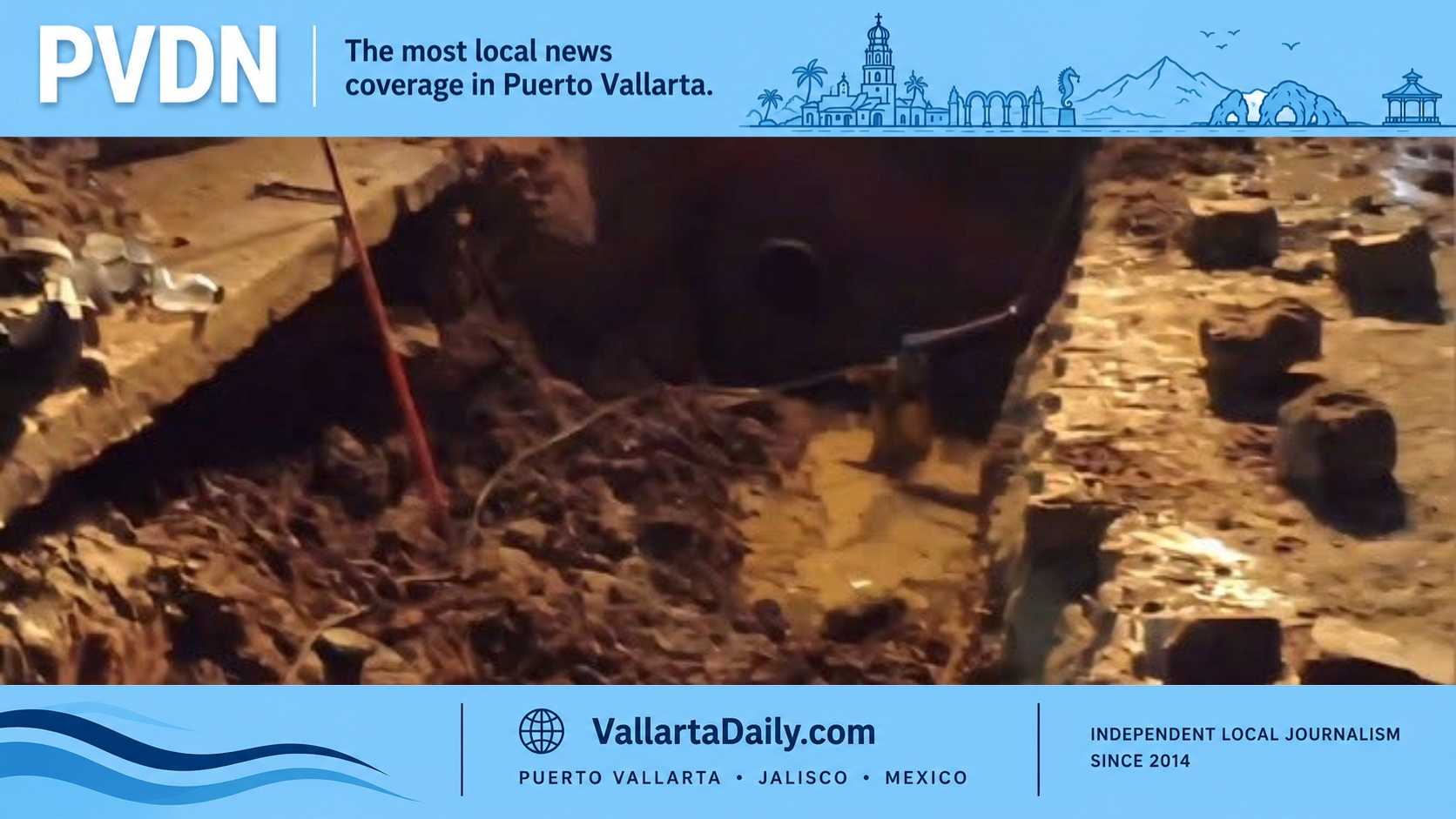
The complaints included wastewater pooling at Manuel López Cotilla elementary school, where the parents’ association representative described the difficulties it creates.
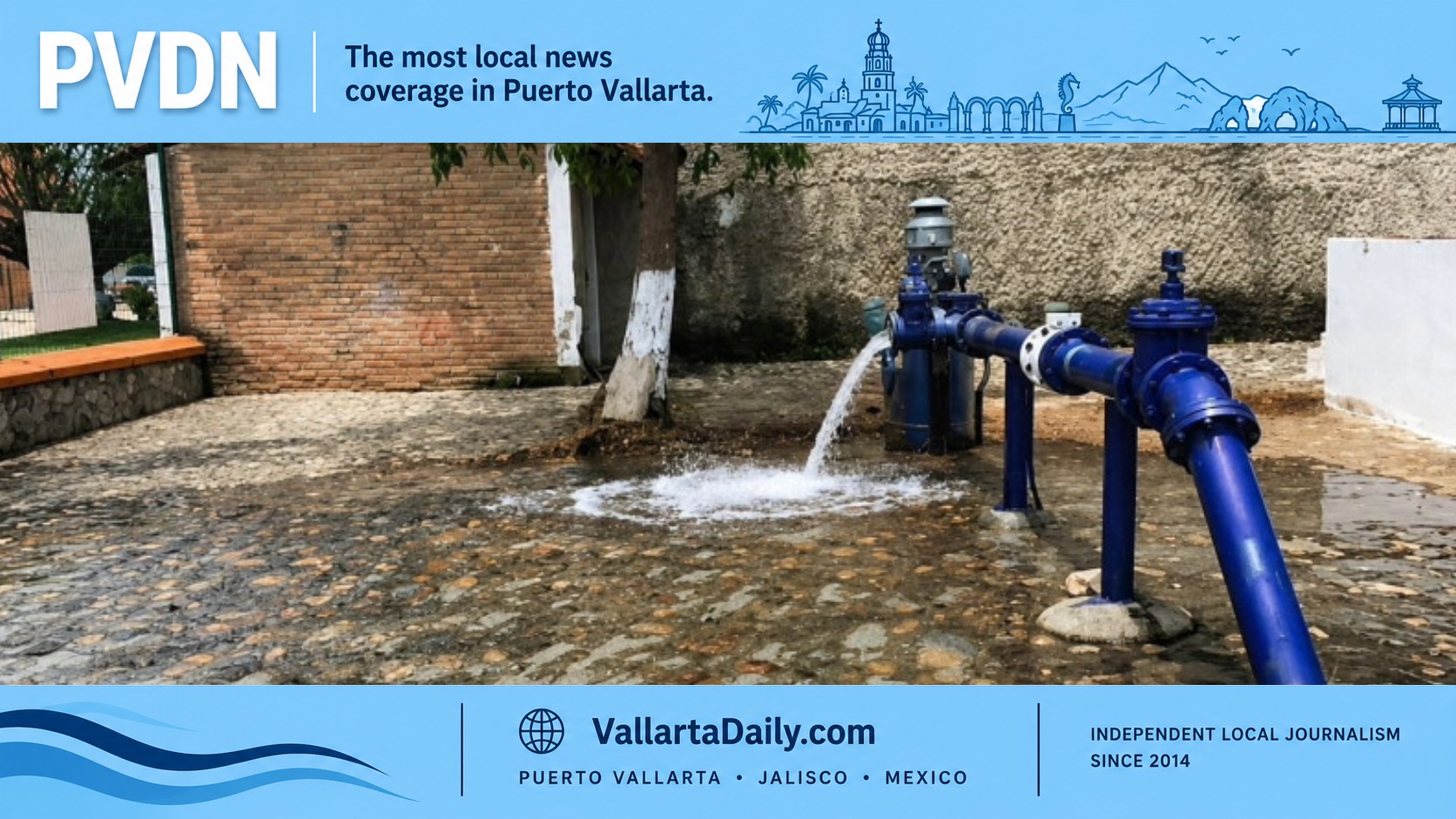
Along the southern coast, a broken drinking-water pipe interrupted service from Mismaloya to Conchas Chinas. SEAPAL estimated that restoration would begin at 4 p.m. Thursday. That was an estimated start of recovery, rather than confirmation that every affected property would have water by that hour.
At Los Muertos, residents and businesses described recurring wastewater flows and strong odors around the beach and pier, according to NoticiasPV. The report documents complaints and demands for intervention; it does not provide laboratory results establishing swimming-water quality or an official determination of the discharge’s source.
Together, the reports expose a practical question for Puerto Vallarta: how will the city stop recurring infrastructure failures when funding for a lasting solution remains unresolved?
The evidence points to an aging network, expensive emergency maintenance, and a gap between projects officials have identified and money available to build them.
SEAPAL has already acknowledged the scale of deterioration. In a July statement explaining rain-related pipe failures, the utility estimated that more than 40% of Puerto Vallarta’s approximately 4,000 kilometers of water and sewer pipes were approaching the end of their useful life.
It attributed increased vulnerability to aging infrastructure, softened ground, and movement beneath streets during the rainy season. Rainfall, it said, increased the demand for attention to leaks and ruptures by at least 25%.
That makes recurring failures a recognized operating condition. The utility’s own explanation describes infrastructure that becomes more susceptible to breaking under predictable seasonal pressures.
An independent financial assessment identified the same problem a year earlier. In an October 2025 credit report published through the Mexican Stock Exchange, PCR Verum said the water and sewer system “has exceeded the useful life of its infrastructure,” in translation.
The agency linked that deterioration to the need for outside maintenance services. Operating expenses increased 25.3% in the first half of 2025 compared with the same period a year earlier, with maintenance and repair contributing to the pressure.
That assessment describes an expensive cycle: worn infrastructure requires repeated intervention, while keeping it operating competes with other demands on the utility’s finances.
The consequences are visible across separate parts of the city. Last Friday, Vallarta Daily reported that a pipe break left six neighborhoods without water. The outlet also reported SEAPAL’s earlier warning that it lacked funding for a sewer overhaul serving Versalles on September 30.
Thursday’s admission therefore adds a new funding figure to an established problem.
Versalles also shows why replacing old pipes cannot be the entire response. In its official account of the neighborhood meeting, SEAPAL identified the need to strengthen pumping at the Norte I treatment plant in Las Mojoneras and clear sections of the Centro–Norte collector with obstructions affecting up to 40% of their internal diameter.
That figure describes the reported obstruction inside the pipe. It should not be read as a measured 40% reduction in the entire sewer system’s capacity.
Operations director Alejandro Padilla said rainwater and groundwater entering pipes designed for sewage were overwhelming the network. Versalles occupies a low section of the collector, making it particularly vulnerable. He identified similar problems in El Pitillal Centro, Emiliano Zapata, 5 de Diciembre and downtown.
Vallarta Hoy also reported concerns about buildings discharging groundwater into the sanitary system. Residents requested that municipal urban-development and environmental officials participate in the next working meeting.
That brings the assessment beyond SEAPAL’s repair crews. If buildings keep sending additional water into an overloaded sewer, infrastructure investment and municipal oversight must address the same problem. Otherwise, the conditions that overwhelm the network remain.
The financial position also requires a more precise explanation than saying every city account is empty.
SEAPAL’s published financial statement for July 31, 2026 recorded approximately 90.1 million pesos in cash and cash equivalents, alongside 134.3 million pesos in short-term liabilities.
Those figures predate this week’s meeting and do not identify how much money is currently available for Versalles. They establish neither an available construction fund nor a zero cash balance. The documented issue is SEAPAL’s reported inability to finance the proposed solution.
There is also a public budgeting question to reconcile. In March, Ruiz described SEAPAL’s finances as healthy and reported 140 million pesos in public works investment.
That announcement and the present funding shortage can coexist if money has already been spent or committed to other work. But residents still lack a clear explanation of how much investment remains available, which projects have priority, and how the Versalles works would be financed.
Pressure on basic maintenance extends beyond the water utility.
On October 13, municipal infrastructure director Andrés Abundis asked councilors to help secure another 1.5 million pesos for pothole repairs: 1 million for asphalt and 500,000 for cement. He described a critical situation in which rain damage and limited resources were restricting the purchase of materials.
“I think with 1 million pesos we can buy the necessary asphalt,” he told councilors, in translation.
Separately, councilor Víctor Manuel Bernal Vargas said the municipality owed suppliers 403 million pesos and faced difficulty covering basic operating needs. Those were his statements about municipal finances; SEAPAL is a decentralized utility with separate financial accounts.
The distinction matters for accountability. City Hall’s payment pressures, SEAPAL’s operating expenses and the capital required to replace infrastructure are connected public-service concerns, but each needs its own explanation of available money and outstanding commitments.
SEAPAL’s latest response offers a direction. Ruiz committed to pursuing a solution before the current administration ends, and the utility said it had prepared engineering projects. It asked health jurisdiction director Jaime Álvarez Zayas for support in seeking state funding.
Its published statement did not identify an approved financing package or a construction start date.
Those missing details determine whether another meeting produces a funded repair program. Until then, the clearest consequence remains the one parents brought to Tuesday’s discussion: wastewater pooling at Manuel López Cotilla elementary school.