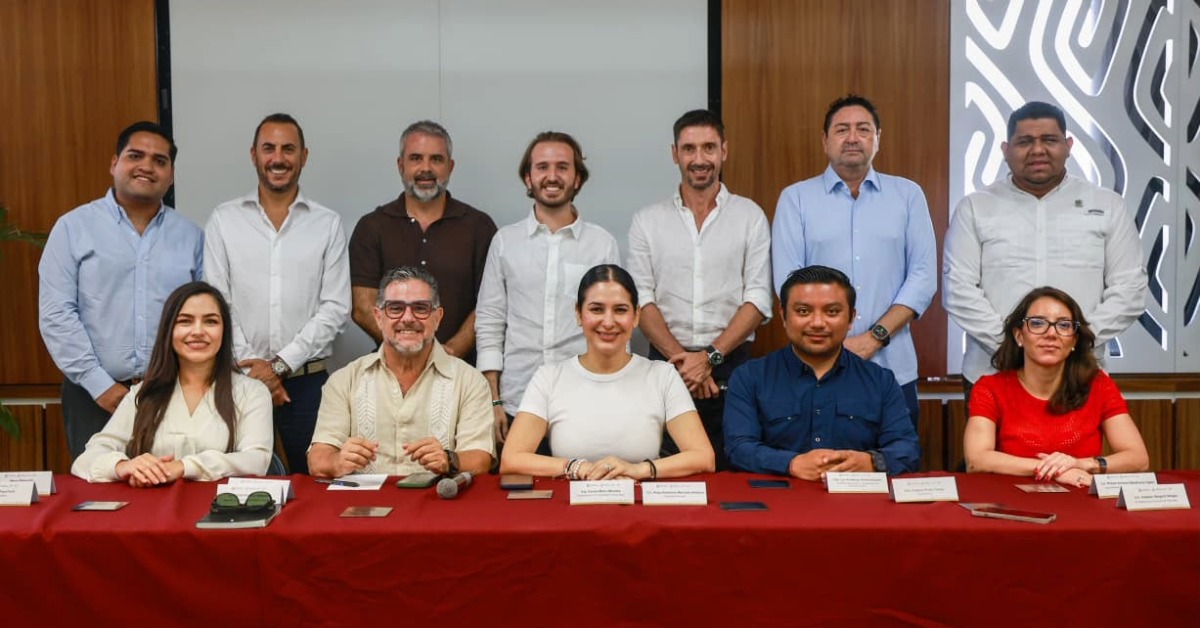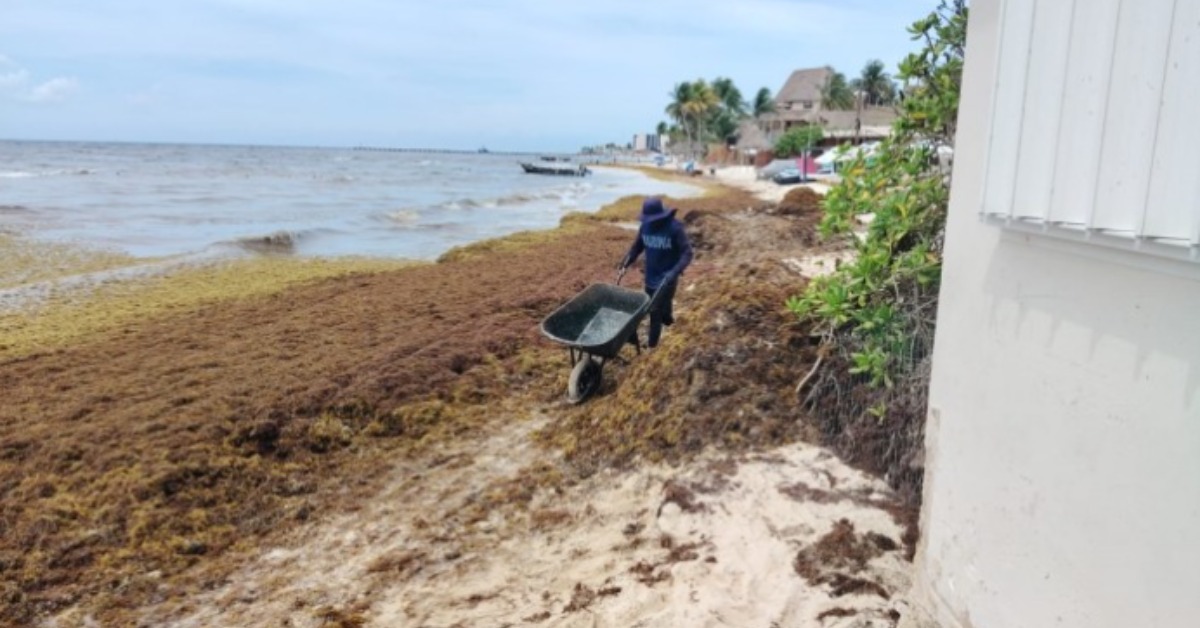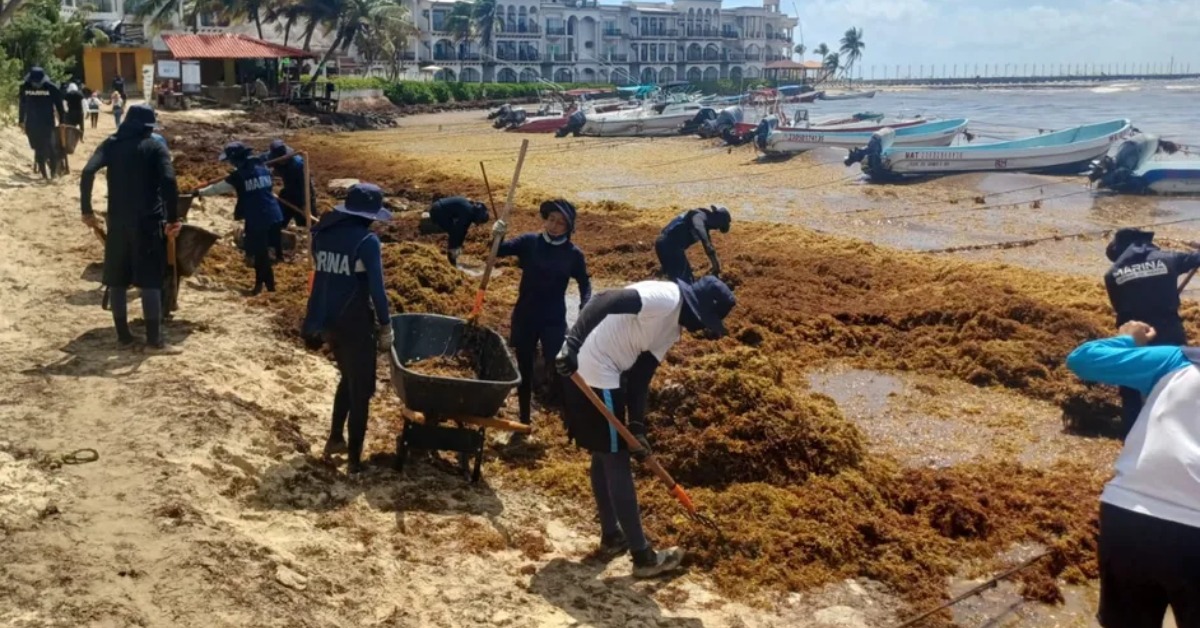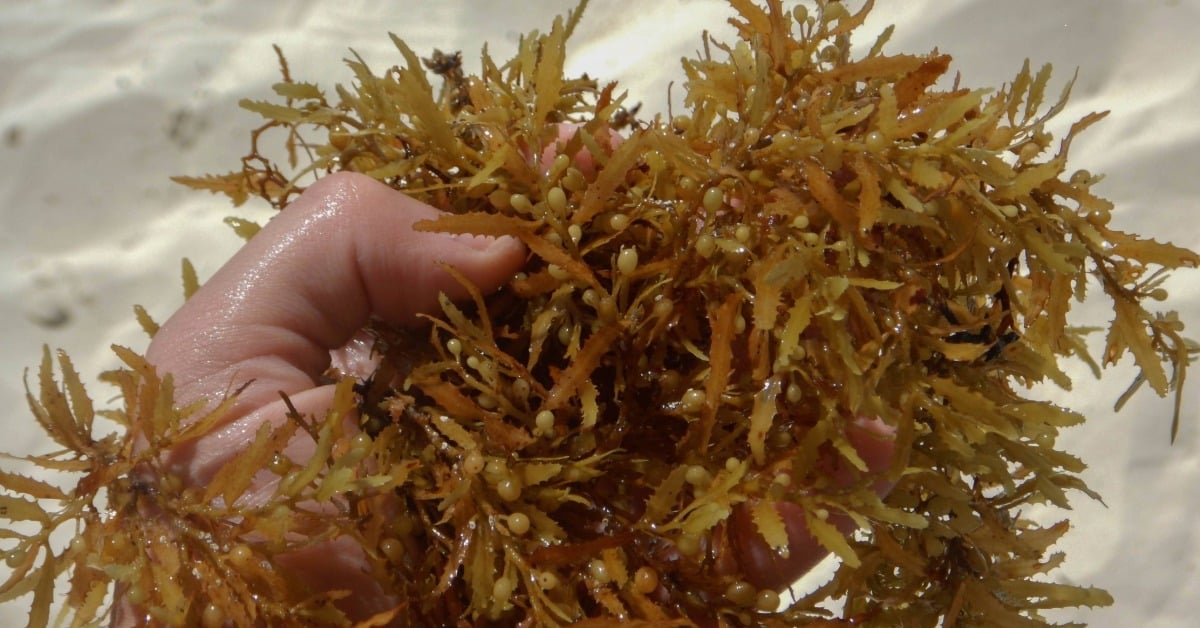
Yucatán just put a bold idea on the ground: a plant designed to turn beach-choking sargassum into products farmers and industry can use. The facility sits inside the state’s science and technology park and is being promoted as a practical answer to an environmental headache. Officials say the plant will make biofertilizers at high volume and also produce animal feed.
Yucatán sargassum biofertilizers
The project belongs to Implementaciones Estratégicas Marinas (IEM). It opened at the Parque Científico y Tecnológico de Yucatán and is pitched as an innovation and sustainability push. In its first phase, the plant spans 600 square meters, with a 65-square-meter applied research lab. The company says it can produce up to 50 million liters of fertilizer per month and three tons of animal feed per month, with room to expand to 850 square meters.
The opening also comes with jobs. The state reports 13 direct, specialized positions tied to the operation. The plant is meant to plug into the local innovation network, alongside Siidetey, the CICY, INIFAP, and the Instituto Tecnológico de Mérida. That mix of public research and private execution is central to the project’s pitch.
What the state says the plant can unlock
Ermilo Barrera Novelo, Yucatán’s secretary of economy and labor, framed the site as the kind of company the state wants to attract: value-added, cleaner, and grounded in applied research. He said the project could open doors in export markets for fertilizers, soaps, and animal feed, and help position Yucatán as an emerging bioindustry hub. The broader aim is to prove that industry and sustainability can move together and pay off locally.
The argument goes beyond branding. Sargassum is an unpredictable arrival. When it piles up, it hurts coastal businesses and ecosystems. Turning that waste stream into inputs for farms is the promise. If the volumes hold, the plant could give producers a steady supply and shift part of the clean-up cost into a marketable product. The state wants that story to resonate with investors and with communities that deal with seaweed every season.
What the company claims about performance
IEM’s director, Jesús Delgado Madrid, described a process built around automation, solar power, and careful water use. The goal, he said, is to do more with less while keeping the footprint down. He also cited field results where crop weight increased by up to 27 percent. Those are company claims and will bear watching as production ramps up and buyers test the product across different soils and cycles.
That last point matters for credibility. Farmers will ask about consistency and price. Municipalities will ask about logistics and who pays to move raw sargassum from the coast inland. The plant’s location inside the science park hints at a plan to iterate fast, but it also raises expectations about transparency and data. If the company can document yield gains and safety at scale, adoption will follow. If not, the idea risks becoming a press-release win rather than an agricultural one.
Why it matters for Yucatán’s competitiveness
Yucatán sits at number 22 in the national innovation and technology subindex compiled by the Mexican Institute for Competitiveness (IMCO), according to the state’s own framing. Projects like this one are touted as steps toward a more competitive, research-driven economy. That means new products, new skills, and the ability to export them. It also means scrutiny. Results will need to match the rhetoric if the plant is to become a model and not a one-off.
For now, the state has a headline and a working site. The company has a clear pitch and a measurable target: high-volume fertilizer and a smaller line of animal feed. The test ahead is practical—steady inputs, stable quality, and real benefits for growers. If those pieces land, Yucatán’s “trash-to-value” bet could become a repeatable playbook across the coast. If they don’t, the coastline will keep reminding everyone how urgent real solutions still are.