Mérida ended the week of April 19 to 25, 2026, with a mix of weather alerts, public projects, tourism planning, and cultural activity. For residents, the most immediate issue was the heat. For city officials, the larger focus was on how Mérida presents itself as a growing capital for tourism, culture, and investment.
The week also brought practical issues for daily life. Residents took part in Diseña tu Ciudad 2026, a participatory budgeting program that lets people vote on local projects. Families affected by the Dzununcán fire began receiving housing support. New safety-perception data placed Mérida in a more complicated position than its long-standing image as one of Mexico’s safest cities.
For international residents, these stories matter because they touch on what shapes daily life in Mérida. Weather, public works, safety, mobility, tourism, and local prices all affect how the city feels beyond the postcard version.
Heat became the week’s most immediate concern
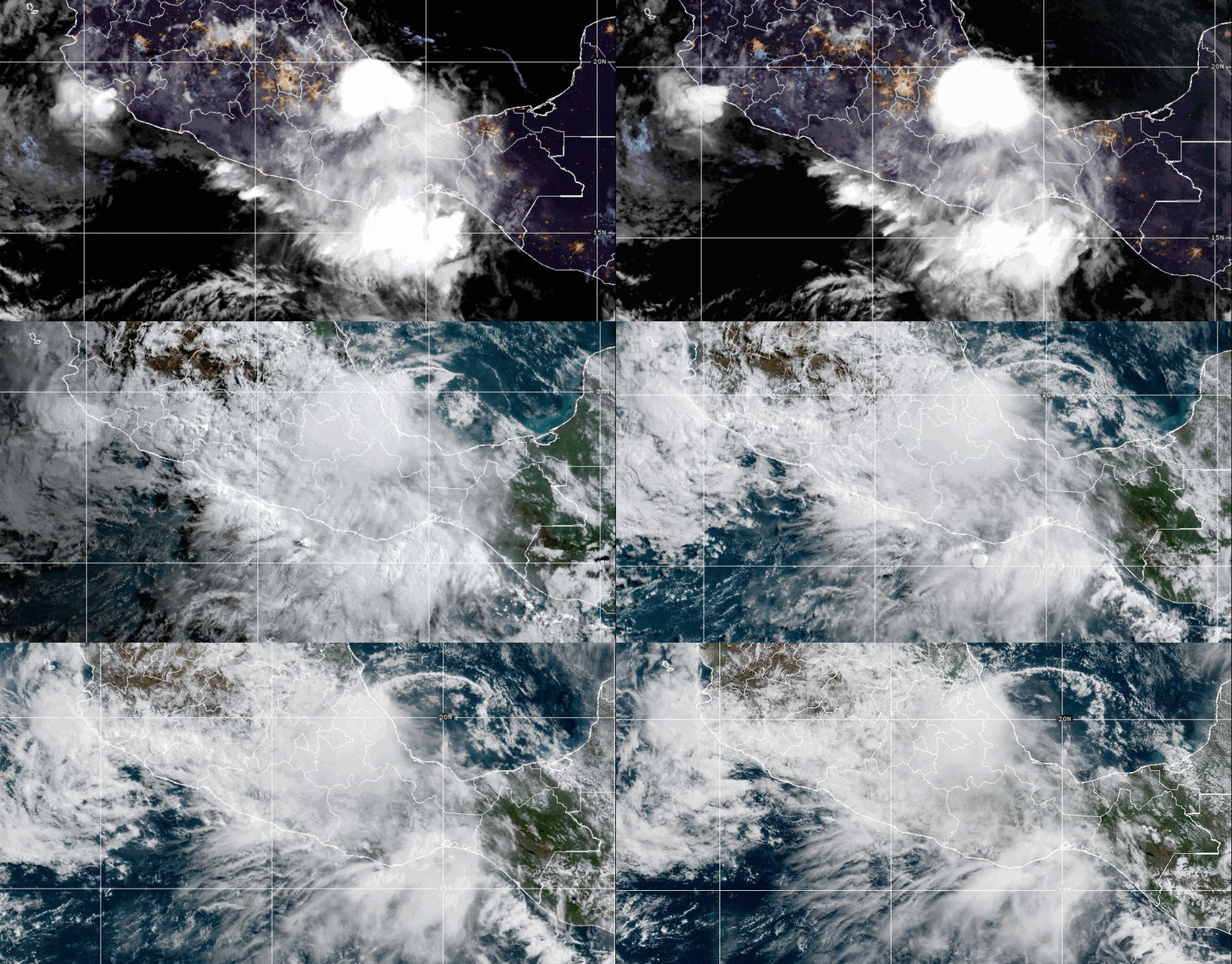
The strongest public advisory of the week came from Yucatán Civil Protection, which warned that a heat wave would begin on April 24 and last into the first days of May. Officials said much of the state could see average temperatures between 37°C and 40°C, with maximum temperatures above 40°C in several areas.
Mérida and its metropolitan area were included in the warning. The city also faces the urban heat island effect, where pavement, traffic, buildings, and reduced shade can make temperatures feel worse than in surrounding areas.
Authorities urged residents to avoid direct sun between late morning and mid-afternoon, drink water often, wear light clothing, and avoid leaving people or pets inside parked vehicles. Older adults, children, outdoor workers, and people with chronic health conditions were identified as higher-risk groups.
For readers new to Yucatán, this type of heat is not only uncomfortable. It can be dangerous. The region’s hottest weeks often arrive before the full rainy season, when humidity and high temperatures can combine with limited cloud cover.
Residents voted on neighborhood projects
One of the week’s main civic stories was the third edition of Diseña tu Ciudad 2026, Mérida’s participatory budgeting program. The city placed 129 projects and five special projects before residents, using 51 voting centers across the municipality.
The program allows residents to vote on how part of the city’s public budget should be used. The projects include new parks, sports areas, rehabilitated public spaces, green corridors, and cycling infrastructure.
This year also included digital voting, giving residents another way to participate. The city said the selected projects will use more than 90 million pesos in public funds.
The program matters because Mérida’s growth has put more pressure on neighborhoods. Better parks, safer streets, shaded public areas, and mobility projects can make a difference in areas where development has outpaced public infrastructure.
Mérida pushed tourism plans tied to the World Cup
City officials also presented Mérida, una Ciudad Viva 2026-2027, a tourism and cultural strategy tied in part to the 2026 FIFA World Cup. Mérida is not a host city for the tournament, but local officials want to attract visitors moving between matches in Mexico, the United States, and Canada.
The city’s campaign, called Mérida entre Gol y Gol, aims to attract at least 150,000 additional visitors during the World Cup period. Officials said the campaign will focus on digital promotion through Visit Mérida MX and target markets such as the United States, Colombia, Spain, and France.
The strategy also points to events already on Mérida’s calendar. These include Noche Blanca in May, Feria Tunich in Dzityá from July 24 to August 2, and the Mérida Jazz Festival in November.
For local residents, the key question is how this tourism push will balance visitor growth with livability. More visitors can support hotels, restaurants, guides, artisans, and transport providers. It can also add pressure to traffic, housing, prices, and public services if planning does not keep up.
State tourism will move into next week
Yucatán’s tourism agenda will continue next week at Tianguis Turístico México 2026, scheduled from April 27 to 30 in Acapulco. The state delegation is expected to include 48 exhibitors, with officials promoting Yucatán’s cultural, community, and tourism offerings to national and international buyers.
The state also promoted Semana Yucatán en México 2026, scheduled from May 8 to 17 at the Palacio de los Deportes in Mexico City. More than 270 businesses from 23 municipalities are expected to participate.
These events are not only about tourism advertising. They are part of Yucatán’s effort to sell food, crafts, destinations, investment, and identity to a wider market. Mérida benefits from that attention because it remains the state’s main gateway for many visitors.
Safety data gave a more nuanced picture
Mérida’s reputation for safety remained part of the week’s discussion, but new data added nuance. The latest urban security survey showed that 33.7% of adults in Mérida said they considered the city unsafe as of March 2026.
That number remains well below the national average reported in the same survey. It also keeps Mérida among the cities with lower perceived insecurity in Mexico. Still, the figure represents a shift from earlier years, when Mérida often ranked near the very top of national safety perception rankings.
For residents, the data should be read carefully. It does not mean Mérida has become one of Mexico’s most dangerous cities. It does show that more people are expressing concern about safety, public order, conflict, or daily conditions in their neighborhoods.
Tourism security was also part of the broader Yucatán conversation this week. After a recent shooting at Teotihuacán, federal attention turned to security at major archaeological zones. In Yucatán, Chichén Itzá is expected to be the main site included in a federal security reinforcement plan. Bag checks were also reported at major sites, including Chichén Itzá, Uxmal, and Dzibilchaltún.
Families in Dzununcán began rebuilding
In southern Mérida, the city began rehabilitation and construction work for families affected by the April 8 fire in San Luis Sur Dzununcán. The fire damaged 10 homes, with three listed as total losses.
Municipal support included clearing debris, cleaning lots, delivering basic supplies, and assisting residents in replacing official documents. The city also set up assistance for documents such as birth certificates, voter credentials, and CURP records.
This story matters because document loss can slow recovery after a disaster. Without basic papers, families can face problems accessing aid, enrolling children in school, receiving health services, or handling legal and employment matters.
Dzununcán is also a reminder that Mérida’s growth is not experienced evenly. Some areas still face gaps in housing security, infrastructure, and access to fast emergency recovery.
Prices and household costs stayed in view
Cost pressure also remained part of the local conversation. Rising fuel and energy costs were linked to higher pressure on basic goods in Mérida’s markets. Products such as lime and tomato were among the items cited as affected by supply and transport costs.
For residents on fixed incomes, even small increases can matter. Mérida is still more affordable than many North American cities, but local wages, imported goods, transport costs, and housing demand all shape the real cost of living.
This is especially important for foreign residents. A city can feel affordable to retirees or remote workers earning dollars or Canadian dollars while becoming harder for local families earning pesos. That gap is one reason price stories should not be treated as minor local market news.
Culture and community programs kept the city active
The week also included several cultural and community programs. Sedeculta held activities in honor of World Book Day, including events at the Biblioteca Central Manuel Cepeda Peraza and other reading spaces. Programming included book exchanges, independent publishers, fanzines, talks, and Maya-language activities.
At the Gran Museo del Mundo Maya, children attended a performance about four Yucatecan women who helped open space for women in public and political life. The presentation focused on figures such as Elvia Carrillo Puerto, Rosa Torre González, Raquel Dzib Cicero, and Beatriz Peniche Barrera.
Mérida also prepared for a Tarde de Vaquería at the Gran Museo del Mundo Maya on April 25. The free event was organized as part of the celebration of the International Dance Day calendar and highlighted jarana, traditional dress, and Yucatecan music.
These events show how Mérida’s cultural calendar works beyond large festivals. Much of the city’s public life is built through libraries, schools, museums, neighborhood activities, and family events.
What to watch next week in Mérida
The heat wave will remain the most practical issue to watch in the coming days. Temperatures above 40°C are expected to remain possible in parts of Yucatán into early May, including the Mérida area.
Tourism will also stay on the agenda as Yucatán participates in Tianguis Turístico México from April 27 to 30. Any new routes, partnerships, promotion deals, or visitor targets could shape the state’s summer and World Cup planning.
Local cultural programming continues as well. Visit Mérida lists activities including a solar observation workshop on April 26 and a children’s videomapping event on April 30. The state’s women’s artisan fair is also scheduled for April 30, with more than 90 women entrepreneurs from 28 municipalities expected to participate.
Residents should also keep an eye on the May 6 national emergency drill. Yucatán is expected to be in the path of a hurricane, and cellphone alerts are expected to be tested nationwide. For newcomers, it will be useful to know that the alert is part of a scheduled drill, not necessarily a real emergency.