A cartel case filed in the United States can move quickly into Mexico’s political system. The Sinaloa case shows how foreign charges can affect bank accounts, extradition pressure, party discipline, and public trust before any Mexican court reaches a verdict. The issue is not limited to one official’s legal future. It is also about how Mexico responds when U.S. prosecutors accuse state officials of helping protect a cartel.
U.S. Cartel Cases Put Mexico Politics Under Strain
A U.S. cartel indictment can create political pressure in Mexico before a Mexican court has reviewed the evidence.
That is the position now facing Sinaloa Governor Rubén Rocha Moya and other current or former state officials named in a U.S. case. The charges were filed in the United States. The political fallout is unfolding in Mexico.
The people accused have not been convicted. The charges remain allegations unless proven in court. Still, the case has already reached Mexican banks, federal politics, and the debate over how far U.S. prosecutors can pressure Mexico’s institutions.
The case sits at the intersection of sovereignty, financial compliance, extradition law, and political accountability.
The case is already political
A cross-border cartel case does not stay within a single courtroom.
When U.S. prosecutors accuse Mexican officials of helping a criminal group, the case can trigger action from several places at once. Mexican authorities may review financial records. Banks may restrict accounts. The United States may seek extraditions. Political parties may face questions about how accused officials reached office.
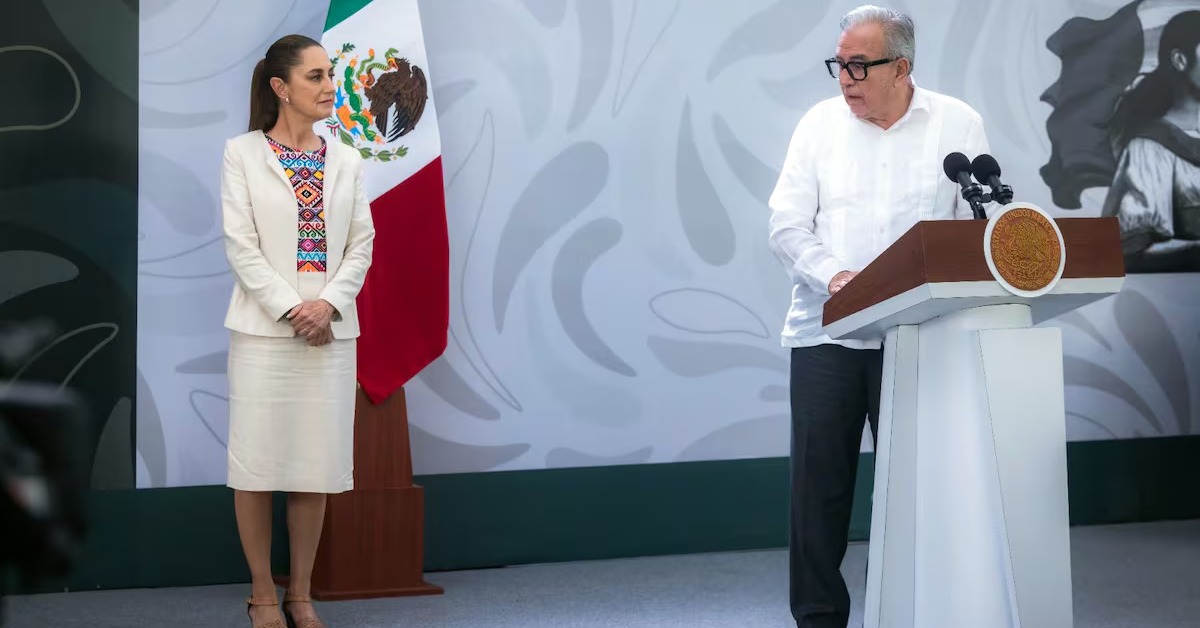
That is the pressure point for President Claudia Sheinbaum’s government. It must ask for evidence and defend Mexico’s legal process without appearing to protect political allies.
Sheinbaum has said Mexico will not protect wrongdoing. She has also questioned whether the United States has presented enough evidence and whether politics may be involved.
That position may be reasonable in legal terms. It is harder to manage in public, especially when the accusation involves alleged protection for the Sinaloa Cartel.
What the UIF can do
The Unidad de Inteligencia Financiera (UIF) is Mexico’s financial intelligence unit. It is part of the Finance Ministry. Its work is tied to suspicious transactions, money-laundering alerts, and financial risk.
The UIF is not a court. It does not decide whether someone is guilty. It also does not replace prosecutors.
This distinction matters when bank accounts are frozen or restricted. A freeze can appear to the public as proof of guilt. Legally, it is a preventive measure while authorities review financial information.
The measure can still have real consequences. It can limit access to money, interrupt transactions, and affect businesses or people connected to the account holder.
For accused officials, a financial freeze can be among the first visible consequences of a U.S. case, even before any Mexican criminal ruling.
Banks react to risk before courts decide
Banks do not need a conviction to act on compliance concerns.
When a politically exposed person is named in a U.S. drug case, banks review the relationship. They may restrict transactions, close accounts, or file reports with regulators.
This is not the same as declaring guilt. It is a risky decision.
Mexico’s banking system is closely tied to the United States through dollar transactions, correspondent banking, and anti-money-laundering rules. That gives U.S. legal actions weight inside Mexican financial institutions.
For Mexican banks, ignoring a U.S. indictment can carry its own risk. A bank may worry about regulators, access to U.S. financial channels, or reputational damage.
That is how a case filed in New York can affect a bank account in Mexico.
Sovereignty is part of the dispute
Mexico often pushes back when U.S. authorities act against Mexican officials. That response is rooted in history, law, and the need to protect Mexico’s own institutions.
The sovereignty argument has legal weight. Mexico has its own courts, prosecutors, and rules for evidence. U.S. prosecutors cannot decide guilt inside Mexico.
The conflict begins when the United States says the alleged conduct affected U.S. territory. In drug cases, prosecutors often claim jurisdiction because narcotics, money, or conspiracies crossed the border.
Mexico can demand evidence and due process. The United States can argue that its courts have jurisdiction over crimes targeting the U.S. market.
The political problem comes from the space between those positions. If Mexico sounds too defensive, critics may see protection for insiders. If it moves too quickly, others may accuse the government of yielding to Washington.
Extradition raises the stakes
A U.S. charge against a Mexican official can lead to an extradition request.
Mexico must review that request under its own legal process. The review can involve treaty rules, evidence, constitutional rights, and court challenges.
In a high-profile case, the process is rarely viewed as purely legal. Supporters of the accused may describe the case as a matter of foreign pressure. Opponents may see it as a chance to expose political protection networks.
The Sinaloa case is especially difficult because it involves people connected to state power. The question is not only whether individuals committed crimes. It is whether public office was used to protect criminal activity.
That is the allegation that carries the greatest political cost.
The cost for Morena
Morena’s problem is credibility.
The party controls the federal government and has built much of its public image around anti-corruption language. Allegations that officials tied to the party protected cartel activity cut directly into that message.
The party is not guilty merely because prosecutors filed charges. But the case still creates political exposure.
Voters may ask how accused figures remained inside the system. Opponents may ask whether Mexican institutions would have acted without U.S. pressure.
That question is damaging for any ruling party. It suggests accountability is coming from abroad rather than from Mexico’s own institutions.
For Sheinbaum, the test is narrow. Her government must show that due process is not being used as a shield for political loyalty.
Why Sinaloa carries national weight
Sinaloa has a specific place in Mexico’s security debate because of the Sinaloa Cartel and decades of drug-war history.
That history gives the case national weight. Allegations involving Sinaloa officials are not read as a local scandal alone. They raise broader concerns about how criminal groups seek access to the state government.
State officials can influence police priorities, public contracts, licensing, local intelligence, and political protection. Those powers can be abused if criminal groups gain influence.
This is why recent U.S. cases have focused more attention on alleged protection networks. Prosecutors are not only targeting traffickers. They are also looking at people accused of helping criminal groups move money, avoid arrest, or maintain access to power.
If those allegations are proven, the effect will reach beyond Sinaloa.
What to watch next
The next stage depends on evidence, extradition requests, and cooperation from accused officials already in U.S. custody.
If defendants cooperate with U.S. prosecutors, the case could produce new claims about political protection in Sinaloa. If they fight the charges, the public record may develop more slowly through court filings.
In Mexico, attention should stay on whether federal authorities open or expand their own investigations. The banking side also matters. Account freezes can be challenged, and those challenges may test how Mexico applies preventive financial measures.
The most important question for Mexico’s institutions is practical: whether they can demonstrate they are acting on evidence rather than reacting to U.S. pressure.
The case is still moving through legal and political channels. Its effect will depend on what prosecutors can prove, how Mexican authorities respond, and whether the accusations extend further into public office.