Lake Chapala is entering the hottest stretch of the year from a stronger position than many expected. Early-April readings show the lake still near 69% of capacity, a level that stands out after recent dry years. That matters well beyond the lakeside towns. The lake is a core water source for the Guadalajara metro area, and its condition often shapes public concern across Jalisco. Even so, the next few months will test how much of last year’s recovery can hold.
Lake Chapala level remains strong as heat begins
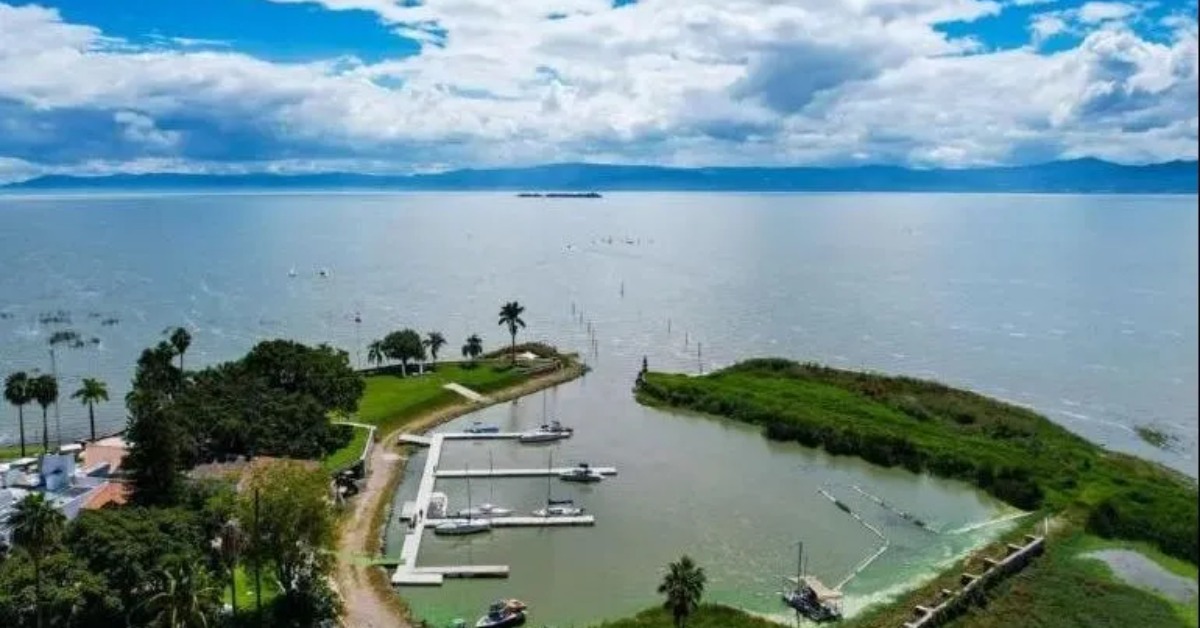
Lake Chapala is starting the 2026 hot season with a healthier buffer than it had at the same point in recent years. Early-April readings place the lake at 68.91% of capacity, suggesting the basin is entering the dry period with more room than during the recent drought cycle.
That does not mean conditions are carefree. Spring and early summer usually bring stronger pressure on lakes, rivers, and reservoirs across western Mexico. Rain is limited, temperatures rise, and evaporation begins to take a larger bite out of stored water. In that setting, the key question is not whether the lake will fall. It almost certainly will. The real issue is how much ground it can lose before the summer rains begin to recharge the system.
For now, the number stands out because it reflects a much stronger starting point. State water data for the start of April shows Lake Chapala well above the levels seen at the same stage in both 2025 and 2024. That gives local officials, residents, farmers, and businesses a measure of relief after repeated seasons in which water levels became a broader symbol of drought anxiety in Jalisco.
Why this lake matters far beyond Chapala
For international readers, the story is easier to understand when viewed beyond the shoreline. Lake Chapala is not only a scenic landmark and a defining feature of the Ajijic-Chapala area. It is also a strategic water source for one of Mexico’s largest urban regions. The lake supplies about 60% of the water used by the Guadalajara metropolitan area, which is why changes in its level often become a statewide issue.
That importance gives every seasonal change more weight. A solid level in April does not just matter to lakeside communities. It matters to the broader regional water picture, especially in a state where public attention to supply, infrastructure, and water quality has remained high.
The lake also carries symbolic weight because it has become a reference point in debates about drought, development, extraction, and environmental management. When the lake rises, it is seen as a sign of recovery. When it falls sharply, it becomes a warning sign. That is one reason early-April stability draws attention even before the most punishing heat arrives.
The recovery is real, but caution still matters
The current reading is best understood as a better starting line rather than a final outcome. Last year’s rainy season gave the lake an important lift, and that recovery is still visible in current storage figures. The early-April level remains far above the low point seen at the start of April 2024 and clearly ahead of the early-April mark from 2025.
Still, the dry season can erase gains quickly. If heat intensifies and meaningful rainfall stays away, the lake will continue to decline week by week. That is normal for this part of the calendar. What matters is whether the decline remains gradual or accelerates.
There is also a practical lesson for residents and part-time homeowners around the lake. A healthier lake level does not automatically solve local water stress, infrastructure failures, or distribution issues. Those can still affect neighborhoods even when the broader reservoir picture looks better. In other words, a strong lake reading is encouraging, but it is not the same thing as full water security everywhere.
What to watch in the months ahead
The next phase of the story will be shaped by two simple factors: how quickly the lake drops and when sustained rain returns. If the decline stays moderate through April and May, officials will be able to say the basin entered 2026 in relatively good shape. If the drop becomes steeper, public concern will return quickly.
For now, the headline is straightforward. Lake Chapala is holding up better than it did in the recent past, and that gives Jalisco a stronger position at the start of the most difficult months of the year. After years in which the lake often reflected the region’s water worries, that alone is significant.
But the reassuring part of this story should be read with discipline. The hottest months are still ahead, and the lake’s condition will keep changing until the next rainy cycle begins. What April shows is not the end of the story. It is the opening measure of the lake’s resilience in 2026.