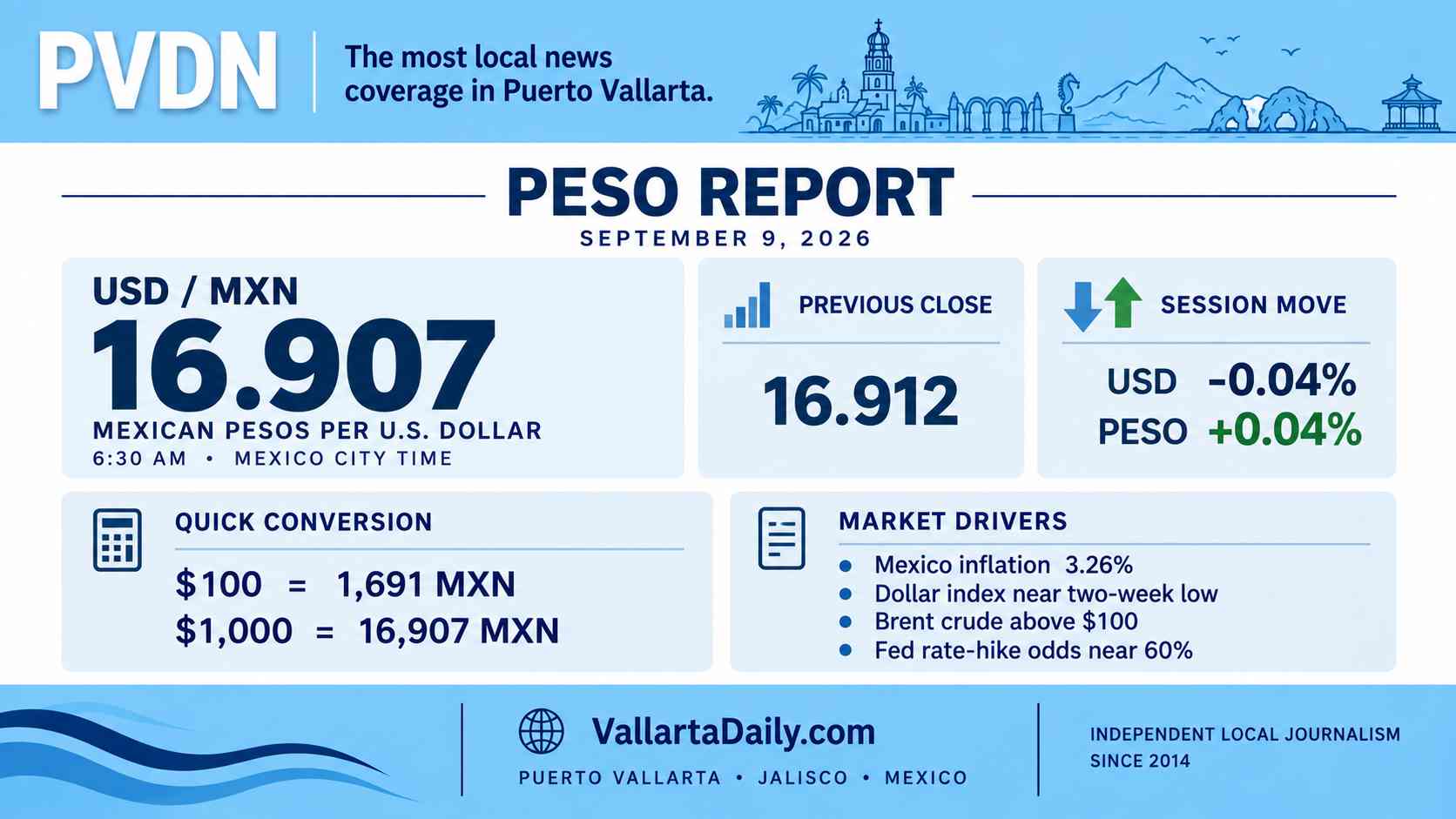
Puerto Vallarta, Jalisco, September 9, 2026 – The Mexican peso held near 16.91 per U.S. dollar early Wednesday as markets absorbed Mexico’s latest inflation reading, the proposed 2027 federal budget and another sharp increase in global oil prices.
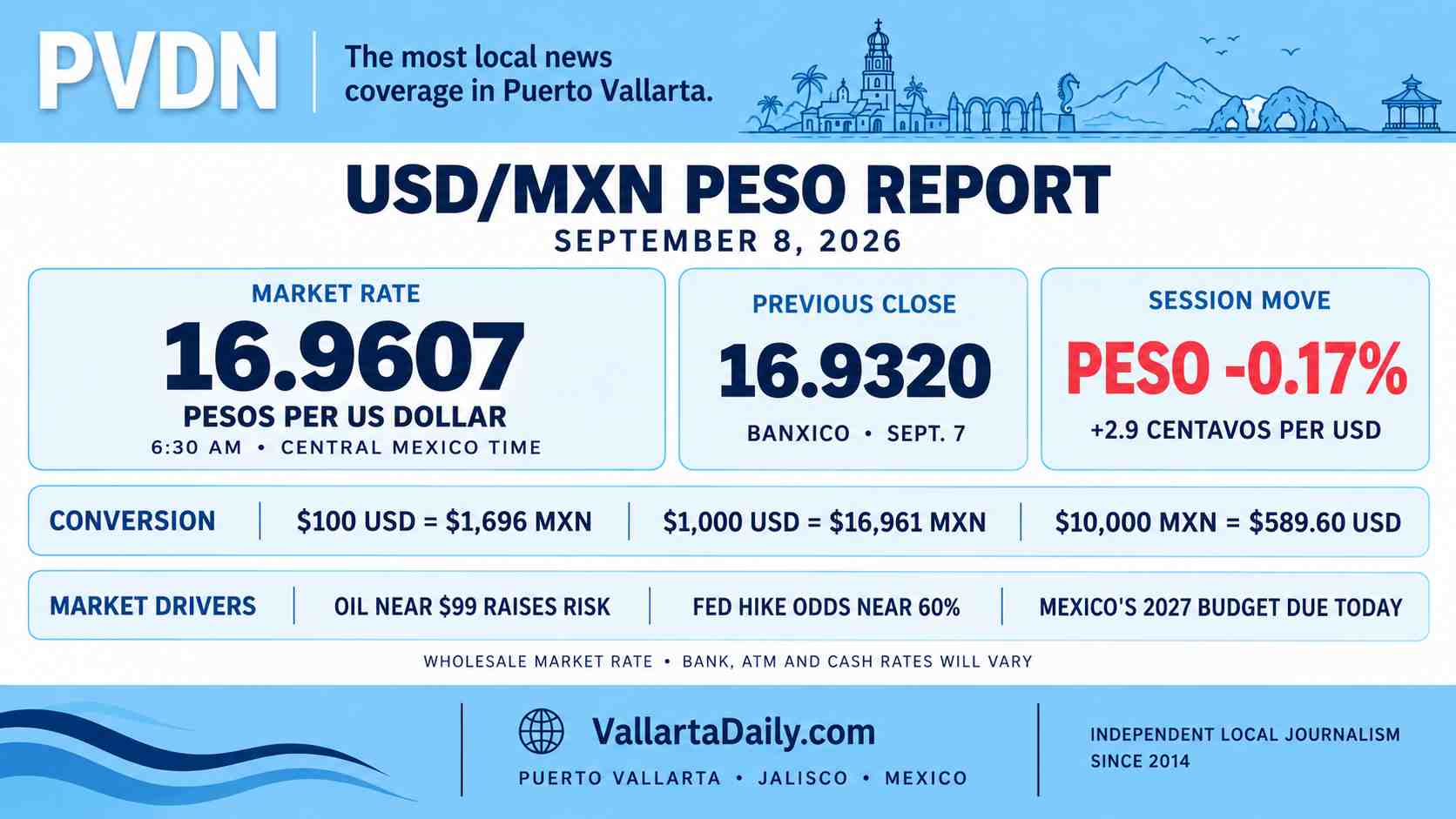
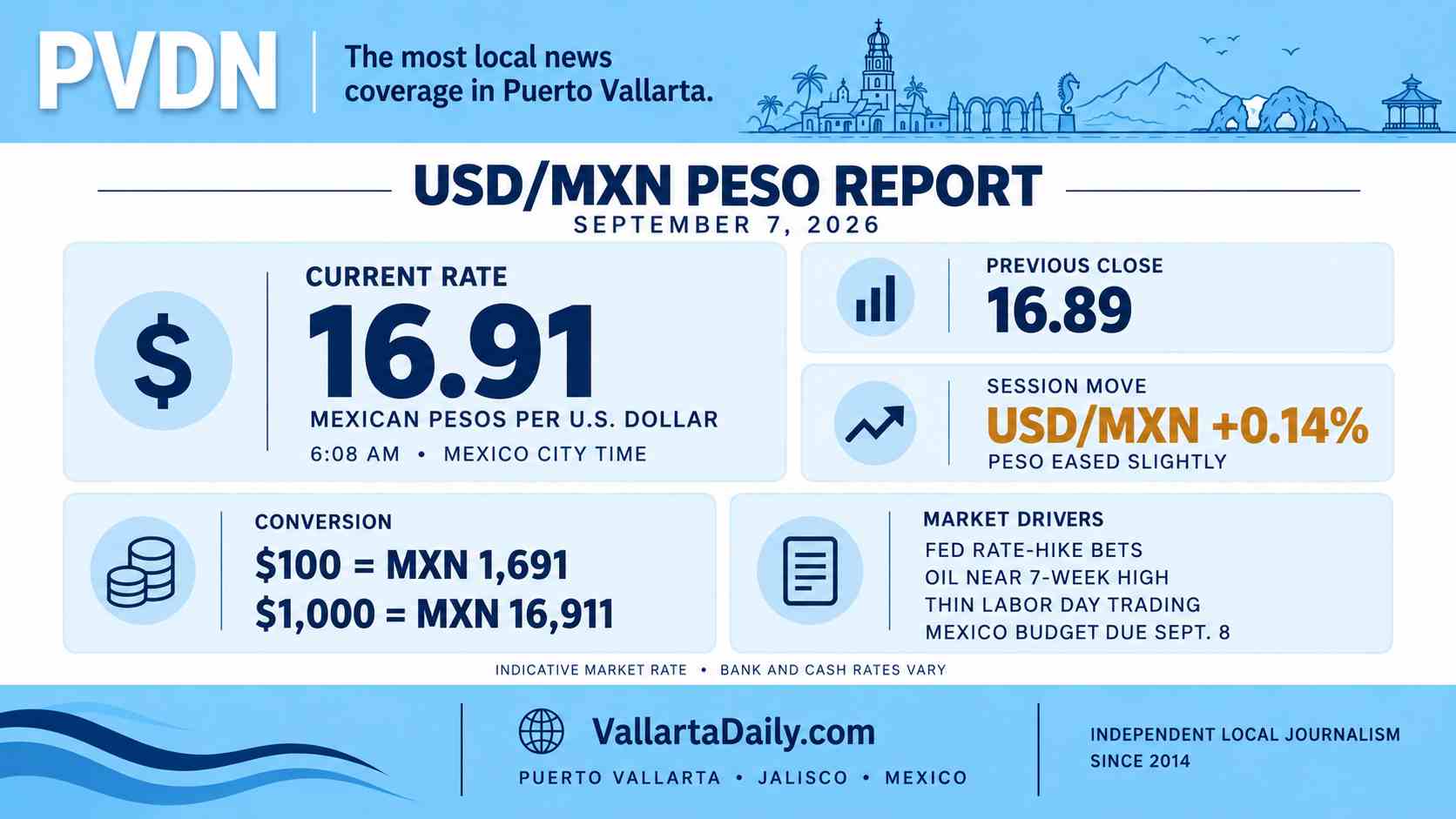
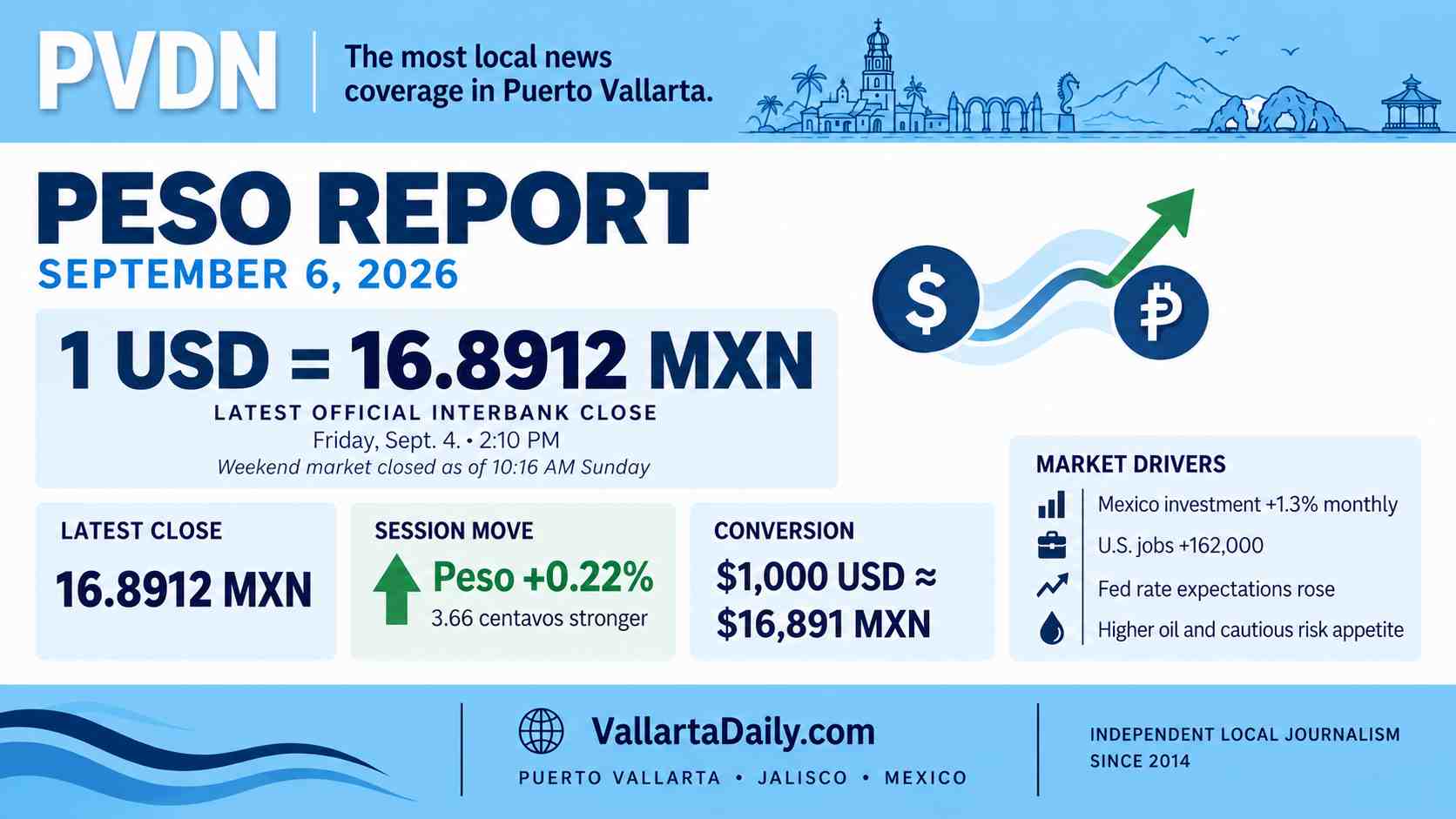
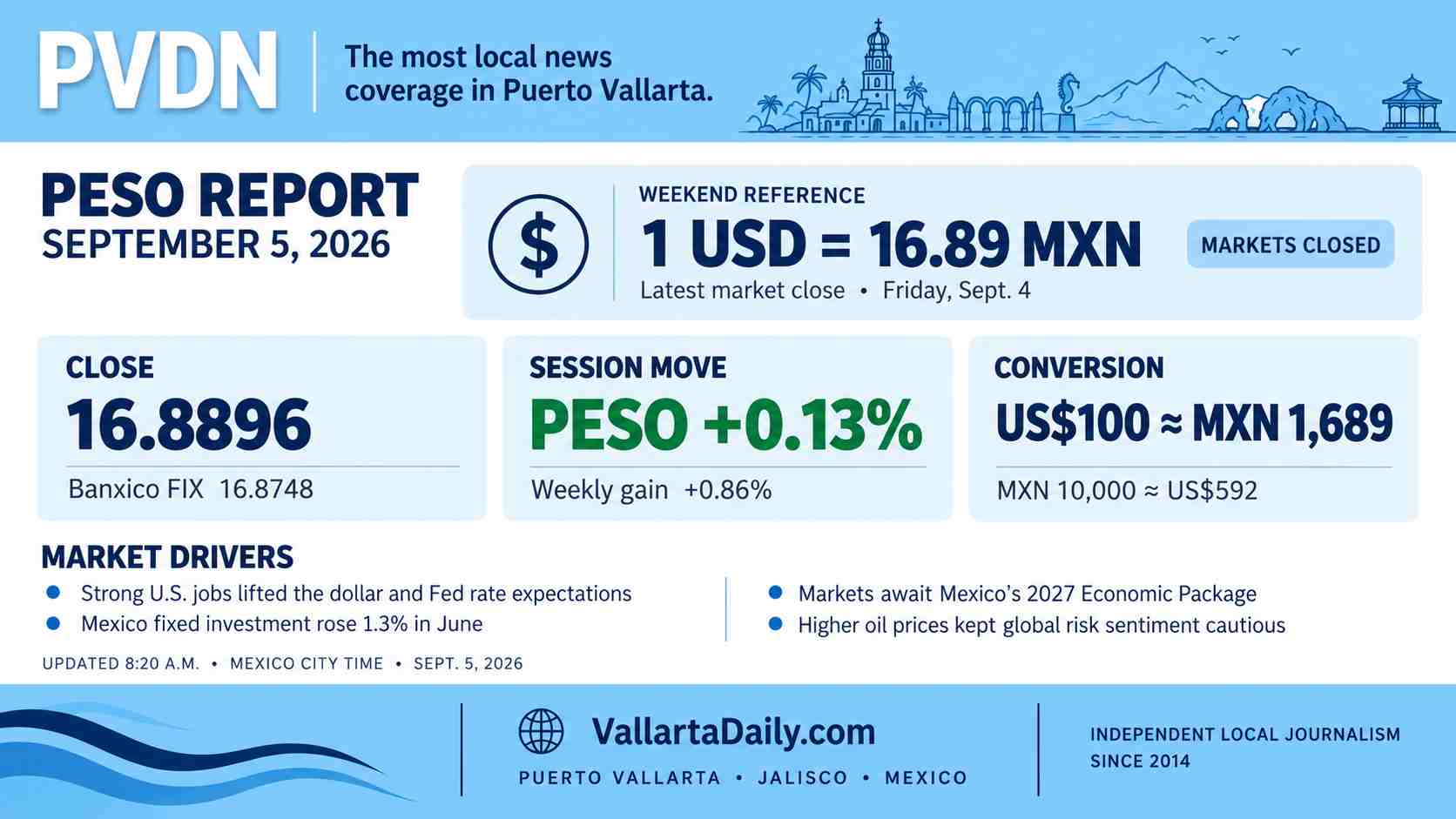
At approximately 6:30 a.m. Mexico City time, USD/MXN was quoted near 16.907 pesos per dollar in wholesale spot trading. The dollar was down about 0.04% from the previous session, indicating a small gain for the peso. The exchange rate remained close to its strongest level since May 2024, according to live market data.
The movement was limited. A softer U.S. dollar supported the peso, while oil above $100 per barrel and renewed expectations of a Federal Reserve rate increase added pressure across global markets.
Mexico inflation rises to 3.26% in August
Mexico’s annual inflation rate increased from 3.12% in July to 3.26% in August, according to the latest National Consumer Price Index report.
Consumer prices rose 0.20% during the month. Core inflation, which excludes products with the most volatile prices, eased from 3.95% annually in July to 3.88% in August.
The figures present a mixed picture for monetary policy. Headline inflation moved higher, but the core rate continued to ease. The annual headline rate also remained within Banco de México’s target interval of 2% to 4%.
Banco de México held its benchmark interest rate at 6.50% in August. The difference between Mexican and U.S. interest rates can support demand for pesos, although it does not protect the currency from changes in global risk or Federal Reserve expectations.
Federal budget projections enter the market
Mexico’s government submitted its proposed 2027 budget to Congress on Tuesday evening. The 2027 Economic Package projects economic growth of 1.5% to 2.5% next year.
The Finance Ministry expects the broader public-sector deficit to narrow to 3.9% of gross domestic product, compared with an estimated 4.1% in 2026. Public debt is projected to rise from 54% of GDP at the end of 2026 to 55% in 2027.
The government also reduced its 2026 growth estimate to a range of 1% to 2%, down from its previous forecast of 1.8% to 2.8%. These are government projections rather than completed results, and Congress will review the package before approving the final budget.
Fiscal targets, debt levels and federal support for Pemex can influence confidence in Mexican assets. No large peso reaction to the budget was evident during early Wednesday trading.
Oil and Federal Reserve expectations pull in opposite directions
The U.S. dollar index approached its lowest level in almost two weeks Wednesday, partly because of a rapid rise in the Japanese yen. That broader dollar weakness helped limit upward pressure on USD/MXN.
At the same time, markets placed the probability of a Federal Reserve rate increase next week at about 60%. Strong U.S. employment data revived expectations of another increase, while Friday’s U.S. inflation report could shift those estimates again.
Brent crude climbed nearly 3% and moved above $100 per barrel for the first time in six weeks as fighting involving the United States, Iran and Iran-backed forces raised concern about further supply disruptions. Global stock markets weakened as investors considered the inflation and economic risks associated with sustained high energy prices.
Higher oil prices can have competing effects on the peso. Mexico produces and exports crude, but expensive energy can also increase transport costs, add to inflation and reduce demand for risk-sensitive currencies. The peso’s limited movement Wednesday morning reflects those opposing pressures.
The rate dollar and peso users will actually receive
At the early wholesale rate of 16.907, $100 was worth approximately 1,691 pesos and $1,000 was worth about 16,907 pesos before fees. That is roughly 93 pesos less per $1,000 than at an exchange rate of 17.00.
For people receiving income in dollars, a stronger peso reduces the number of pesos received when exchanging the same amount. People earning pesos and paying dollar-denominated expenses need slightly fewer pesos to cover those costs.
The wholesale rate is different from the amount offered by banks, ATMs, exchange houses and card issuers. Those institutions add their own margins or transaction fees.
Banco de México listed 16.9237 pesos per dollar as the official rate for dollar-denominated obligations payable in Mexico on September 9. The central bank’s FIX rate for Wednesday had not yet been determined early in the morning; Banco de México normally publishes it after noon
Exchange rates can change throughout the day as markets react to the inflation report, federal budget details, oil prices and expectations surrounding next week’s Federal Reserve decision.