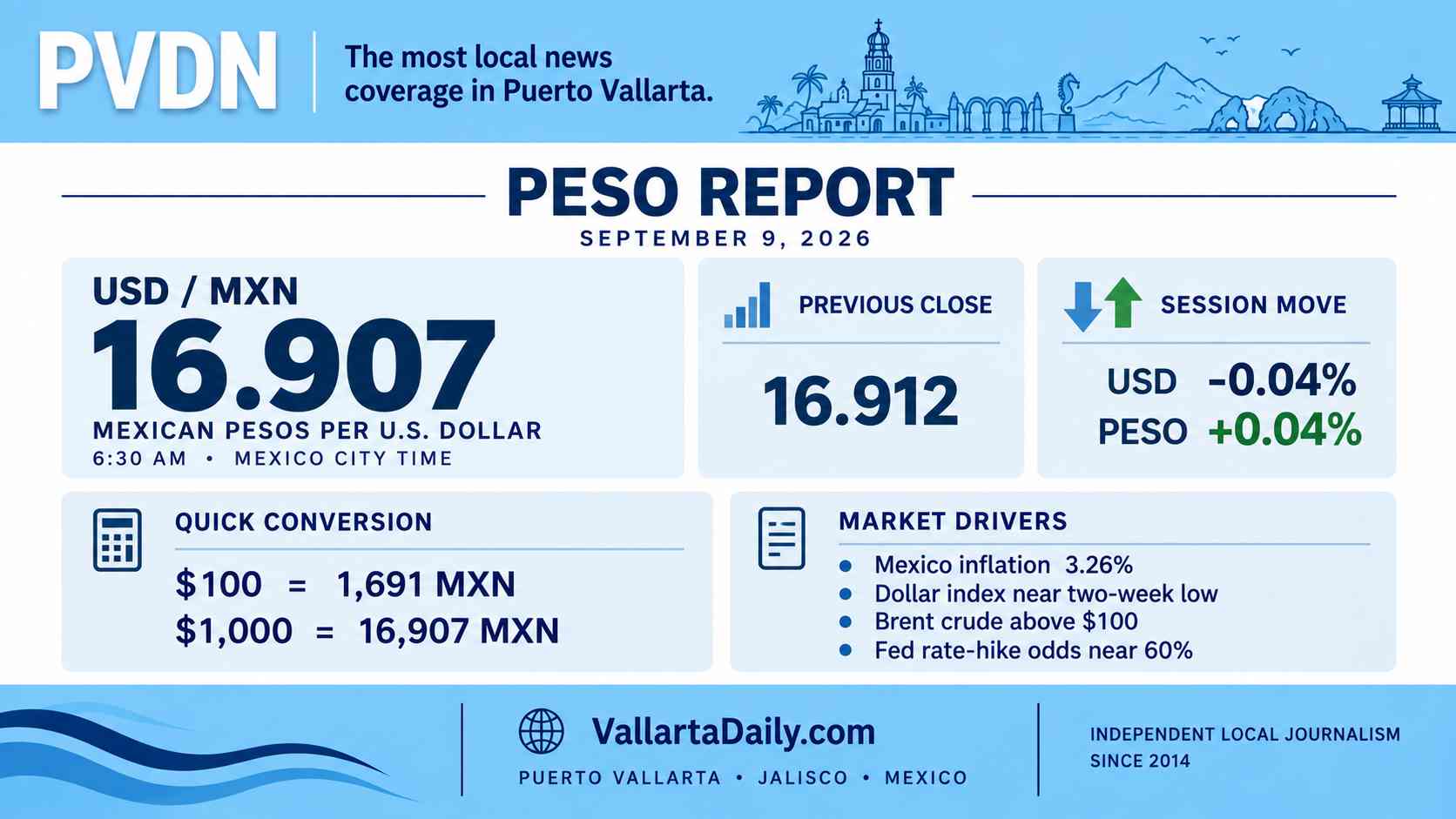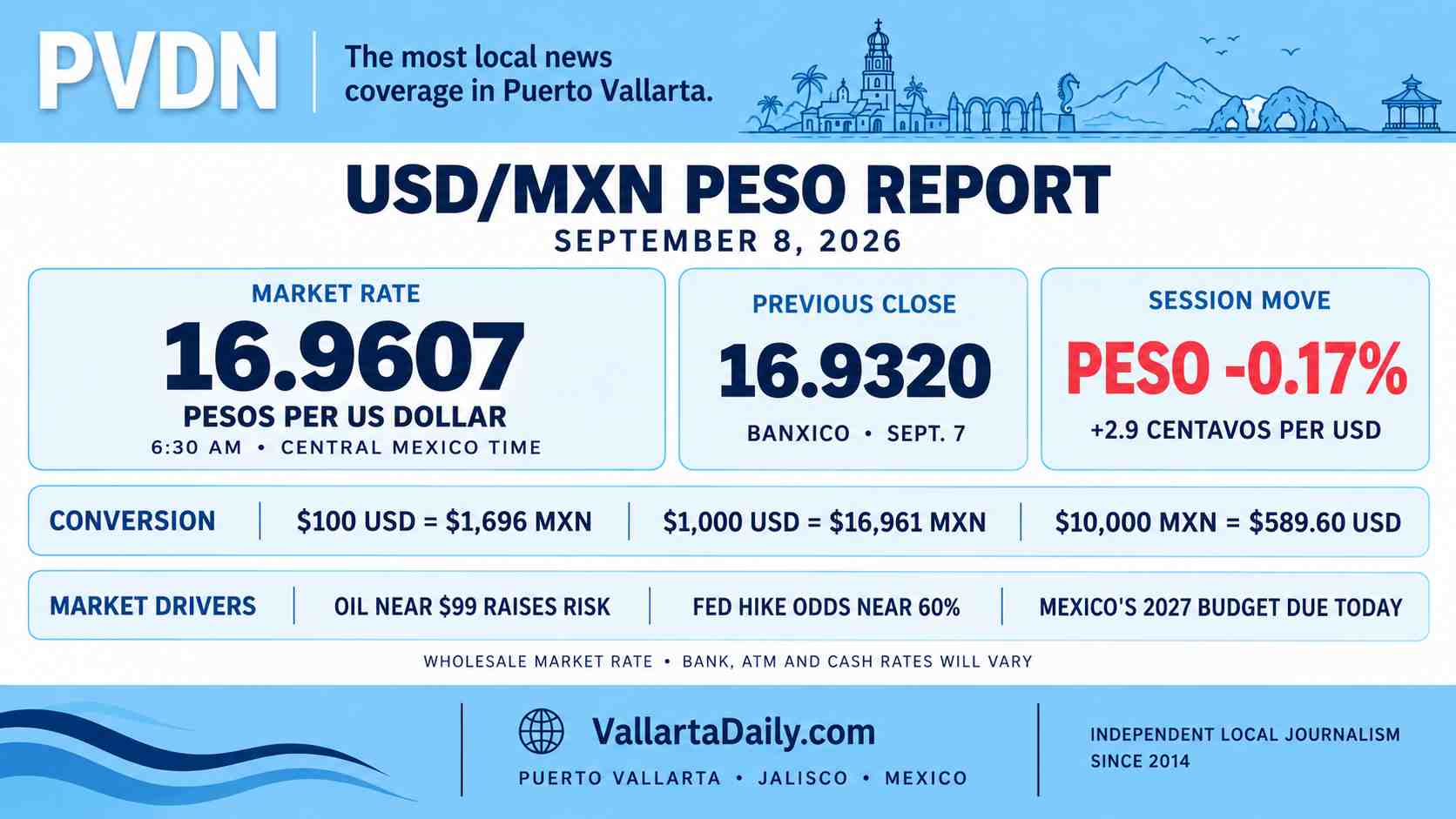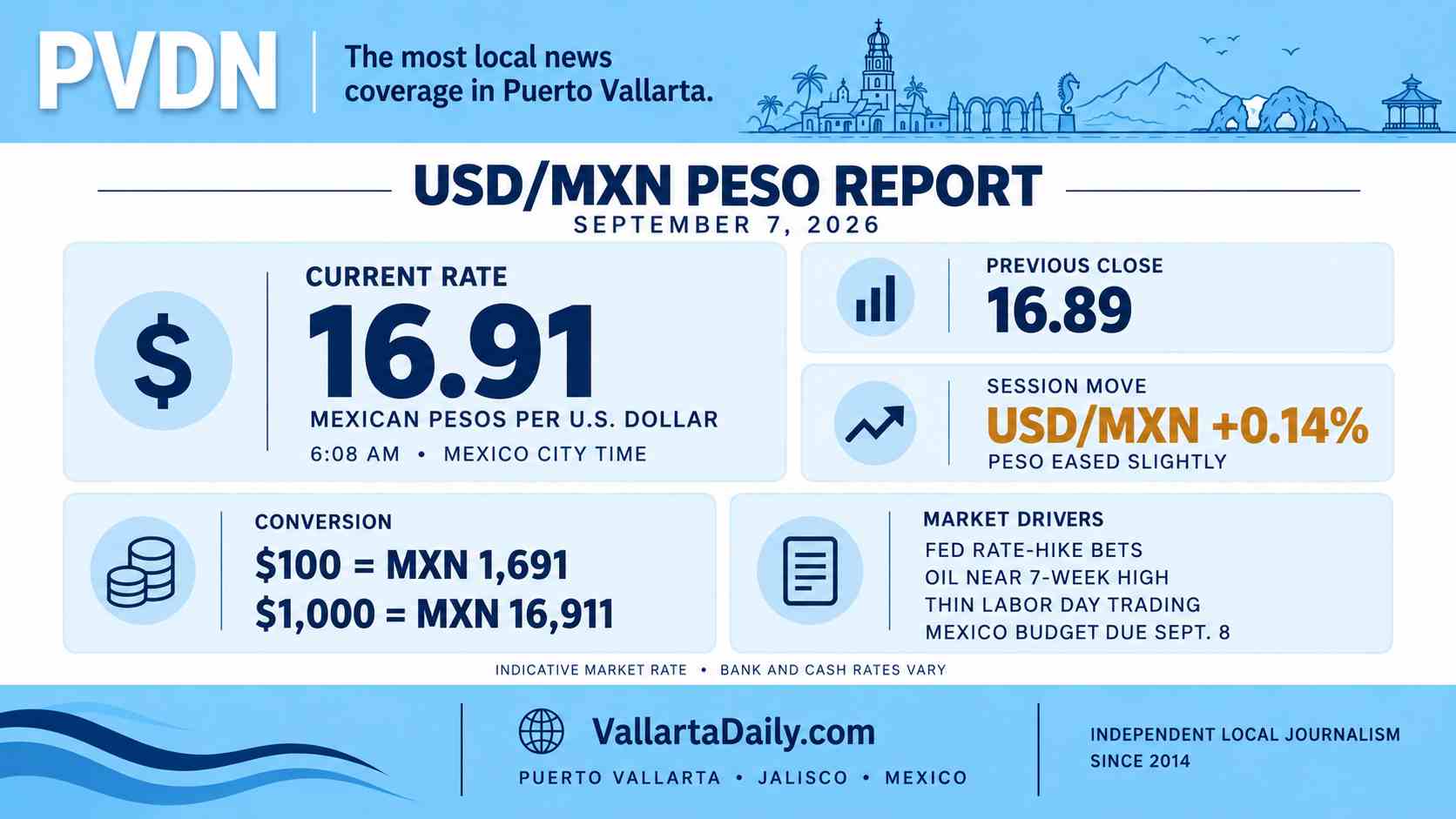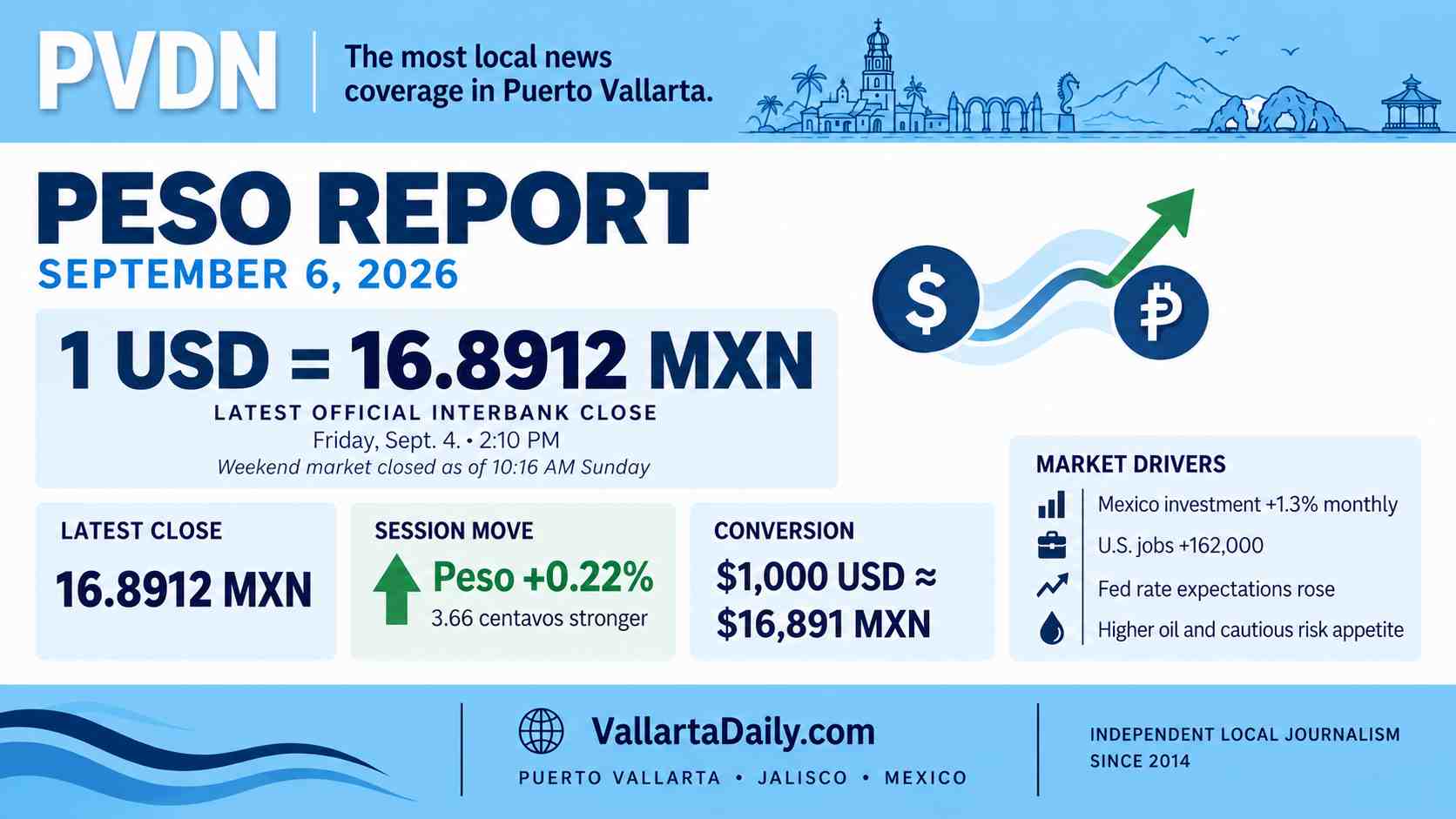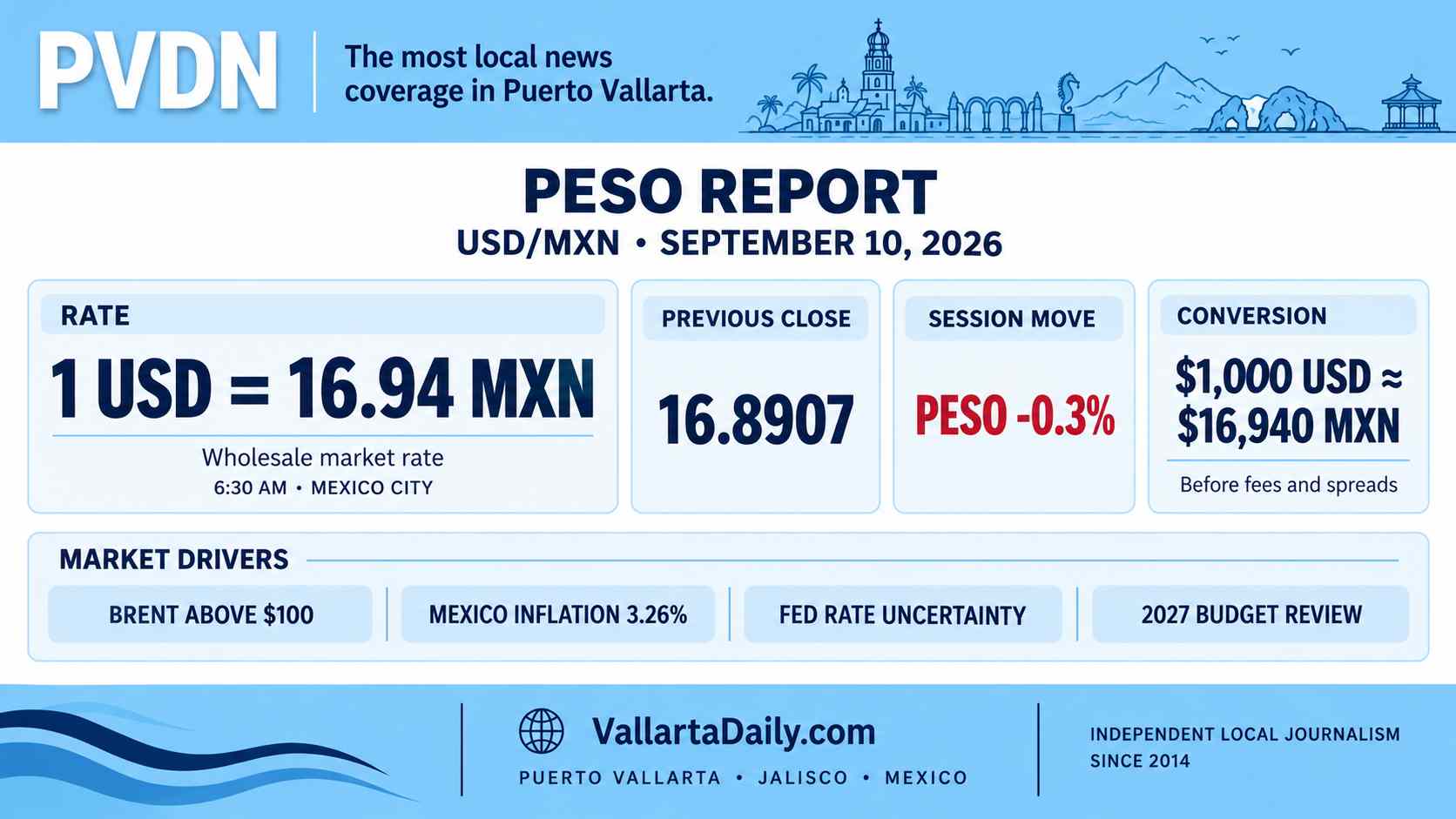
Puerto Vallarta, Jalisco, September 10, 2026 – The Mexican peso weakened modestly early Thursday, with USD/MXN trading near 16.94 at 6:30 a.m. Mexico City time. The figure is an indicative wholesale-market rate. Banks, card networks and currency-exchange businesses set their own customer rates.
The dollar was up about 0.3% from the previous market close of 16.8907 pesos. The session had ranged from 16.8859 to 16.9435, according to live USD/MXN market data. A rising USD/MXN quote means the peso is losing value against the dollar.
For a separate official reference, Banco de México calculated Wednesday’s FIX rate at 16.8947. The rate applicable Thursday to certain dollar-denominated obligations payable in Mexico is 16.9202 pesos per dollar. The central bank will calculate Thursday’s FIX later in the session.
Exchange rates can move quickly, especially around scheduled economic releases.
Oil and U.S. interest rates unsettle markets
The peso’s early decline came during a cautious global session shaped by higher energy prices and uncertainty over interest rates.
Brent crude was trading above $102 a barrel Thursday morning as attacks on Gulf shipping raised concerns about further supply disruptions. West Texas Intermediate was near $98. The oil surge has pushed inflation risk back into market calculations and contributed to higher government bond yields.
Higher oil prices do not have a simple effect on Mexico’s currency. Mexico earns revenue from crude production, but expensive energy can also raise transportation and manufacturing costs, prolong inflation and reduce demand for risk-sensitive currencies. Thursday’s peso movement cannot be attributed to oil alone.
The broader dollar was slightly firmer early Thursday but remained on course for a weekly decline. Futures-based market pricing showed traders assigning about a 60% probability to a Federal Reserve rate increase at its September 15-16 meeting. A separate survey of economists found that most still expected the Fed to leave rates unchanged, showing how divided expectations remain.
The U.S. Producer Price Index for August was scheduled for 6:30 a.m. Mexico City time Thursday, just as this exchange-rate reading was taken. The official August figures were not yet visible on the agency’s release page when this report was prepared. U.S. consumer inflation data are due at the same time Friday and could produce another round of currency movement.
Mexico’s inflation and budget enter the calculation
Mexico’s latest inflation report offered a relatively stable domestic backdrop. The National Consumer Price Index rose 0.20% in August, taking annual inflation to 3.26% from 3.12% in July. Inflation remains within Banco de México’s 2% to 4% variability interval, although the August reading ended four consecutive months of annual declines.
Banco de México held its benchmark interest rate at 6.50% in August. The difference between Mexican and U.S. interest rates remains one source of demand for peso-denominated assets, but that advantage would narrow slightly if the Federal Reserve raises its rate next week.
Markets are also reviewing the federal government’s proposed 2027 budget, delivered to Congress on September 8. The fiscal proposal projects economic growth between 1.5% and 2.5% next year and a broader public-sector deficit equal to 3.9% of gross domestic product, down from an estimated 4.1% in 2026.
Hacienda also lowered its 2026 growth estimate to a range of 1% to 2%. Public debt is projected to rise from 54% of GDP at the end of 2026 to 55% in 2027. Those are government forecasts contained in a proposal that Congress has not yet approved, rather than confirmed economic results.
How 16.94 changes a Vallarta household budget
At the wholesale rate of 16.94, converting $1,000 would produce about 16,940 pesos before fees and spreads. At Wednesday’s previous market close, the same amount was worth about 16,891 pesos, a difference of roughly 49 pesos.
For residents earning dollars and paying expenses in pesos, Thursday’s early movement provides slightly more purchasing power. People earning pesos while paying dollar-denominated bills would face a marginally higher cost. The change is small enough that the rate offered by a bank, ATM, or transfer service may have a greater effect than the market movement itself.
A movement of 10 centavos changes the peso value of $1,000 by 100 pesos. That provides a useful budgeting measure for homeowners covering property expenses, travelers estimating daily spending, and households transferring money between the two currencies.
Thursday’s quote should be treated as a timestamp rather than a full-day rate. The U.S. inflation releases, oil prices, and the market’s changing expectations for next week’s Federal Reserve decision could move USD/MXN in either direction before the Mexican trading session closes.