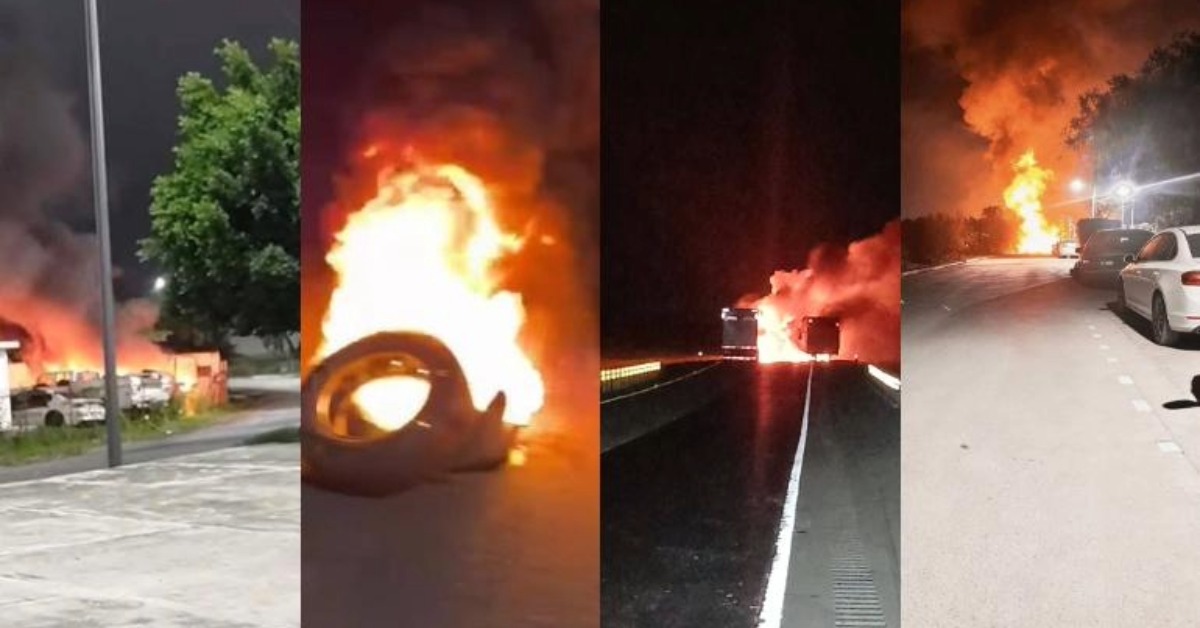
Reynosa woke up Monday to roadblocks, fires, and reported shootings after the arrest of a man identified as Alexander Benavides Flores, alias “El Metro 9.” He is described by authorities and security reporting as an alleged leader within Los Metros, a faction linked to the Gulf Cartel.
The arrest was reported on the morning of April 27. Within hours, several parts of Reynosa and nearby border routes saw disruptions. Authorities reported blockades, burned tires, damaged surveillance cameras, and other acts of vandalism. Reports also described fires involving vehicles and at least one workshop where state security vehicles were located.
The violence forced residents to change routes, stay indoors, or delay normal activities. Some schools in Reynosa and nearby municipalities suspended classes because of the security situation. The disruption also affected road movement in parts of the border region, including routes connected to Miguel Alemán and areas leading toward Nuevo León.
Authorities said federal and state forces responded to clear blocked roads, restore circulation, and protect residents. By the time later reports were issued, Tamaulipas officials said Reynosa was operating again, and no deaths or injuries had been confirmed from the incidents.
Who is El Metro 9
The detained man has been identified as Alexander Benavides Flores, also referred to in some reporting as Alexander “B” or Alexander “N.” He is accused of operating under the alias “El Metro 9” or “M9.” Authorities describe him as an alleged priority target in Reynosa.
Security accounts tie him to Los Metros, one of the Gulf Cartel factions with a long presence in Tamaulipas. The group has been linked to drug trafficking, human smuggling, weapons trafficking, and attacks against authorities. The accusations remain allegations unless proven in court.
The arrest reportedly took place during a search operation at a property in the Vicente Guerrero neighborhood of Reynosa. Authorities seized a long gun, cartridges, magazines, tactical equipment, vehicles, a cellphone, and documents. The detainee was placed at the disposal of federal prosecutors for further proceedings.
The case drew attention because the arrest appeared to trigger a rapid criminal response. That response included narco-blockades, a tactic used by criminal groups to slow security forces, create confusion, and pressure authorities after major arrests.
Why Reynosa matters
Reynosa is not just another city in northern Mexico. It sits across the border from the McAllen area in Texas and forms part of one of the country’s most important border corridors. The city is tied to trade, migration, cross-border family life, and daily movement between Mexico and the United States.
That location also makes Reynosa valuable to criminal groups. Control of border routes can mean control over smuggling paths, migrant movement, stolen fuel networks, and local extortion. This is why security operations in Reynosa often carry wider consequences.
For foreign residents in Mexico, the incident is a reminder that security conditions vary sharply by region. Violence in Reynosa does not mean the same conditions apply in Puerto Vallarta, Los Cabos, Mérida, or other expat-heavy areas. Still, major events in border states can affect travel planning, national security policy, and public confidence.
The U.S.-Mexico border is also a route used by some foreigners who drive between Mexico and the United States. When blockades happen in Tamaulipas, they can affect highway travel and border crossings. Anyone planning road travel through the region should check official alerts and local conditions before departure.
The role of narco-blockades
The violence after the arrest followed a familiar pattern in parts of Mexico. A major arrest happens, then armed groups or their supporters create roadblocks, burn vehicles, or attack public infrastructure. These actions are often meant to buy time, distract police, and show that a criminal group still has local reach.
In Reynosa, authorities reported attacks on videovigilance infrastructure. This matters because surveillance cameras are part of the state’s ability to monitor public roads and respond to emergencies. Attacking those systems can reduce visibility for security forces during fast-moving events.
The use of fire also serves a practical and psychological purpose. Burning tires and vehicles can quickly block roads. They also spread fear, even when most residents are not directly targeted. For people trying to get to work, school, medical appointments, or the border, the effect is immediate.
That is why officials often urge residents to follow official channels during these events. False reports can spread fast during security incidents. In a city already facing road closures and gunfire reports, misinformation can make the situation harder to manage.
Links to earlier violence
The arrest also comes after months of attention on organized crime in Reynosa. Los Metros has been mentioned in connection with other criminal investigations in the region, including the 2025 killing of five members of the regional Mexican band Grupo Fugitivo.
That case drew national attention after the musicians disappeared while traveling to a performance. Their deaths became another example of how organized crime can affect ordinary workers and families, not only rival criminals or security forces.
Authorities have also investigated fuel theft, weapons movement, and migrant-related crimes in Tamaulipas. Reynosa’s criminal landscape is shaped by several overlapping markets. That makes security operations complicated and often dangerous.
The arrest of an alleged faction leader can weaken a cell in the short term. But it can also create new instability if rivals move in or remaining members fight over control. That is one reason blockades sometimes follow arrests. They can be both a reaction and a warning.
What residents and travelers should know
For people living outside Tamaulipas, the main takeaway is context. This was a serious security event in a northern border city. It was not a national shutdown, and it did not signal violence across all of Mexico. But it did show how quickly local conditions can change in areas with cartel activity.
Foreign residents should avoid comparing security conditions by country alone. Mexico is large, and risks differ widely by state, highway, and city. A quiet beach town, a central colonial city, and a northern border crossing can have very different security realities on the same day.
For anyone who must travel through Tamaulipas, the safest approach is simple. Check official alerts, avoid night driving, monitor local road conditions, and do not rely only on social media posts. If a security incident is underway, sheltering in place is usually safer than trying to drive through roadblocks.
In Reynosa, authorities said they worked to restore traffic and maintain patrols after the incidents. Still, the arrest of El Metro 9 adds another layer to the ongoing security pressure in Tamaulipas, a state where criminal groups have long fought over border routes and local control.