Mexican criminal groups are recruiting Colombian ex-military personnel for skills that go beyond ordinary gunmen.
The reported recruitment focuses on people with experience in combat, explosives, intelligence work, and drone-related operations. That makes the issue more than a migration or policing concern. It points to the growing professionalization of cartel violence in Mexico.
Authorities have not released a complete national figure for how many Colombian ex-soldiers may be operating in the country. The picture instead comes from arrests, intelligence reports, diplomatic comments, and past cases in states with active cartel conflicts.
The trend has been most often linked to the Jalisco New Generation Cartel, known as CJNG. Some cases have also been linked to groups affiliated with the Sinaloa Cartel or regional criminal alliances fighting over territory.
For readers living in Mexico, the issue matters because it helps explain why violence in some regions has become more tactical. In several hotspots, criminal groups are no longer only fighting with rifles and vehicles. They are using drones, improvised explosives, surveillance, and trained assault teams.
The Los Reyes case brought the issue into public view
The clearest recent example came from Los Reyes, Michoacán, a municipality near the Jalisco border.
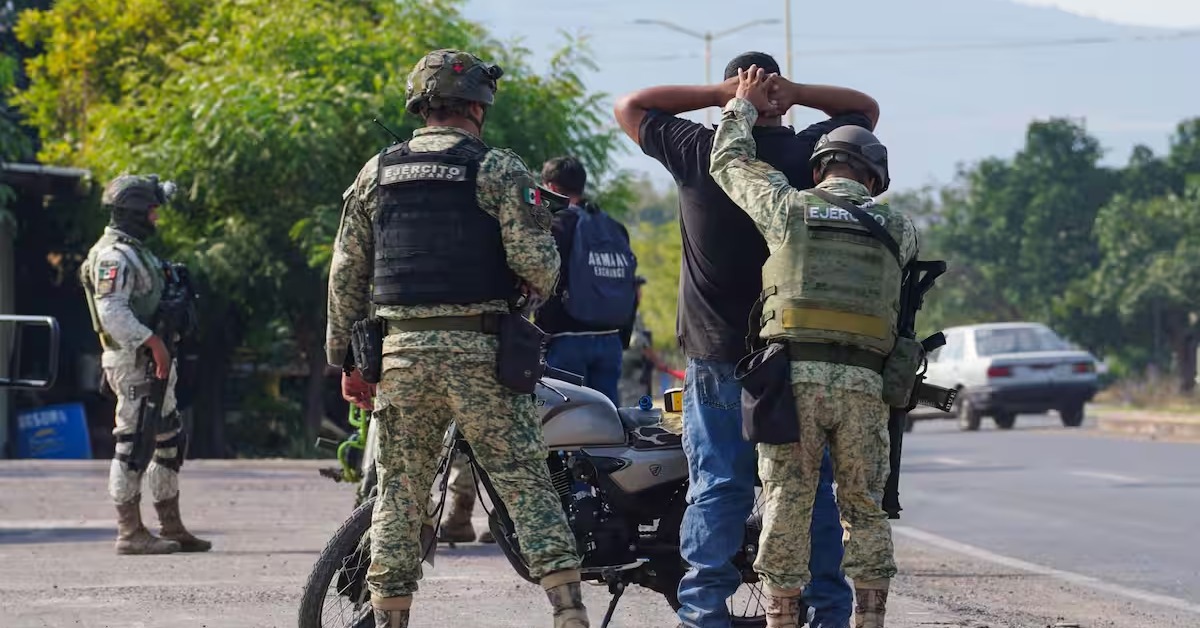
In 2025, Mexican officials said 17 people were detained after an explosive attack killed members of the Mexican Army. Twelve of those detained were Colombian citizens. Officials later said several had military backgrounds or military training.
Colombian authorities also confirmed that most of the detained Colombians had past links to Colombia’s armed forces. That finding strengthened concerns that the recruitment was not random.
The case showed how Mexican cartel disputes are drawing in foreign personnel with formal training. It also showed how the issue can quickly become diplomatic. Colombia has had ongoing concerns about how its citizens are treated at Mexican airports, while Mexico has security concerns about criminal recruitment networks.
The Los Reyes case was not the first sign of the problem. It was the case that made the pattern harder to dismiss.
Why Colombian ex-soldiers are attractive to cartels
Colombia’s armed forces have decades of experience from the country’s internal conflict. Many soldiers served in environments shaped by guerrilla warfare, intelligence operations, jungle combat, and counterinsurgency.
That background gives some former soldiers skills that criminal groups may want. Those skills can include weapons handling, patrol discipline, explosives knowledge, reconnaissance, and small-unit tactics.
For cartels, that type of training can shorten the learning curve. A recruit with years of military service may already know how to move in difficult terrain, follow orders, operate under stress, and train others.
This does not mean all Colombian ex-soldiers are involved in crime. The vast majority are not. It also does not mean every Colombian detained in Mexico is guilty of cartel activity.
But the repeated appearance of former military profiles in cartel-linked cases has raised concern in both countries.
Money, false job offers and criminal networks
Recruitment appears to involve a mix of direct offers, social media contact, messaging apps, and possible fronts tied to private security work.
Some former soldiers may accept because the pay offered by criminal groups is far higher than what they can earn at home. Others may be misled by offers that appear to be legitimate security jobs. Once in Mexico, they may face pressure, threats, or debt.
This is part of what makes the issue difficult to police. Some recruits may be willing participants. Others may be deceived and later trapped by criminal groups.
The recruitment also reflects a wider labor market for armed experience. Colombian veterans have appeared in conflicts and security jobs abroad. Mexican cartels appear to be tapping into that same pool of trained personnel.
The danger is that criminal groups are not only buying manpower. They are buying military know-how.
Drones and explosives show a shift in cartel tactics
The concern is not limited to who is being recruited. It is also about what they are being recruited to do.
In 2023, authorities in Michoacán detained eight Colombians in Buenavista. Officials said they were suspected of belonging to a cell that made explosives for drones. Authorities reported the seizure of improvised explosive devices, ammunition, and a firearm.
That case was important because it connected foreign recruits with technical skills. It also matched a broader trend in cartel violence, especially in parts of Michoacán, where drones and explosive devices have become part of criminal conflict.
Drones can be used for surveillance, intimidation, or attacks. Improvised explosives can turn rural roads, farms, and conflict zones into more dangerous spaces for both security forces and civilians.
For residents, travelers, and business owners, the practical impact is uneven. Most of Mexico is not experiencing this level of violence. But in affected zones, criminal groups are becoming more adaptive and harder to confront.
Guanajuato adds another warning sign
The concern has also reached Guanajuato, one of Mexico’s most violent states in recent years.
U.S. sanctions documents in 2025 said the Santa Rosa de Lima Cartel had recruited former Colombian military and paramilitary personnel to operate in Guanajuato during its fight with the CJNG.
That detail is important because it shows that the pattern is not limited to a single cartel or state. Different criminal groups may be learning from each other and adopting similar methods.
Guanajuato’s violence has been tied to disputes over fuel theft, drug trafficking, and local control. Adding foreign-trained personnel to that environment could make conflicts more lethal and more organized.
It also shows how cartel wars can evolve. When one group gains a tactical advantage, rivals often respond by seeking their own specialists, weapons, or outside help.
What this means for Mexico’s security strategy
The recruitment of Colombian ex-military personnel presents several challenges for Mexico.
First, it complicates law enforcement. Authorities are not only tracking local criminal cells. They are also dealing with cross-border recruitment, travel routes, forged job offers, and possible facilitators in more than one country.
Second, it raises the risk of more sophisticated attacks. Trained recruits can help criminal groups improve ambushes, the use of explosives, surveillance, and defensive tactics.
Third, it creates a diplomatic problem. Mexico and Colombia must separate ordinary travelers and residents from people suspected of criminal involvement. That requires intelligence sharing without creating broad suspicion toward Colombians in Mexico.
Fourth, it creates a prevention challenge in Colombia. If former soldiers are vulnerable to recruitment because of low pay, weak reintegration support, or limited civilian job options, the problem cannot be solved only at Mexican checkpoints.
The larger issue is that organized crime is behaving more like a transnational security actor. It recruits talent, studies battlefield tactics, and moves people across borders.
A threat that should not be overstated or ignored
The available cases do not prove that Colombian ex-soldiers are present in every cartel conflict in Mexico. There is still no clear public count of how many have been recruited.
But the pattern is serious enough to matter.
The arrests in Michoacán, the drone-explosives case in Buenavista, the Guanajuato sanctions reference, and diplomatic concern from Colombia all point in the same direction. Mexican criminal groups are looking for people with specialized skills.
That does not change the day-to-day reality for most foreign residents in Mexico. Many communities remain far removed from cartel conflict zones. Still, the trend helps explain why violence in some areas has become more organized, more technical, and more difficult to contain.
For Mexico, the concern is not only that cartels are recruiting foreigners. It is that they are recruiting experience from real conflicts and applying it to local criminal wars.