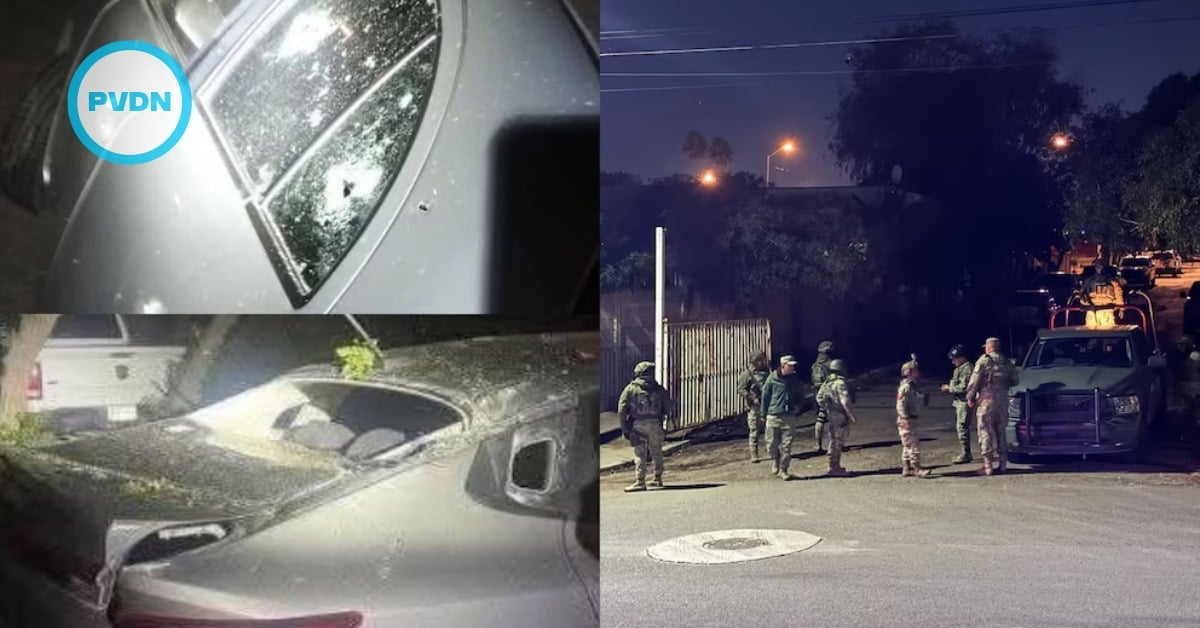
Three small drones carrying improvised explosives struck the Baja California Attorney General’s anti-kidnapping unit in Playas de Tijuana just after 7 p.m., shattering the evening calm, damaging vehicles, and triggering an immediate security perimeter. No one was hurt, but the attack marked a new escalation: authorities say it’s the first documented use of drones against the state prosecutor’s facilities in Baja California. The U.S. Consulate warned Americans to avoid the area, while Mexico’s federal prosecutor considers taking the case under a terrorism lens.
It started with a Tijuana drone attack—three small aircraft loitering above the Baja California Attorney General’s Office anti-kidnapping unit in Playas de Tijuana and dropping makeshift explosive charges fashioned from plastic bottles packed with metal fragments. Security cameras captured the strike. The blasts ripped through the unit’s courtyard, damaging multiple vehicles. By night’s end, officials confirmed the headline that mattered most: no injuries.
When another device appeared overhead, officers fired skyward, trying—and failing—to bring it down. Investigators haven’t publicly identified who flew the drones or from where they were launched. What they are saying is significant: state prosecutor María Elena Andrade called it the first recorded use of drones to hit her agency’s facilities in Baja California. That benchmark matters in a region where criminal groups constantly test tactics.
Tijuana drone attack
The timing added pressure. The strike landed around 7:00 p.m., according to authorities, as officers were in and out of hearings and routine work. Within minutes, patrols from all levels of government ringed the beachside district with checkpoints. No arrests have been announced. The state prosecutor’s office notified federal counterparts, and Mexico’s federal prosecutor—FGR—has been asked to take the lead on a terrorism investigation. That would shift the case into a national arena with broader tools and jurisdiction.
The U.S. Consulate in Tijuana posted a same-night alert urging Americans to steer clear and monitor local news. The wording was sober and straightforward—there were reports of an attack on the state prosecutor’s office in Playas de Tijuana—yet the message rippled across the border, a reminder of how quickly violence in Tijuana can draw binational attention.
Authorities stressed what this wasn’t: an attack on the public at large. The target was institutional. The devices were crude but effective enough to damage parked vehicles when they detonated in the courtyard. Some outlets reported three drones with bottle-based IEDs; others noted six vehicles sustained damage after the blasts. Those details vary at the margins—standard in the first 24 hours—but the core facts align.
The strike also fits an ugly pattern. In late September, arson attacks torched official vehicles at FGE sites in Tijuana and Ensenada; at least one incident hit the anti-kidnapping unit’s grounds. National media chronicled those pre-dawn fires and the widening investigation, with multiple detentions reported across that week. Wednesday night’s drone-delivered explosives feel like a grim sequel—same institutions, escalated method.
What’s driving the escalation
Context matters. Just a day earlier, law enforcement buried Humberto Antonio Martínez, a coordinator linked to the Vehicle Theft Unit in Rosarito Beach who was shot dead outside his Tijuana home. It’s not clear whether his murder is tied to the drone incident, and officials haven’t drawn a line between them. Still, the proximity adds heat to a security environment already under strain.
Drone attacks aren’t new in Mexico’s broader cartel war—some groups have experimented with small quadcopters dropping improvised munitions in rural zones—but striking an urban prosecutor’s complex on the U.S. border is a different signal. By pushing the fight into an institutional courtyard, the attackers aimed for shock value as much as physical damage. For investigators, that raises complex questions about launch sites, flight paths, and whether the devices were piloted locally or from a standoff distance. Early statements suggest the bombs were simple constructs, but the tactic forces security agencies to think in three dimensions.
For residents, the practical advice hasn’t changed. Authorities are telling people to keep away from the affected block and let the perimeter work. For travelers and cross-border commuters, the U.S. advisory is straightforward: avoid the area, stay plugged into local updates, and use emergency numbers if needed. For Tijuana’s institutions, the test is whether the investigation can move quickly enough to prevent a copycat attempt. As of this writing, officials say they are confident the attackers will be identified. That’s a promise Tijuana has heard before—now it sits against the hum of a drone.