Mexico’s nearshoring story is often reduced to geography, wages, and logistics. The 2026 USMCA review shows why that is incomplete. What matters now is not only where goods are made, but whether they meet the rules that keep North America’s market open. The talks beginning the week of March 16 and the formal July 1 review will test how much of Mexico’s boom rests on real regional integration and how much still depends on policy decisions made outside Mexico.
Nearshoring is the real test
Mexico has spent years selling a simple story. Global companies want production closer to the United States, and Mexico is the natural answer. That pitch still works, but the USMCA review shows why it is no longer enough. The real advantage is not geography alone. It is rules-based access to the North American market. That is why the first bilateral talks between Mexico and the United States matter so much. They are not just a prelude to a ministerial meeting. They are the first serious test of whether Mexico’s growth strategy can still rely on the same trade framework that made the country central to regional manufacturing. Since NAFTA, and now under USMCA, Mexico has tied jobs, investment, and export capacity to a market largely shaped outside its borders. For readers living in Mexico, that may sound remote. In practice, it affects where factories expand, which logistics corridors stay busy, and how confident employers feel about committing to the next project. The real story is not only whether the treaty survives. It is whether Mexico remains the safest platform for production in North America.
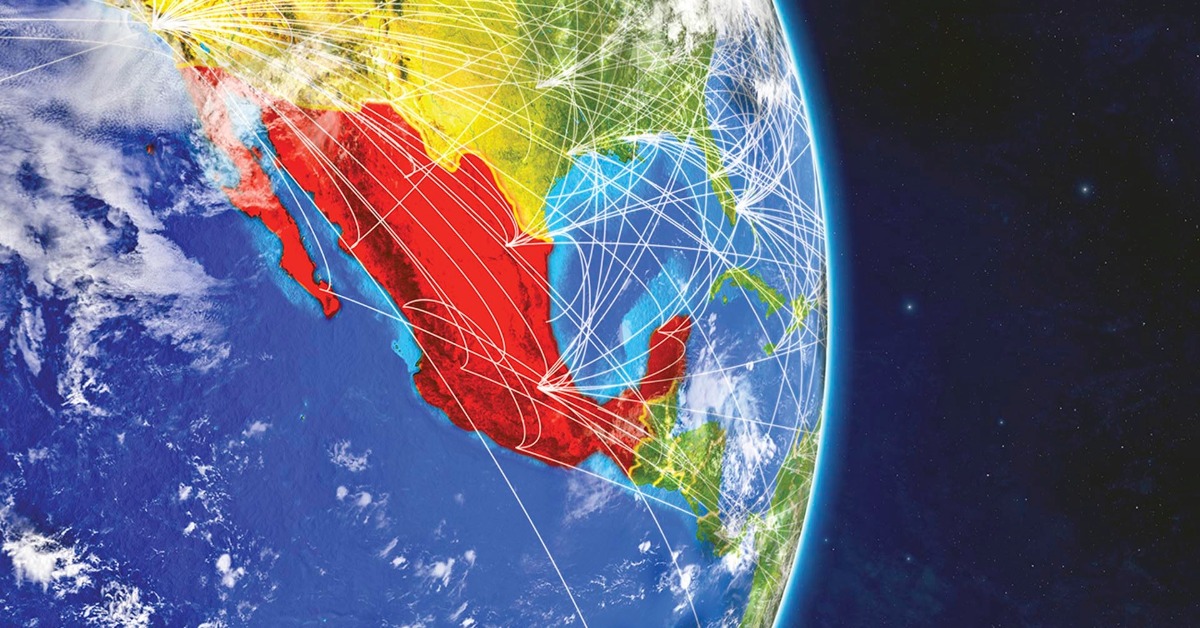
The scale of that dependence is easy to miss because it has become normal. Mexico is not just a country that sells to the United States. It is an economy built around North American integration. More than four-fifths of its non-oil exports go north. Entire manufacturing regions are organized around that fact. Plants in the border states, the Bajío, and the north-central industrial belt do not simply export finished goods. They operate inside cross-border production systems, where components, engineers, financing, and schedules move back and forth. That model can deliver growth, but it also creates exposure. Every tariff threat, enforcement dispute, or rules change in Washington can turn interdependence into vulnerability. That is what makes this review more important than a standard treaty checkup. Mexico is not approaching it from a position of distance. It is approaching it from the center of a supply chain that depends on predictable treatment from its largest customer. The closer Mexico gets to the U.S. market, the more it has to live with U.S. political swings. That is the bargain behind the nearshoring boom.
The dividing line is eligibility
This is why nearshoring needs a more precise definition. It does not just mean moving production to Mexican soil. It means producing in a way that can qualify for the trade benefits that make Mexico attractive in the first place. In 2025, Washington made that distinction clear. Goods from Mexico and Canada that claimed and qualified for USMCA preference were spared from one set of border-related tariffs, while goods outside that preference faced extra duties. That turned legal status into a commercial dividing line. It also pushed companies to pay closer attention to rules of origin, supplier maps, and customs paperwork. The implication extends beyond a single tariff episode. Mexico’s future advantage will not go to every factory that relocates south of the border. It will go to the factories that can prove they are part of a North American production chain. In other words, the question is shifting from “Is it made in Mexico?” to “Does it qualify as North American?” That is a stricter test, and it changes the meaning of the nearshoring story as a whole.
What Washington is signaling
The opening signal from Washington points in exactly that direction. U.S. and Mexican officials said the new talks will examine how to reduce dependence on imports from outside the region, strengthen rules of origin, and secure North American supply chains. Read plainly, that suggests a tougher standard for sectors that still rely heavily on inputs from Asia or other non-regional sources. It does not mean Mexico loses its role. It means Mexico may be asked to earn that role more deliberately. For firms that have already built dense supplier networks in Mexico, this could reinforce their position. For firms that treated Mexico mainly as a final assembly point, the pressure could rise. That is why the 2026 review matters even if the treaty itself remains in place. A trade agreement can survive and still become harder to use. The businesses that benefit most from the next phase of USMCA may be the ones with deeper regional content, cleaner documentation, and fewer weak links outside North America. The politics here are real, but the operational consequences are even more important.
Mexico’s own industrial strategy shows that its officials understand the problem. Plan México is built around nearshoring, higher national and regional content, faster investment approvals, and stronger local supply chains. In that sense, the U.S. review agenda and Mexico’s domestic agenda partly overlap. Both sides want more value created inside the region. The difficulty is timing and execution. It is one thing to promise deeper integration. It is another to build the supplier base, compliance capacity, and production depth needed to meet a stricter regional test. That gap matters because Mexico’s advantage has often rested on speed. Companies could move quickly, plug into existing export corridors, and reach the U.S. market fast. If the new phase of North American trade rewards content verification and supplier resilience more than simple relocation, the winners may be the states and sectors with mature ecosystems. The rest may find that being close to the United States is no longer enough. That would not end the nearshoring story. It would separate the strong version of it from the marketing version.
Why this matters beyond industrial parks
For many readers, USMCA can sound like a discussion for trade lawyers and factory managers. It is broader than that. When export rules change, the effects travel outward. They shape which cities attract investment, what kind of jobs are added, which suppliers and service firms grow around new plants, and how stable the business climate feels in Mexico’s industrial corridors. They also influence whether Mexico can continue to present itself as the most reliable way to serve the U.S. market without producing inside the United States. That is why this story sits underneath the louder political story. Campaigns come and go. A six-year treaty review reaches deeper. It asks whether Mexico’s economic model still works under harder North American conditions. The most important result may not be a headline about diplomacy. It may be a quieter answer to a more basic question. Can Mexico turn geography, market access, and industrial momentum into durable regional integration, or is too much of its recent boom still exposed to policy choices made elsewhere? That is the real test now.