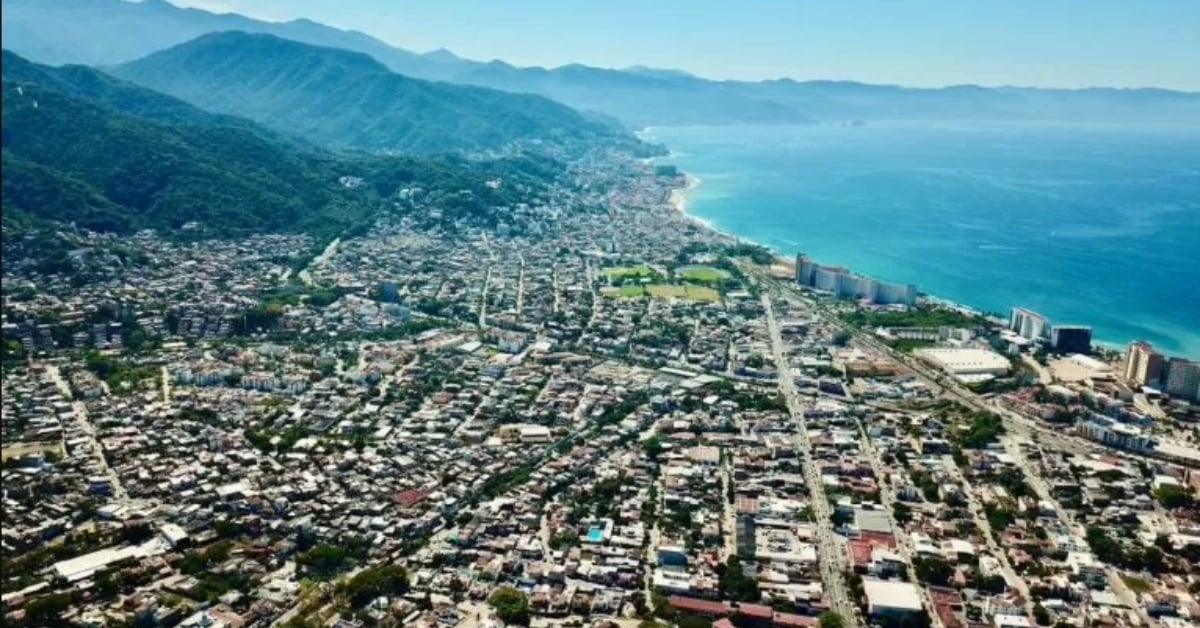
The economy of Puerto Vallarta and Bahía de Banderas has always depended on movement. Tourists arrive, seasonal residents come and go, and workers cross municipal and state lines every day. What is changing now is the type of movement and the length of time people stay.
A new local warning from the business sector argues that the region is being shaped by two forces at once. One is the continued arrival of U.S. residents, many of them made more mobile by remote work and flexible living arrangements. The other is the return of Mexican nationals from the United States, whether by choice, family needs, or pressure from stricter migration conditions. Together, those trends are changing the local economy in quieter but more lasting ways than a normal tourism season.
This matters because the Bay Area is no longer dealing only with visitor spending. It is also dealing with the economics of semi-permanent and permanent residence. A person who comes for a week spends like a tourist. A person who stays six months spends like a resident, rents like a resident, uses local services like a resident, and begins to influence prices, expectations, and business models.
The region is seeing two migration stories at once
The first story is the continued arrival of foreigners, especially U.S. residents, into parts of Mexico that offer lower costs, warmer weather, and strong service economies. In the Bay Area, that means more demand for furnished rentals, better internet service, healthcare access, and businesses that can serve long-stay clients. It also means a local economy that increasingly caters to people who earn in dollars but live in pesos.
That pattern is not entirely new, but the pandemic changed its pace and its structure. Remote work allowed many people to untie their jobs from their home cities. In places like Puerto Vallarta, the result has been a gradual shift from short seasonal stays to longer occupancy periods. Areas that once depended heavily on winter demand now see a more extended presence of foreign residents.
The second story is less visible but just as important. Some Mexican nationals are returning from the United States and trying to re-enter local labor markets. Some come back with savings. Others return with technical skills, bilingual ability, or work experience that can help local employers. But return does not automatically translate into economic stability. A worker returning from the U.S. may find that wages, housing costs, and job structures in western Mexico no longer fit easily together.
Housing is where the pressure becomes visible
The clearest effect of these changes is often housing. When a region attracts people with stronger purchasing power, demand rises first in rentals and then in sales. In a tourism-driven market, it can move quickly because the housing stock is already split between residents, vacation use, and investment.
For local families, the issue is not simply that more foreigners are present. The real issue is that part of the market begins to price itself for outsiders. That can push long-term residents into competing more tightly for apartments, smaller units, or neighborhoods farther from work and services. In Bahía de Banderas, where population growth has already been rapid, that pressure can be especially sharp.
This does not mean every foreign arrival is the same, or that migration alone explains every increase in rents. Local land use, short-term rentals, construction costs, speculation, and weak affordable housing supply all matter. But migration linked to remote work adds a new layer. It changes demand patterns, especially for well-located, furnished, and flexible housing that once served tourists or middle-income local renters.
Spending patterns are changing too
There are also gains, and they are real. Longer stays can stabilize demand for restaurants, healthcare providers, transportation, personal services, property maintenance, language services, and small businesses that serve mixed local and foreign markets. That kind of spending can help smooth out low seasons and reduce dependence on short bursts of tourism.
But the gains are uneven. Some businesses benefit quickly because they already serve higher-income customers. Others struggle because their own operating costs rise with rent, wages, and commercial space. A service economy can expand while many workers still feel squeezed. That is one reason migration-led growth often feels positive in the aggregate but stressful at the street level.
The remittance side of the story adds another layer. In many Mexican households, remittances remain a key support for daily spending, schooling, debt payments, and housing improvements. If remittance growth slows while living costs rise in destination regions, the pressure on local households can intensify. In that sense, incoming foreign spending and family money from abroad do not always move in the same direction or help the same people.
Return migration could reshape the labor market
The return of Mexican nationals may become more important over the next year if U.S. migration enforcement remains tighter. For the Vallarta-Bahía region, that could mean a larger pool of workers with cross-border experience. Some may fit into tourism, logistics, customer service, trades, construction, or digital support roles. Others may try to keep working for U.S. employers from Mexico.
That last point could matter more than it first appears. If workers return physically but remain linked to foreign companies through remote work, the local economy gains residents with outside income. That can support consumption, but it can also widen the gap between people tied to foreign wages and those paid by the local market. A region can become more prosperous on paper while feeling less affordable to many of the people who built it.
The challenge for local leaders is not to treat all migration as a simple benefit or a simple problem. The real question is whether the region can absorb these shifts without deepening inequality. That means thinking beyond tourism promotion. It means planning for workforce housing, transportation, public services, water, health access, and the quality of everyday life for permanent residents.
Why this matters now
This story matters now because the region is entering a phase in which migration is no longer merely a background condition. It is becoming a direct economic force. Puerto Vallarta and Bahía de Banderas are not just selling beach time. They are becoming a place where people relocate, work, age, invest, and return.
That creates opportunity, but it also forces harder questions. Who can still afford to live near work? Which neighborhoods stay residential? Whether local wages can keep pace with a changing cost structure. Whether the benefits of outside money reach the broader community. And whether public policy can move fast enough to respond.
For readers living in the region, the key point is simple. This is not only about foreigners arriving or Mexicans coming home. It is about how those movements are rewriting the local balance between housing, labor, spending, and social pressure. The next stage of the Bay Area economy will be shaped by how well it manages that balance.