Sargassum cleanup crews have already removed tens of thousands of tons from Quintana Roo’s coast in 2026. The work covers several of the state’s most visited beach areas, including Playa del Carmen, Tulum, Cozumel, and Mahahual. The Navy says the effort includes vessels, containment barriers, smaller boats, and beach crews, while satellite monitoring helps track new arrivals before they reach shore.
Navy reports large sargassum cleanup across Quintana Roo
The Mexican Navy says more than 39,500 tons of sargassum have been collected from sea and beach areas in Quintana Roo so far this year.
The cleanup has covered coastal areas in Isla Mujeres, Benito Juárez, Puerto Morelos, Cozumel, Playa del Carmen, Tulum, and Mahahual, as well as Othón P. Blanco.
The work is part of the Estrategia de Atención al Sargazo, carried out in collaboration with federal, state, and municipal authorities, as well as private-sector and local partners.
For residents and visitors along the Caribbean coast, the report points to a broad cleanup operation rather than a single beach response. Conditions can still change by beach and by day, especially during periods of heavy arrival.
Vessels, barriers and beach crews remain in use
The Navy says it has deployed 13 surface units for the operation. That includes one ocean sargassum vessel, 11 coastal sargassum vessels, and one amphibious sargassum unit.
The response also includes 18 smaller support boats and more than 7,605 meters of containment barrier. The barriers are supervised by underwater work personnel.
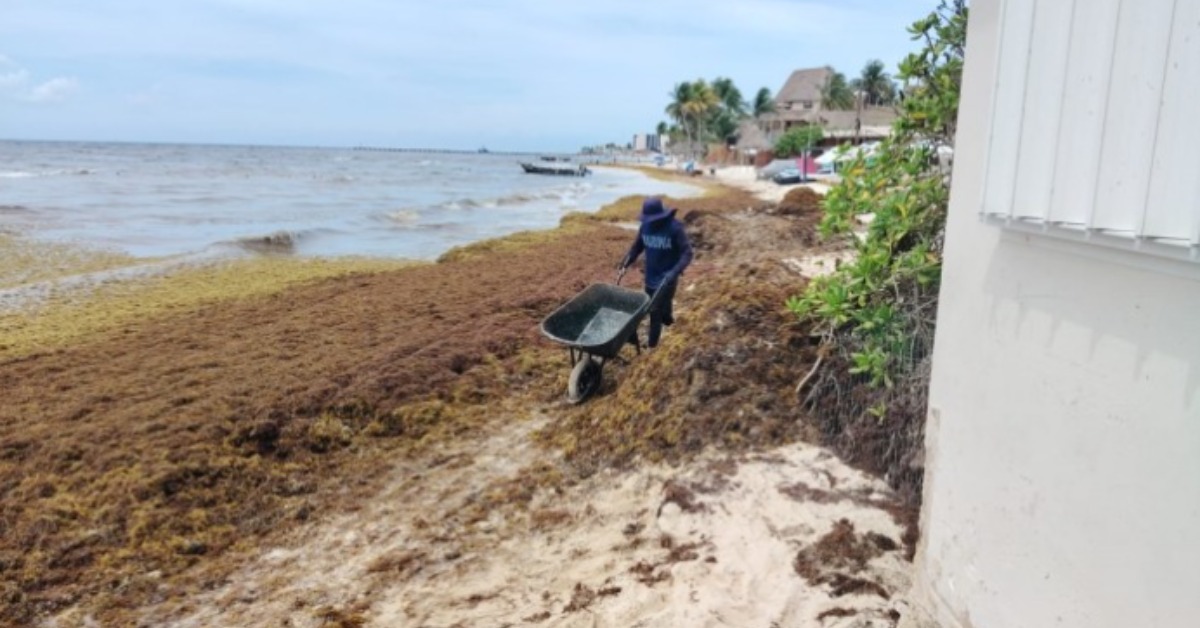
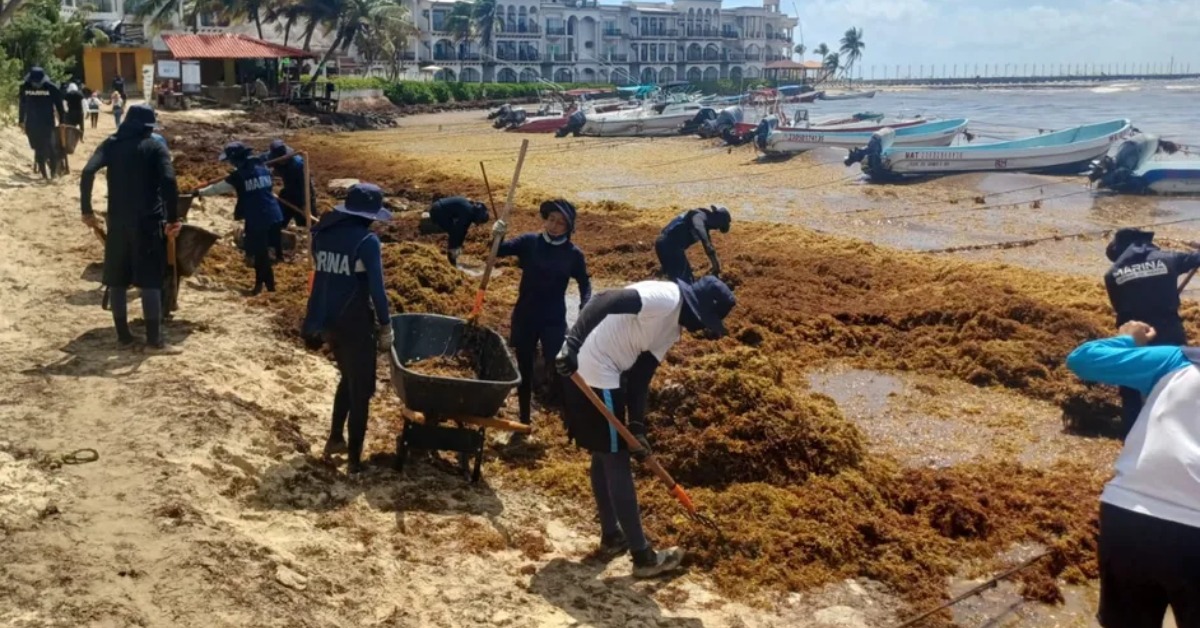
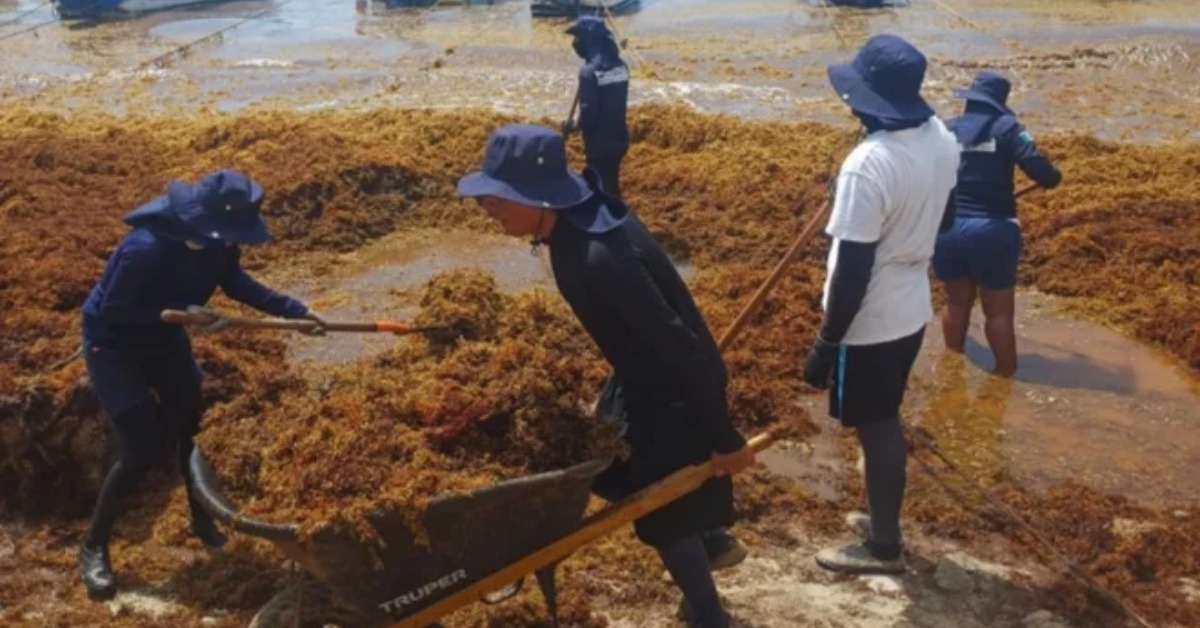
At the same time, naval, state, and municipal crews are removing sargassum from beaches using tools such as pitchforks and wheelbarrows.
The work is being carried out both offshore and on land. The goal is to limit the amount of sargassum that reaches beaches and remove what does arrive.
Satellite monitoring is part of the response
The Navy says the Institute of Oceanography of the Gulf and Caribbean Sea is being used to monitor the arrival of sargassum by satellite.
That monitoring is part of the early-warning system used to guide containment and cleanup work along the coast.
The report comes during a year when researchers have warned of heavier sargassum activity in the Atlantic. UNAM’s National Laboratory for Earth Observation has estimated that 40 million metric tons of sargassum biomass could be present in the Atlantic in 2026.
Researchers also note that sargassum is not present at all times or on every beach. That means beach conditions may vary across Quintana Roo, even within the same week.