Playa del Carmen is preparing to allocate more funding to its sargassum response as heavy arrivals continue to test beach crews, equipment, and tourism services. The proposed increase would come through the Environmental Sanitation Fund, a local mechanism tied to lodging and environmental work. The move also raises a larger question for residents, visitors, and businesses: how much will Caribbean beach destinations have to spend each year just to keep sargassum from disrupting daily life?
Playa del Carmen prepares more funding for sargassum response
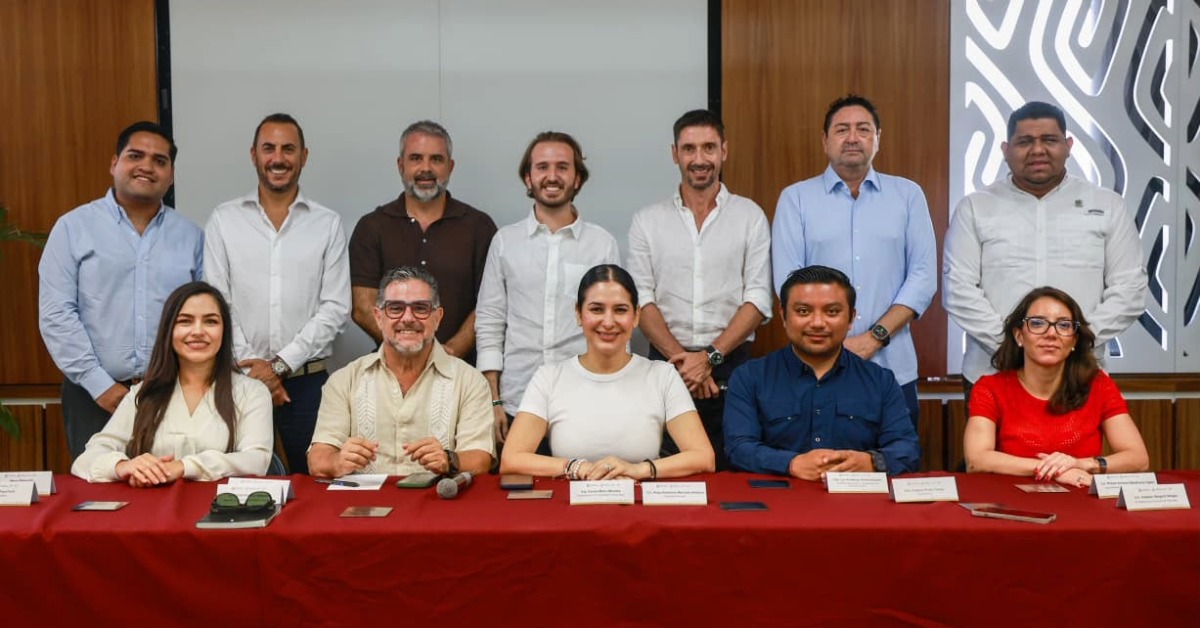
Playa del Carmen City Hall is preparing an increase to its Environmental Sanitation Fund to strengthen the municipality’s response to sargassum, the brown seaweed that returns each year to parts of the Mexican Caribbean.
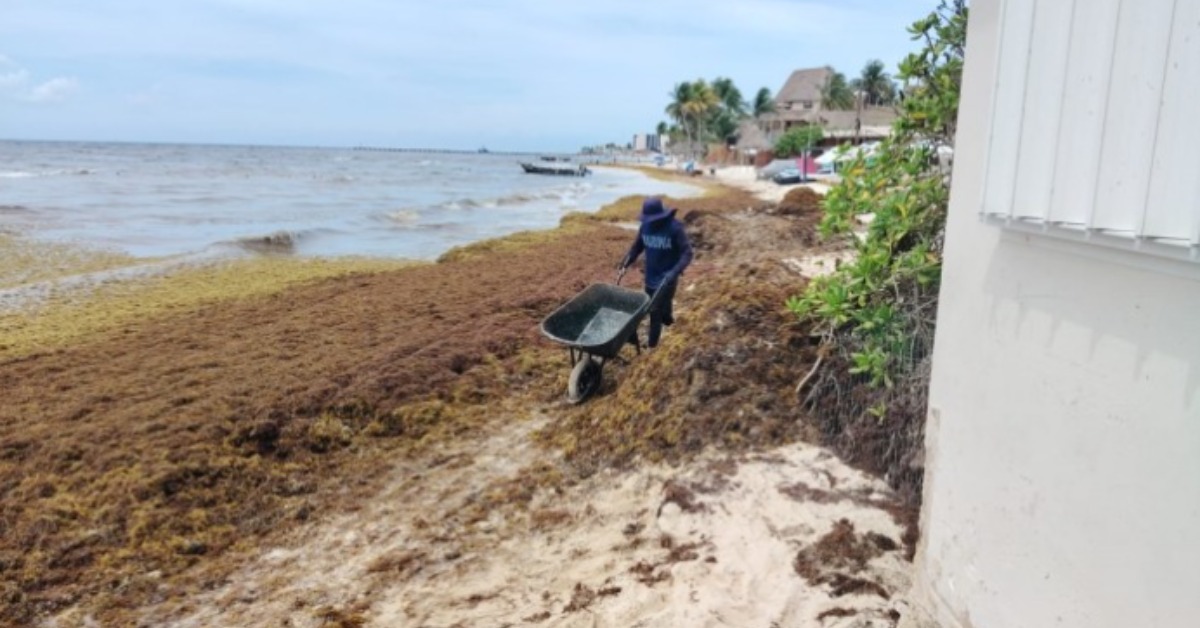
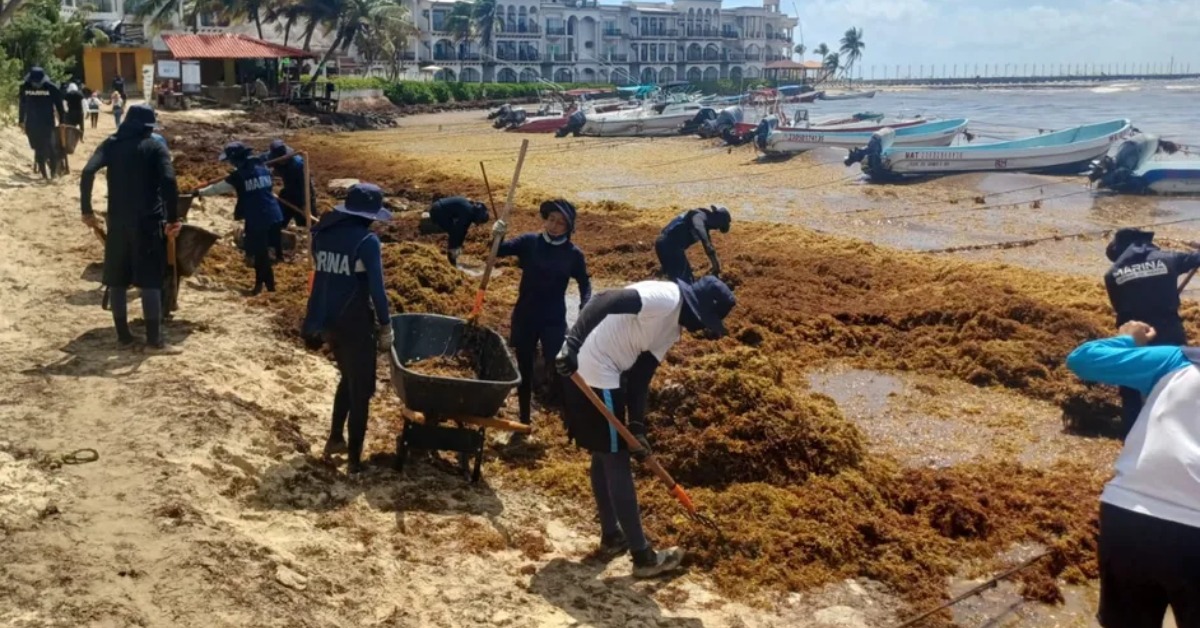
The proposal comes as local beach crews and federal support teams face heavier arrivals along the coast. Officials expect the fund to be reviewed in a new session so more resources can be assigned to containment, cleanup, equipment, and staffing.
The amount of the possible increase has not been publicly confirmed. For now, the main point is that the city is preparing to expand the financial base behind its beach response.
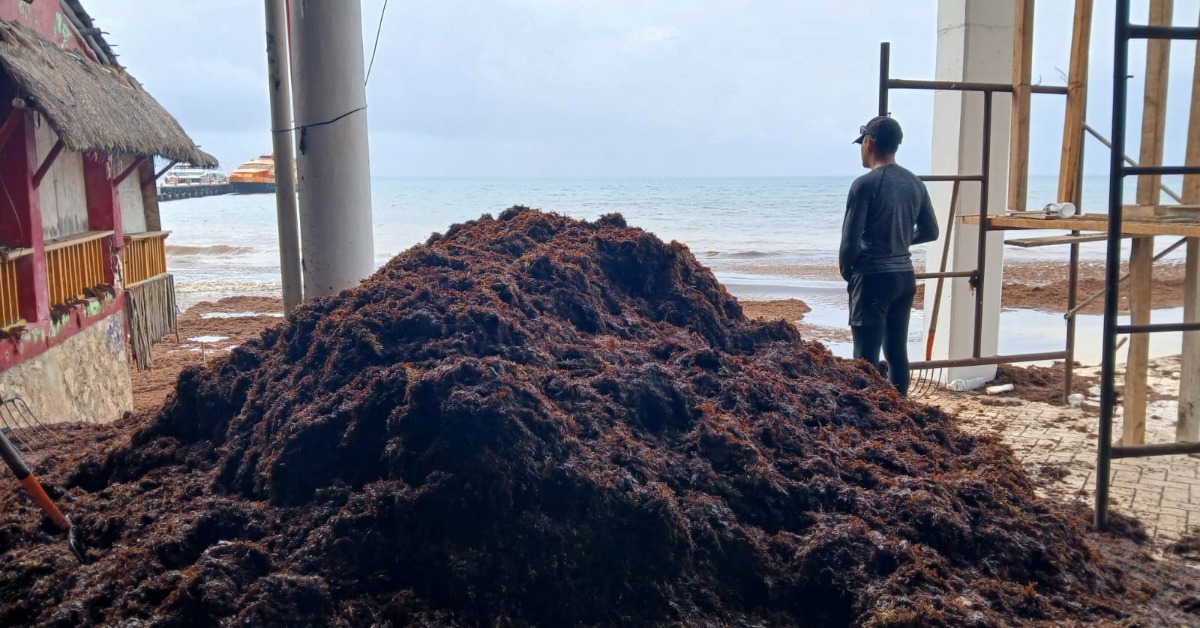
Sargassum is first seen as a beach problem for residents and tourists. For the municipality, it has become a recurring budget issue. Each heavy arrival requires workers, machinery, transport, disposal sites, monitoring, and coordination with hotels and federal agencies.
What the environmental fund pays for
The Environmental Sanitation Fund is tied to the Derecho de Saneamiento Ambiental, or Environmental Sanitation Fee. This fee is charged to users or guests of hotels, hostels, motels, inns, and similar lodging in the municipality.
According to the municipal framework, the money is intended for environmental sanitation work. That can include beach conservation and maintenance, solid waste treatment, environmentally friendly public lighting, and the removal of illegal open-air dumps.
Sargassum cleanup now falls within the broader context of beach maintenance. The seaweed can arrive suddenly, pile up quickly, and require a response before it begins to decompose. Once that happens, the problem moves beyond appearance.
Rotting sargassum can produce strong odors and gases. It can also affect nearshore water, marine life, and the visitor experience. For a destination built around beaches, delays in cleanup can quickly become an economic concern.
Why Playa del Carmen is under pressure now
The city began preparing for a stronger 2026 season earlier in the year. Municipal officials announced a broader strategy that included five kilometers of offshore barriers, daily satellite monitoring, and a beach-by-beach sargassum alert system.
The plan also included coordination with the Mexican Navy, the state government, UNAM, Conabio, and the hotel sector. The goal was to reduce the amount of seaweed reaching shore and give residents and visitors clearer information on beach conditions.
Even with those measures, recent arrivals have placed pressure on the system. Areas such as Playacar and Petrel have seen heavy buildup, and officials have acknowledged the need for more personnel and equipment.
That is the core reason the fund is being revisited. The current response is not just about cleaning up the sand after sargassum washes ashore. It is about having enough workers, machines, and operating money ready when conditions change.
Sargassum has become a yearly cost of doing business
Sargassum is not new to Quintana Roo, but the scale has changed over the past decade. What was once treated as a seasonal nuisance is now part of annual coastal management.
The problem is difficult because sargassum does not arrive evenly. One beach may be clear while another has large piles. A shoreline can change in a few hours depending on wind, currents, and the size of floating mats offshore.
That makes planning expensive. Municipalities need a response system that can scale up quickly, even if exact beach impacts cannot be predicted far in advance.
For Playa del Carmen, this means the cost of protecting beaches is becoming a regular part of public finance. It also means hotels, vacation rentals, visitors, and local businesses are all indirectly tied to the same issue.
What visitors and residents should understand
An increase to the fund does not automatically mean every visitor will see a separate new charge. The details will depend on how the municipality structures the fund and any future adjustments to collection rules.
Still, visitors should understand that environmental fees in tourist destinations are increasingly linked to the visible services they provide. In Playa del Carmen, those services include beach cleaning, waste management, and other environmental work.
For residents, the issue is broader. Sargassum affects public beaches, local businesses, beach access, coastal health, and the city’s image. It also affects workers whose income depends on tourism activity.
The challenge is that cleanup alone does not solve the problem. Removing sargassum from the sand is necessary, but it is usually the last step. Stronger monitoring, offshore containment, and better disposal systems are all part of the long-term response.
The bigger Caribbean picture
Regional monitoring shows 2026 is shaping up as another major sargassum year. Satellite-based tracking has shown large amounts across the Atlantic and Caribbean, with more expected during the warmer months.
Researchers have warned that beaching events around the Caribbean are likely to continue and may increase. That does not mean every beach will be affected every day. It does mean coastal towns need to prepare for more frequent disruptions.
In open water, sargassum can serve as habitat for marine life. The problem begins when large amounts reach the coast, block sunlight, sink near reefs, or decompose onshore.
This is why Playa del Carmen’s funding decision matters. It is not only a local accounting move. It is part of a larger shift in how Caribbean destinations are learning to live with a recurring environmental pressure.
What happens next
The next step is for the fund to be reviewed through the proper municipal process. Officials are expected to evaluate the needs presented by the environmental department, especially for staffing and equipment.
Until the city confirms the exact increase, the most accurate way to describe the proposal is as a pending expansion of resources for sargassum response.
The larger question is how Playa del Carmen can build a system that is fast, transparent, and financially sustainable. Sargassum is likely to remain part of life on the Mexican Caribbean coast. The city’s response now depends on how quickly it can match funding to the scale of the problem.