Quintana Roo is entering another difficult sargassum season, with authorities estimating arrivals could reach 100,000 tons in 2026. The number is not just about beach cleanup. In Playa del Carmen, decomposing algae, shrinking shorelines, and daily removal costs are putting pressure on tourism businesses, fishermen, and local governments. The bigger question is whether the Caribbean coast is now dealing with an occasional bad year or a recurring environmental problem that requires a different kind of response.
Quintana Roo could face another heavy sargassum year
Quintana Roo could receive around 100,000 tons of sargassum in 2026, according to current estimates from authorities monitoring the Caribbean coast.
That would put this year above the roughly 90,000 to 93,000 tons collected in 2025 by federal, state, and municipal crews. The figure is still an estimate, not a final count. But it points to another season of heavy pressure on beaches from Cancún to Tulum, with Playa del Carmen among the most affected areas.
The arrival of sargassum started earlier than usual this year. That timing has added pressure to cleanup crews, hotels, restaurants, tour operators, and fishing cooperatives that depend on beach access and clean coastal water.
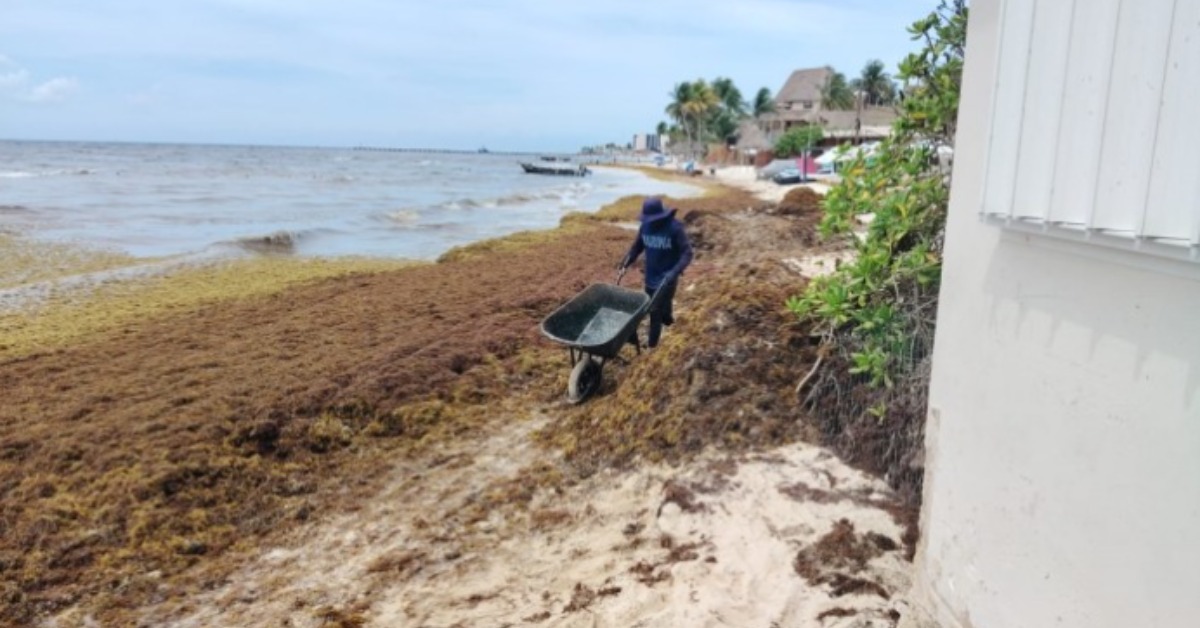
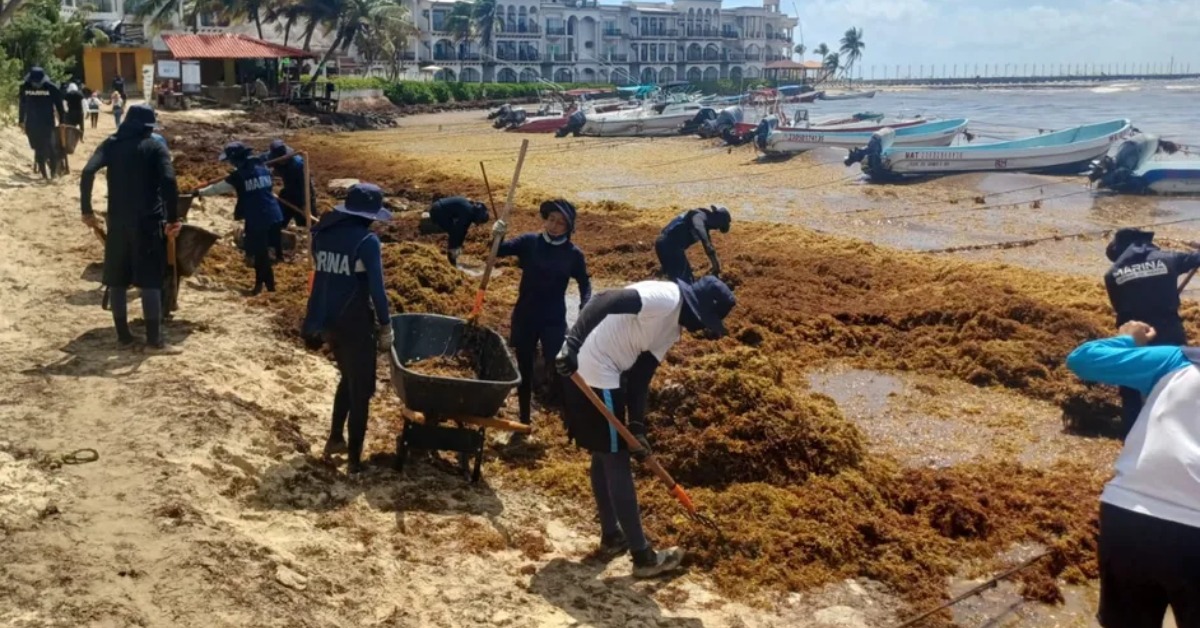
Federal, state, and municipal teams are working through daily monitoring, vessel patrols, barriers, and beach crews. Still, officials acknowledge that winds, currents, and weather conditions can quickly change where the algae lands.
Playa del Carmen is feeling the pressure
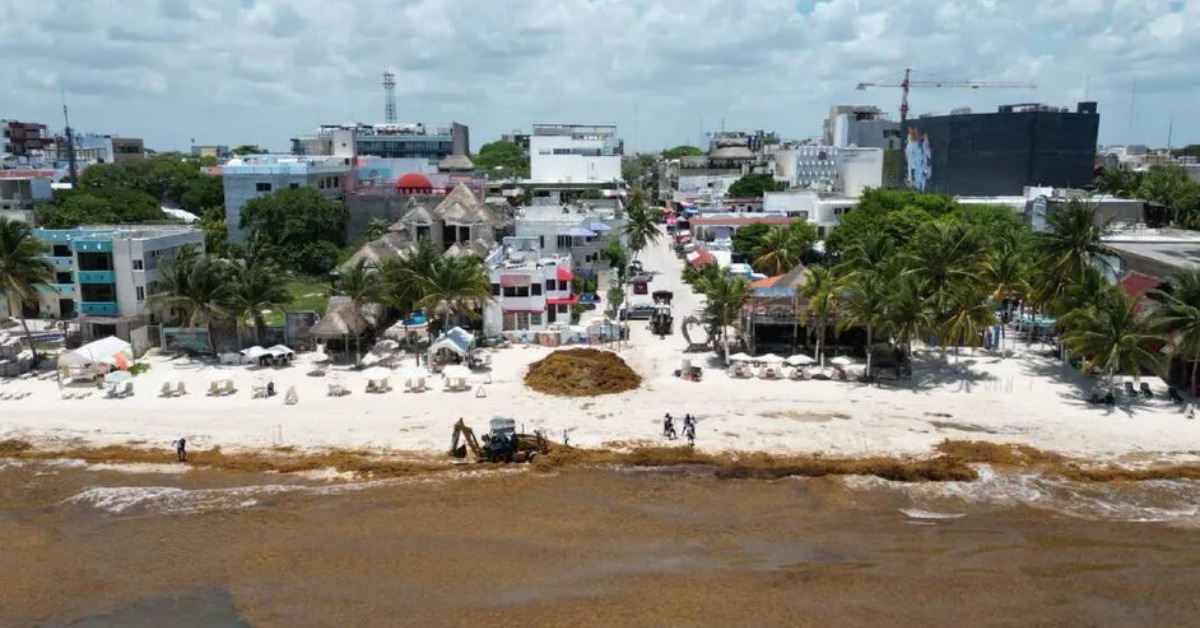
In Playa del Carmen, the problem is no longer limited to piles of seaweed on the sand. Local officials and tourism workers say beach erosion, decomposing algae, and reduced access to key coastal areas are now part of the same crisis.
The concern is especially visible around Playa El Recodo, one of the city’s best-known beaches. Reports from the area describe major sand loss, reduced public access, and pressure on nearby businesses.
Cleanup creates its own challenge. Heavy machinery can remove large amounts of sargassum, but it can also pull sand from the beach. Over time, that can worsen erosion, especially in narrow coastal areas already affected by storms, currents, and development.
For fishermen and small tour operators, the issue is practical. Boats can be harder to move. Water conditions can affect trips. Visitors may change plans when beaches smell bad or appear unusable.
What sargassum is and why it reaches Mexico
Sargassum is a floating brown seaweed that grows in the Atlantic. In open water, it can serve as habitat for fish, turtles, crabs, and other marine life.
The problem begins when large volumes reach shore. Once trapped on beaches, the algae starts to decompose. It can release a strong odor and turn clear water brown in low-oxygen coastal zones.
Large sargassum arrivals have become a recurring problem across the Caribbean since 2011. Scientists link the expansion to several possible factors, including warmer seas, changing ocean currents, nutrient runoff, and large-scale Atlantic circulation patterns.
The exact amount that will reach Mexico cannot be predicted with full certainty. Currents and winds can shift floating mats before they reach land. Still, satellite monitoring shows that 2026 is developing as another major year across the wider Atlantic and Caribbean region.
Cleanup is costly and complicated
Mexico’s response includes ocean collection, smaller coastal vessels, beach crews, barriers, and daily satellite-assisted monitoring. The goal is to intercept sargassum before it reaches the shore, where it becomes harder and more expensive to manage.
That is easier in theory than in practice. Sargassum does not always arrive as one solid mass. It can move in long, scattered lines across wide areas of the ocean. That makes collection difficult, especially when the weather limits boat use.
Barriers can help in some locations. But they need constant maintenance and fast removal of the trapped algae. If too much sargassum accumulates, the system can fail or allow algae to pass through.
Beach cleanup is the last line of defense. It is also the most visible. Visitors judge beach conditions quickly, and local businesses often feel the economic effects before the broader numbers are measured.
The health and environmental concerns
Fresh sargassum in the ocean is not usually the main concern. The risk grows when large amounts decay onshore.
As it breaks down, sargassum can release gases, including hydrogen sulfide, which has a rotten-egg smell. In heavy concentrations, the odor can irritate the eyes, throat, and lungs. People with asthma or respiratory conditions may be more sensitive.
There are also environmental concerns. Large deposits can block sunlight, reduce oxygen in shallow water, and affect seagrass beds and coral areas. Those ecosystems help support marine life and protect the coast.
Researchers have also warned that sargassum can carry heavy metals, including arsenic and cadmium. That complicates its disposal and limits some possible uses.
Turning sargassum into a resource remains difficult
For years, companies and researchers have explored ways to turn sargassum into fertilizer, fuel, construction materials, packaging, and other products.
Those ideas are still part of the conversation. They could help reduce waste and create value from a costly problem. But scale remains a major obstacle.
A useful product needs a steady supply chain, safe handling, processing capacity, and clear rules for disposal or reuse. The material also needs testing, especially when there are concerns about metals, salt, and contamination.
For now, most communities still focus on the urgent work of collection and removal. Long-term reuse may become part of the answer, but it has not replaced the need for daily beach management.
A recurring issue for the Mexican Caribbean
For residents, retirees, and long-stay visitors in the region, sargassum is now part of life on the Caribbean coast. It does not affect every beach every day. Conditions can change quickly, even within the same municipality.
Protected beaches, west-facing shores, and islands may see less accumulation than exposed coastlines. Open beaches facing the Caribbean are often more vulnerable.
That means beach conditions can vary from Cancún to Puerto Morelos, Playa del Carmen, Cozumel, Tulum and Mahahual. Travelers and residents often need to check local reports before planning beach days.
The broader concern is that years with heavy sargassum are becoming more common. If 2026 reaches the levels now expected, Quintana Roo will face another test of its cleanup systems, tourism planning, and coastal protection strategy.