Puerto Vallarta, Jalisco, Sept. 1, 2026 — Puerto Vallarta’s City Council approved a 2027 revenue proposal Monday that would freeze municipal taxes, fees and water rates at 2026 levels.
The approved proposal projects revenue of 3,101,869,049 pesos. It still requires review and approval by the Jalisco Congress.
The measure received 15 votes in favor and no votes against. Council member Melissa Marlene Madero Plascencia abstained, saying she had not received the final information early enough to analyze it.
Impact for taxpayers and water users
If state lawmakers retain the proposal, Puerto Vallarta would make no inflation adjustment to property taxes, licenses, permits, municipal rights, service charges or other tariffs for 2027.
The freeze would apply to residents and businesses across the municipality. It would preserve existing charges rather than reduce the amounts established for 2026.
SEAPAL also endorsed a zero percent increase for domestic and commercial water service. The utility said it would contain operating expenses while maintaining planned work on water, drainage and sanitation infrastructure.
That reverses an earlier proposal for an increase of about 6% on commercial water accounts. The domestic schedule also faced a restructuring that would have reduced the minimum consumption block from 20 to 15 cubic meters.
For property owners, the council’s decision means the 2026 predial framework would remain the starting point for another year. It does not cancel unpaid taxes, penalties or changes caused by alterations to an individual property.
PVDN compared the council’s projected revenue with the 2026 Revenue Law approved by the Jalisco Congress. Both documents list exactly 3,101,869,049 pesos.
The figure is a revenue projection, not a guarantee of how much the municipality will collect.
Council abandoned the first draft’s increases
The vote marked a change from the plan under discussion before Monday’s meeting.
Reporting on the original draft described a general 4% adjustment. It also included proposed cadastral-value increases of 4% in rural zones, 6% in established urban areas and 8% in urban-tourism zones.
Those classifications covered hundreds of colonias and could have affected the taxable values used to calculate predial bills.
The original proposal was scheduled for an extraordinary council session Saturday, Aug. 29. The official agenda included the 2027 Revenue Law, cadastral tables and SEAPAL tariffs.
That meeting did not proceed after 12 of the council’s 16 members said they would not attend. Local reporting at the time said some members objected that they had not received sufficient documentation.
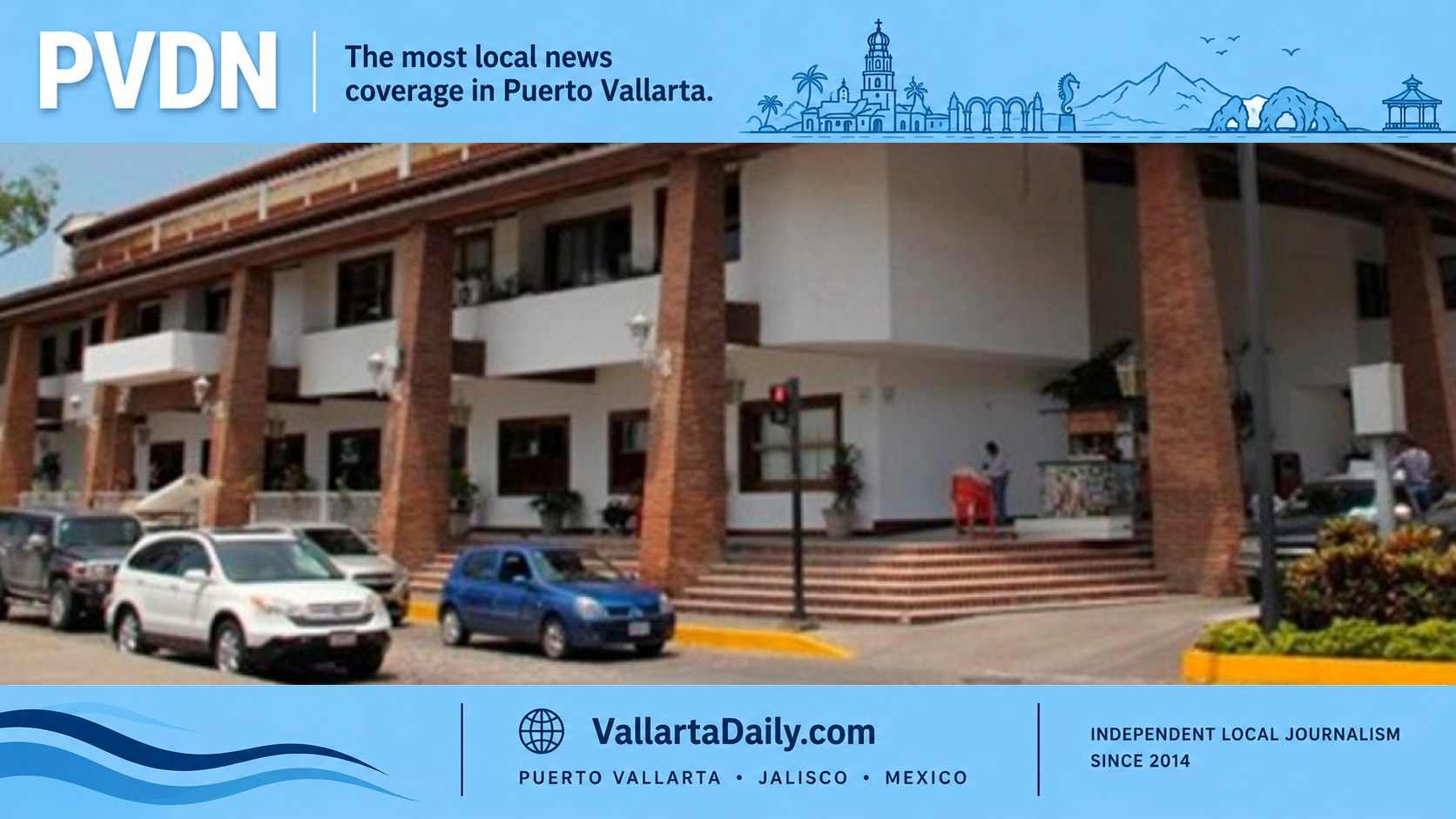
The council returned Monday, the state filing deadline, and adopted the zero-increase version. Members met at 4 p.m. in the council chamber at City Hall, Independencia 123, in Colonia Centro, according to the city agenda.
“We are not proposing inflation adjustments,” Mayor Luis Ernesto Munguía González told the council. “We are proposing zero increase.”
Madero objected to voting without sufficient time to review the modified document. She described the process as voting “blind,” according to transcripts of the council meeting.
As of Tuesday, we found the Aug. 31 agenda on the municipal transparency page, but not the final initiative or council agreement. The absence prevents a public line-by-line comparison with the 160-page 2026 law.
Predial discounts remain under current rules
The city said the proposal retains predial reductions for older adults and several protected groups.
The announced discounts are 50% for pensioners, retirees, people with qualifying disabilities, widows, widowers and people ages 60 to 74. The reduction rises to 60% for people ages 75 to 79 and 80% for those 80 or older.
The current 2026 statute places limits on those benefits. It requires recipients to be Mexican citizens and applies the reduction to the first 2 million pesos of fiscal value on one owner-occupied home. The property cannot be used for commercial activity.
Because the final 2027 text has not been posted, the current law remains the available source for those eligibility conditions.
The new proposal also leaves out the foreign-visitor charge previously included in municipal revenue legislation. That fee had already been invalidated by Mexico’s Supreme Court.
State approval remains required
Jalisco law requires municipalities to submit their revenue initiatives to Congress by Aug. 31. If a municipality misses the deadline, the prior year’s law, adjusted for inflation, becomes the working proposal.
Puerto Vallarta’s Aug. 31 vote met that deadline. The proposal will not become the 2027 Revenue Law unless state lawmakers approve it and the final text is published.
The 2026 municipal revenue law remains in force through Dec. 31.