What began as a routine arrival from Dallas turned into a tense afternoon at Puerto Vallarta’s airport when an American Airlines jet reported a serious mechanical problem on approach. Emergency teams moved into position, passengers waited for the outcome, and airport operations briefly tightened around the aircraft. The plane landed without injuries, but the episode raised wider questions about what emergency landings mean for travelers, how airports respond, and why even a safe outcome can still ripple across a busy tourism hub.
What happened at the airport
An American Airlines aircraft operating flight AAL1219 from Dallas, Texas, made an emergency landing at Puerto Vallarta International Airport on April 13 after the crew reported a critical technical problem linked to the landing gear system.
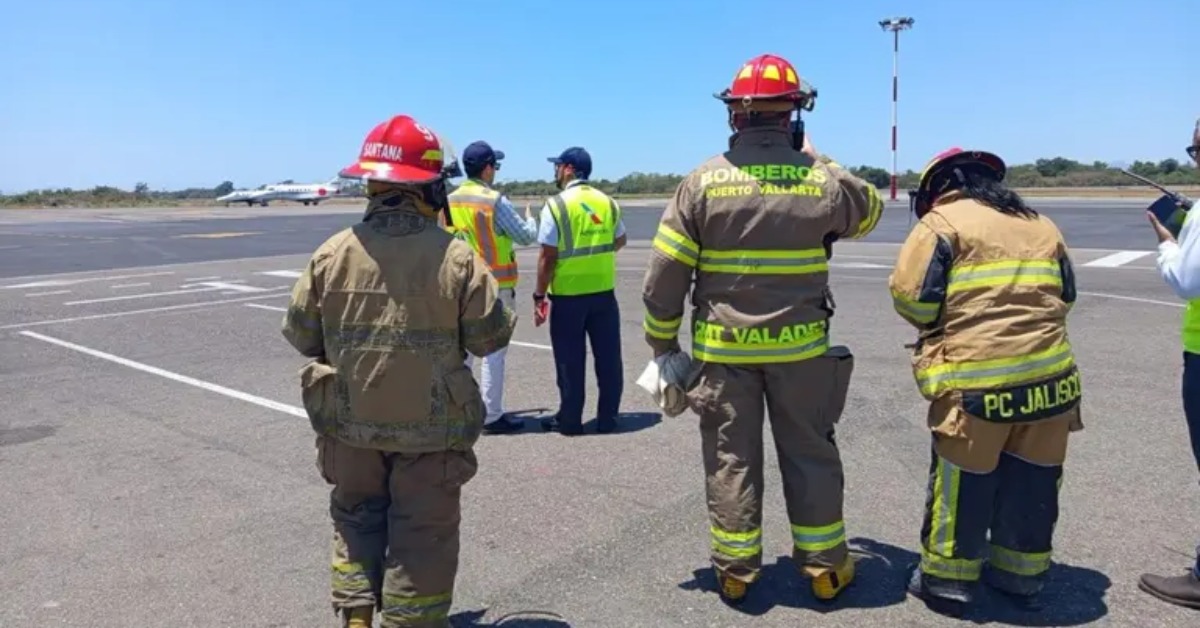
Airport safety procedures were activated before the aircraft touched down. Emergency personnel were positioned on the airfield while the crew prepared for arrival under controlled conditions. The plane landed safely at about 12:51 p.m., and authorities reported no injuries among the passengers.
The aircraft remained on airport taxiways after landing so technical personnel could inspect it. That part matters because an emergency landing does not end when the wheels touch the ground. The aircraft still has to be secured, checked, and cleared before normal movement can fully resume around it.
Why the incident drew immediate attention
Incidents like this quickly attract attention in Puerto Vallarta because the airport is one of the city’s most important pieces of infrastructure. It handles a steady flow of international travelers, including many visitors and residents moving between Mexico and the United States.
For local readers, the story was notable because it happened during a normal operating day, not during a major storm or broader security emergency. That helps explain why the focus shifted so quickly to airport procedures, timing, and possible knock-on effects for other flights.
For international readers, the key point is that an emergency landing is not always a crash. In aviation, crews are trained to declare emergencies early when a key system may not work as intended. That gives controllers and ground crews time to prepare the runway environment, reduce risk, and keep options open.
What a landing gear failure can mean
A reported problem in the landing gear system is taken seriously because the gear is one of the aircraft’s most critical systems during arrival. In simple terms, pilots need confirmation that the wheels and support structures are fully extended and locked before touchdown.
When that confirmation is unclear, crews follow checklists and coordinate with air traffic control. Depending on the problem, they may troubleshoot in the air, request priority handling, or prepare for an emergency landing. That is why airport responders are often staged in advance, even if the aircraft later lands normally.
In this case, the safe landing suggests the emergency response worked as intended. The system flagged a problem, the crew reported it, the airport activated protocols, and the aircraft landed without reported injuries.
What happened to airport operations afterward
Even when an emergency landing ends safely, normal airport activity can still be disrupted for a period of time. That appears to have happened in Puerto Vallarta, where authorities said 13 operations were affected while the aircraft was being handled and inspected.
That kind of disruption does not necessarily mean mass cancellations. It can include delayed arrivals, delayed departures, gate adjustments, and temporary spacing changes for aircraft already in the system. At a tourism-heavy airport, even a brief disruption can cause visible delays because so many passengers are connecting to hotels, ground transport, and onward plans on a tight schedule.
Authorities later said the airport returned to normal operations. That is an important detail because it indicates the incident remained contained to a short operational window rather than turning into a prolonged shutdown.
Why the story matters beyond one flight
The incident occurred at a time when Puerto Vallarta airport had already been under closer public attention. The airport is central to the city’s tourism economy, and any disruption, even a short one, is quickly felt by travelers, transport providers, hotels, and families waiting on arrivals.
That broader context is part of why this story matters. A safe emergency landing is first a human story about training, procedure, and calm under pressure. It is also a reminder that airport resilience matters in a destination where air access shapes daily life and the local economy.
For readers living in or traveling through Puerto Vallarta, the main takeaway is straightforward. The flight landed safely, no injuries were reported, and airport operations were restored. But the event also showed how quickly a routine international arrival can become a major local story when it touches one of the city’s most visible systems.
What travelers should watch next
The next question is usually whether the aircraft returns to service quickly or remains out of rotation for further inspection. Airlines and airport operators do not always release detailed technical findings immediately, especially in the first hours after an incident.
For passengers, the practical takeaway is to watch the flight status of the next scheduled service rather than assume a same-route problem will cascade across the day. Mechanical events can cause later delays, but they do not always do so. Much depends on whether the airline substitutes another aircraft, how long the inspection takes, and how tightly the route was scheduled.
In Puerto Vallarta, where U.S. routes are a daily part of airport activity, readers are likely to keep an eye on whether this turns into a one-day incident or simply becomes a brief operational scare that ended the way everyone hopes these situations end: safely.