Puerto Vallarta is changing who picks up the trash just as one of Mexico’s busiest holiday periods begins. Business leaders say that it is a risky moment to switch systems in a city that depends on clean streets, full hotels, and steady service in both tourist zones and regular neighborhoods. City Hall says it has a new plan, more trucks, and direct control. The bigger question is whether that plan can withstand a sharp jump in visitor numbers, waste volume, and public scrutiny.
Why the timing matters
Puerto Vallarta is changing its garbage collection system at the exact moment the city enters one of its busiest travel stretches of the year. That is why the warning from Coparmex Puerto Vallarta matters. The business group is not arguing that change is impossible. Its concern is that a service handoff becomes harder when hotels fill up, restaurants stay busy late, beaches draw heavy foot traffic, and waste rises across the city.
For readers outside Mexico, Semana Santa and Pascua are more than religious dates. In practical terms, they form one of the country’s most important holiday travel periods. In beach destinations, that can mean packed hotel zones, higher restaurant demand, more traffic, and extra strain on basic city services. In Puerto Vallarta, that also means sanitation becomes a front-line tourism issue. If trash starts to pile up in visible areas, the problem quickly moves from a public-works issue to a public-image problem.
That is the backdrop for the business sector’s warning. Local leaders have said residents in central neighborhoods were already asking what would happen once Red Ambiental stopped operating. Their message was also broader. If the city wants to avoid damage to visitor experience, it cannot focus only on the postcard areas. The tourist corridor matters, but so do the neighborhoods where workers live, move, and store waste between pickups. A holiday system that looks clean only in the center will still be judged as a failure.
How Puerto Vallarta got here
This dispute did not appear overnight. The deeper story is that Puerto Vallarta’s relationship with Red Ambiental had already been under pressure for months. Public complaints about missed pickups and route changes had circulated well before the current break. In January, the company partially suspended service on some routes, citing unpaid municipal bills. Days later, service was restored after an agreement, but the underlying dispute did not disappear.
That earlier disruption matters because it showed the city was already operating with a fragile sanitation system. What looked like a billing conflict was also a warning that the concession was unstable. Once a city enters a cycle of interrupted pickups, emergency measures, and public frustration, confidence drops fast. Businesses begin to worry about tourism. Residents begin to wonder whether certain neighborhoods are being left behind. Every new pause then feels less like an isolated problem and more like proof that the model is not holding.
Now the city is moving to end a concession that had been approved for 15 years in late 2024, but is already being unwound roughly 15 months later. That is a short life for what was supposed to be a long-term public service arrangement. The speed of the breakdown is part of the story. It suggests the disagreement was not only about money, but also about operations, expectations, and whether the concession ever matched the needs of a fast-growing tourism city.
There is also a financial layer. Public reporting has highlighted months of unpaid obligations and an ongoing dispute over how much the municipality owed the contractor. The figures in circulation have not been fully consistent in public coverage, but the pattern is clear. The conflict between City Hall and Red Ambiental moved from operational friction to a deeper fight over payment, continuity, and legal responsibility. That is why the current transition carries more risk than a normal contractor change.
What the city says it will do now
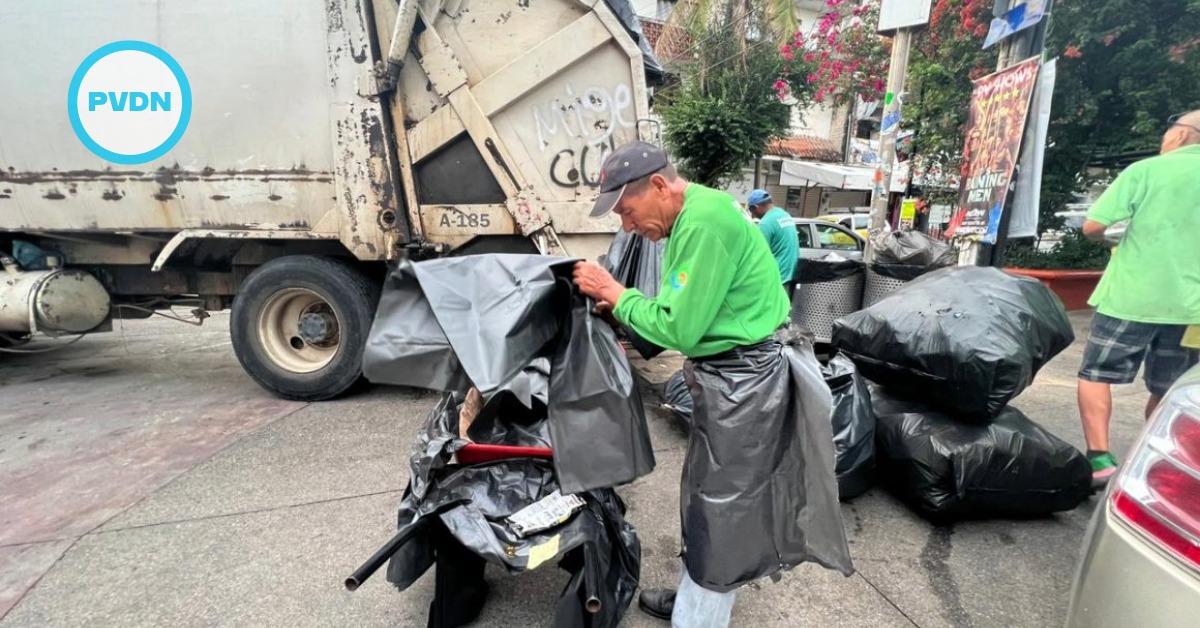
Municipal officials say the answer is direct control. The city has said that, starting with the handoff at the end of March and the April 1 relaunch, garbage collection will return to the Dirección de Servicios Eficientes, backed by the Guardia Ecológica and the area of Sostenibilidad Ambiental. Public statements around the transition describe a plan built around 25 collection trucks, possibly added units, and a three-shift operation meant to cover the city from morning into the night.
That sounds straightforward on paper, but the challenge is not only equipment. The city also has to rebuild routes, staffing, supervision, and response speed at the same time. Local reports say officials have been reorganizing personnel and preparing additional support vehicles. One municipal official also projected that waste volumes during the strongest holiday days could reach 300 to 500 tons. That figure explains why business leaders reacted so strongly to the timing. Even a short disruption can become visible quickly when the daily volume is high.
The city is also asking residents to adapt. Officials have urged people to place garbage at designated street corners and follow the new timetable. That may help the collection move faster, but it also means the transition depends partly on public cooperation. When a system changes, even minor confusion over hours, routes, or set-out points can cause bags to remain in public view longer than usual. During a quiet week, that can be absorbed. During a holiday surge, it becomes harder to hide.
What this means for residents and visitors
For most residents, the real question is not who wins the dispute. It is whether the truck comes on time. For most visitors, the issue may seem minor until it affects the street outside a rental, a restaurant block, or a beach access point. That is why this story matters beyond city politics. Waste collection is one of those services that disappears when it works and dominates attention when it fails.
There is also a public-health angle. Trash left too long in heat and humidity can bring odor, pests, and drainage problems. In a dense tourist city, it can also shape how safe and orderly a place feels. That does not mean Puerto Vallarta is headed for a sanitation collapse. It means the next few days are a serious operational test. The city is trying to prove it can take back a major public service without letting the holiday season expose weak points.
The fairest reading right now is that both sides have left Puerto Vallarta with a narrow margin for error. Coparmex is right to worry about the timing. The city is also right to argue that it needs a stable system under direct oversight, even if the concession has already become unworkable. What happens next will decide which argument looks stronger. If pickups stay regular in the center and in ordinary neighborhoods, the transition may quickly settle. If routes slip, this story will stop being about planning and become one more chapter in a long-running fight over how Puerto Vallarta manages growth, tourism, and basic services.
Deep Dive:
Puerto Vallarta takes over garbage pickup in April
Vallarta Garbage Crisis Grows as Contractor Stops Pickups
Puerto Vallarta trash cuts double as city fails to pay bills