FBI offers up to $245,000 for La Firma after charges link him to CJNG timeshare fraud, money laundering, and alleged material support in Mexico.
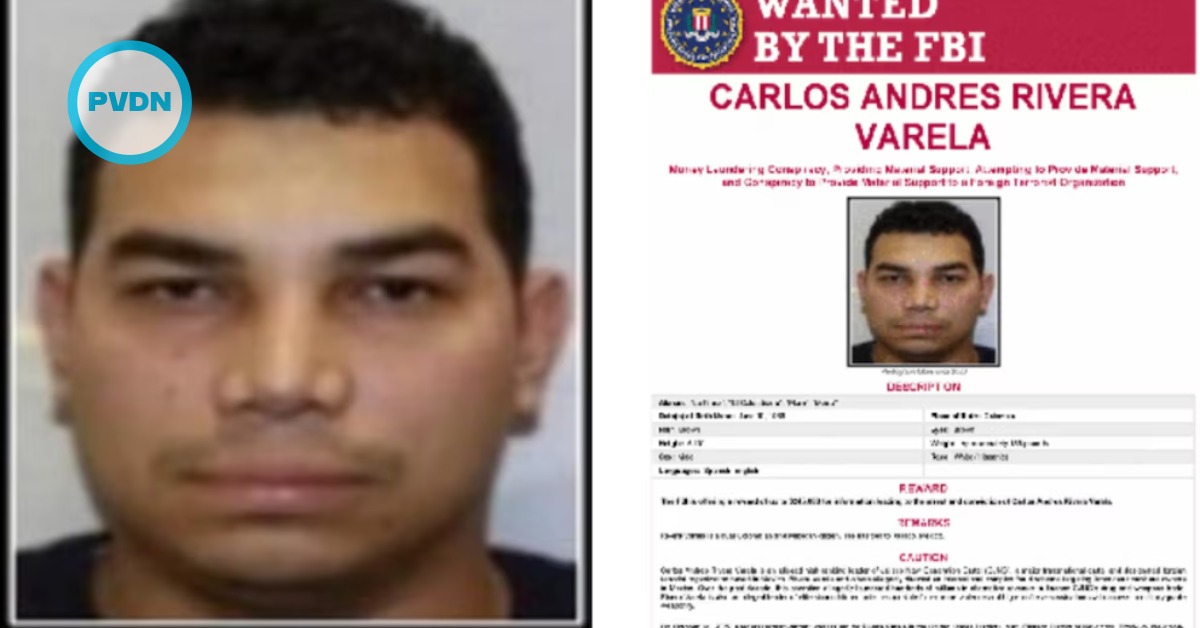
The FBI is offering a reward of up to $245,000 for information leading to the arrest and conviction of Carlos Andrés Rivera Varela. The agency says he is also known as “La Firma,” and it identifies him as a dual Colombian and Mexican citizen with ties to Jalisco.
In the FBI’s public notice, Rivera Varela is described as an alleged high-ranking leader of the Jalisco New Generation Cartel, or CJNG. The same notice warns the public to consider him armed and extremely dangerous.
What makes this case stand out is the money trail the U.S. government is spotlighting. Investigators say Rivera Varela and others allegedly directed a complex international fraud scheme that targeted American timeshare owners in Mexico. The FBI says the operation has run for about a decade and produced huge proceeds.
U.S. authorities allege those proceeds did not just disappear into private pockets. They say the money was laundered to finance CJNG’s drug and weapons trafficking.
A federal arrest warrant was issued on October 28, 2025, in the U.S. District Court for the Eastern District of New York, in Brooklyn, according to the FBI notice. The FBI lists charges that include money laundering conspiracy, along with counts tied to providing, attempting to provide, and conspiring to provide material support to a foreign terrorist organization.
The FBI also portrays Rivera Varela as more than a financial operator. It says he is an alleged leader of elite hitmen units linked to extreme violence and high-profile assassinations. The bureau adds that he has access to military-grade weapons.
CJNG timeshare fraud
Timeshare fraud is not new. What is new is how directly U.S. agencies now describe it as cartel finance.
In the version outlined by U.S. authorities, the victims are Americans who already own timeshares in Mexico. The promise is familiar to anyone who has ever gotten a too-good-to-be-true call. A buyer is ready. A resale deal is close. The owner just needs to pay fees, taxes, or “closing” costs up front.
The FBI’s allegation is that Rivera Varela and others helped direct an operation like this from within Mexico. The bureau says the scheme targeted U.S. timeshare owners and ran as an “alternative revenue” stream that could be laundered into CJNG’s broader criminal business.
That matters because it reframes the scam as more than white-collar crime. It is being treated as an alleged pipeline that turns fraud proceeds into resources for a cartel’s core operations.
U.S. Treasury sanctions over the last several years have also focused attention on this same theme. Those actions have targeted people and companies accused of being connected to timeshare fraud tied to CJNG, including networks centered in Puerto Vallarta. Treasury has described Puerto Vallarta as a CJNG strategic stronghold for drug trafficking and other illicit activity, and it has repeatedly tied the region to this specific kind of fraud.
Rivera Varela has been on Treasury’s radar for years. In April 2021, the Treasury Department’s Office of Foreign Assets Control sanctioned him and Francisco Javier Gudiño Haro, known as “La Gallina.” Treasury described them as members of a CJNG enforcement group based in Puerto Vallarta, and it tied that group to assassinations of rivals and politicians using high-powered weaponry.
That background helps explain why the FBI notice pairs fraud allegations with warnings about violence. U.S. authorities are not treating the scam as separate from cartel enforcement. They are presenting it as part of the same ecosystem.
There is another layer in the FBI’s language that raises the stakes. The FBI notice describes CJNG as a designated foreign terrorist organization. That designation changes how certain federal charges can be applied, and it helps explain why the case now includes terrorism-related material support counts alongside money laundering allegations.
Even with those labels, the public notice does not claim a conviction. It lays out allegations and charges, and it asks the public for tips that could lead to an arrest and conviction.
Puerto Vallarta and the money trail
Puerto Vallarta is not being singled out because tourism equals crime. It is being singled out because tourism can generate the kind of paperwork and payments that scammers can exploit. Timeshares sit right in that overlap. They can involve large sums, cross-border contracts, and owners who may be far away when something feels off.
U.S. authorities have repeatedly described these fraud networks as complex. That word is doing work. A complex scam is harder for victims to unwind quickly. It can also be harder for financial institutions to flag, especially when transactions are framed as legitimate fees connected to property and travel.
Treasury’s sanctions record has treated the timeshare scheme as highly lucrative, and it has warned that it can prey on vulnerable victims, including older Americans. The government’s broader message is that cartel-linked operations do not rely on drug revenue alone. They can also rely on fraud that looks, at first glance, like ordinary consumer business.
The FBI’s reward poster is designed to crack that wall of distance. Rivera Varela is not accused of operating from a street corner. He is accused of operating through people, payments, and front-end business structures that can be difficult for victims to trace.
The reward also signals urgency. A public offer of up to $245,000 is meant to motivate someone with real proximity to come forward, whether that person is inside a fraud operation, adjacent to it, or simply aware of where a suspect is moving and hiding.
Whether Rivera Varela is captured is unknown. What is clear is what the U.S. government is trying to underline. In this case, it is not just chasing drugs. It is chasing the money streams that can keep a cartel running, even when those streams start with a phone call about a “timeshare deal” that never existed.