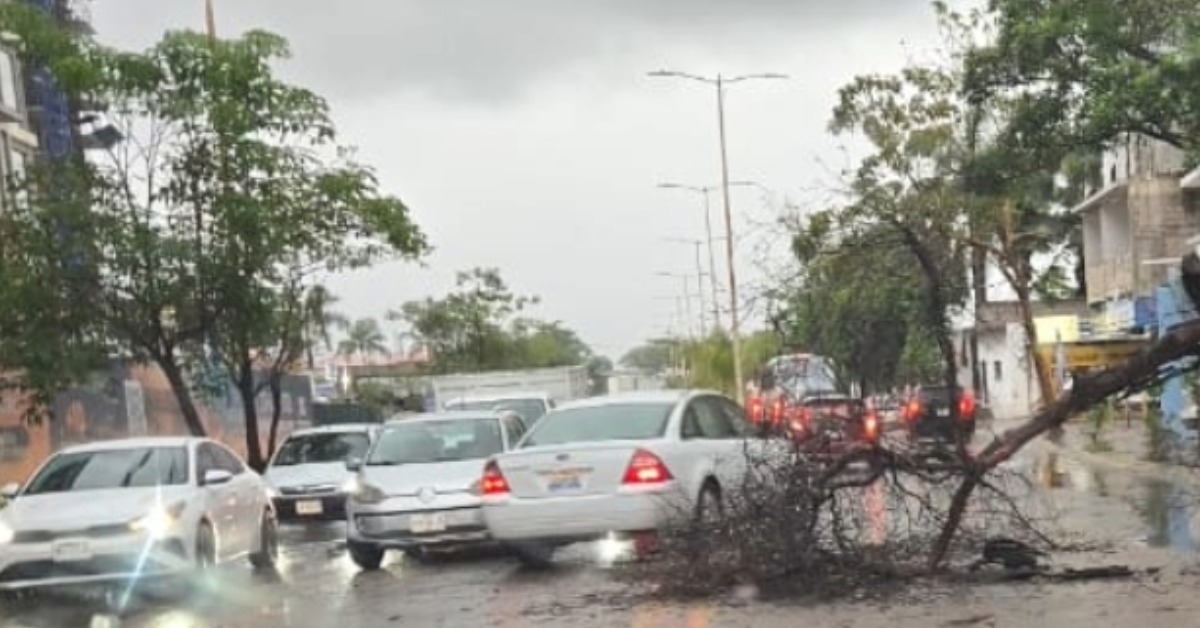
Heavy rain on Tuesday afternoon left flooded lanes, street runoff, and traffic problems in several parts of Puerto Vallarta, including a slow crawl on Federal 200.
A local flooding report cited water buildup around Laguna de Tomasa, near Poetas and Avenida México, and flooding near La Paloma by Galerías Vallarta. Runoff was also reported in Ramblases, El Progreso, Las Juntas, and La Corona, where hard rain often moves quickly off the hills and into older drainage areas.
Drivers using Federal 200 faced long north-to-south lines from La Corona toward the city entrance, according to the report. Water on the pavement slowed traffic before the evening rush had room to clear.
Tree falls onto CFE lines in Ixtapa
Rain also brought down trees. One fell on Avenida Prisciliano Sánchez near the Vallarta 500 curve, partly blocking the road toward El Pitillal.
In Centro de Ixtapa, a separate tree fall involving CFE lines at the intersection of Allende and Josefa Ortiz streets created a more direct safety issue. The tree, estimated at about six meters, landed on electrical lines.
Protección Civil y Bomberos de Puerto Vallarta worked with CFE before crews cut and removed the tree. The street was later reopened to pedestrians and vehicles.
More rain was already in the forecast
Federal forecasters had put Jalisco on alert for heavy rain before the storm. In its June 9 evening forecast, SMN and Conagua warned that parts of southern Jalisco could experience very heavy rain, with possible flooding in low-lying areas and rising stream levels.
A recent rainy season explainer described the familiar shift from humid afternoons to fast storms that can overwhelm drains before the season is fully underway.
Earlier Tuesday, the Puerto Vallarta weather report for June 9 pointed to humid, cloudy conditions and a higher chance of rain later in the day.
During storms, do not cross flooded streets, streams, or arroyos. Stay away from fallen wires, even when they look inactive.
More rain remains possible under the federal forecast. The same low spots usually flood first, especially near canals and river crossings, and on road sections below the hills.