Puerto Vallarta could see its first meaningful rains soon, as early tropical waves and Pacific weather systems begin to influence western Mexico, but the first showers should not be mistaken for the full onset of steady rainy-season conditions.
The first rains are often irregular. A storm may arrive in one part of the bay while nearby neighborhoods stay dry. Another day may bring heavy clouds, heat, and humidity, with little or no rain. The pattern usually becomes more consistent later, when afternoon and evening storms are more common, and the air holds more moisture through the day.
Heat, humidity, wet pavement, mosquitoes, and drainage problems can all appear before the season feels fully settled.
Heat may continue after the first storms
The arrival of rain does not automatically cool Puerto Vallarta. Early showers can make the air feel heavier, especially after hot pavement, concrete, and rooftops release heat back into the air.
That is why the first rains can bring relief in one moment and a more uncomfortable heat index afterward. The heat index reflects how hot the air feels when humidity is factored in. In Puerto Vallarta, the difference between the air temperature and how the body experiences it can become more noticeable once moisture increases.
People working outside, older adults, children, and pets face a higher risk during this period. Outdoor work, errands, walks, and exercise are safer earlier in the morning or later in the day. Water, shade, and cooling breaks matter even when clouds are present. A cloudy afternoon can still be hot enough to cause problems.
Pets should not be left in parked vehicles, and walks on pavement should be timed carefully. The first rains may briefly cool the ground, but dry stretches between storms can leave sidewalks and streets hot again.
Streets can change quickly during early rain
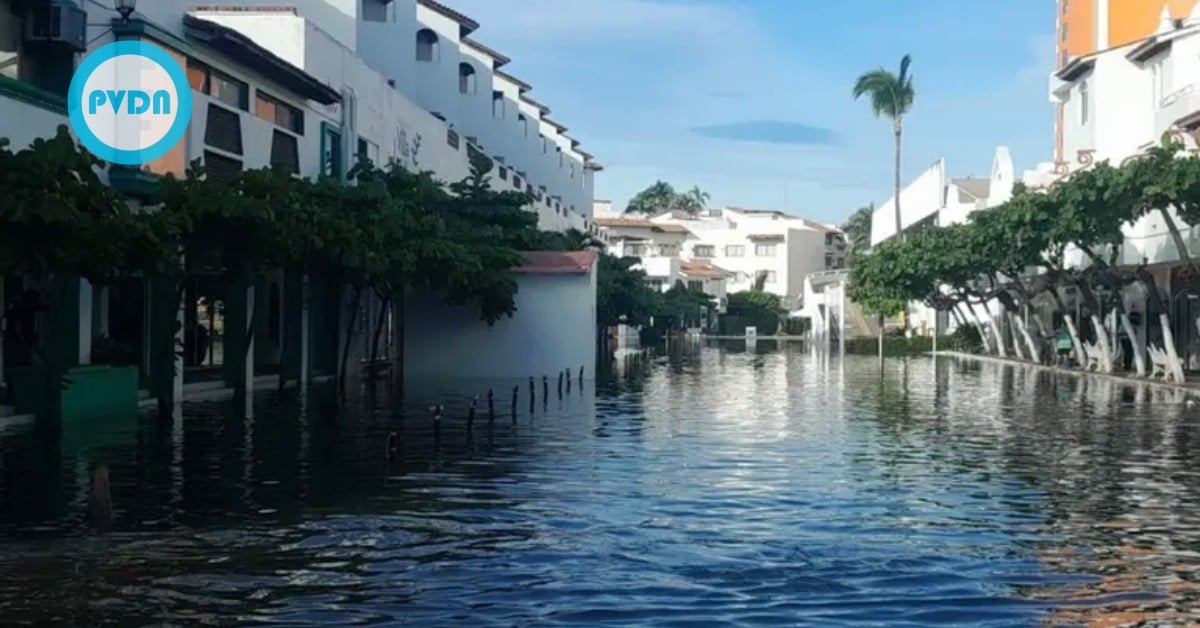
Puerto Vallarta’s drainage system is tested quickly once the first stronger downpours arrive. Roads near canals, rivers, low crossings, and underpasses can become difficult before a storm looks serious from a distance.
The first rains also carry dust, leaves, trash, and loose debris into storm drains. That can slow runoff and create street flooding in areas that already have drainage problems. Past flooding has affected parts of Ixtapa and Los Tamarindos, while other heavy-rain events have turned streets into fast-moving water in different parts of the municipality.
Drivers should avoid flooded roads, even when the water appears shallow. Motorcycles are especially vulnerable on slick pavement, loose gravel, and painted road markings. Pedestrians should also be careful around storm drains, canal edges, and crossings where water depth is hard to judge.
Beaches, rivers and outdoor plans need extra attention
Early rains can change beach and river conditions before the weather pattern becomes routine. Runoff may carry debris toward rivers, arroyos, and the bay. River levels can rise quickly after rain in the mountains, even when rain near the coast seems limited.
Beachgoers should pay attention to flags and local instructions, especially after a storm. Swimmers should be cautious around river mouths and areas where runoff enters the ocean. Water can appear calm, even as currents, debris, or poor visibility make conditions less predictable.
Outdoor events also become harder to plan during the first-rain period. A morning may begin hot and clear, then shift toward clouds, wind, or rain by late afternoon. Organizers should plan for shade, water, electrical protection, and a rain option before the forecast becomes more certain.
Mosquitoes usually follow standing water
The first rains can also start the mosquito cycle. Buckets, plant saucers, roof areas, construction materials, tarps, old tires, and uncovered containers can hold water long enough for it to become a breeding site.
The simplest step is removing standing water after each rain. Containers should be emptied, turned over, covered, or scrubbed. Patio drains and gutters should be checked for leaves and debris. Small amounts of water can be enough to create problems if they sit for several days.
Repellent, window screens, and light clothing that covers more skin can help during the first weeks of wetter weather, especially around dusk and after rain.
What to expect
The next signs to watch are repeated afternoon cloud buildup, higher overnight humidity, rain chances increasing over several days, and official updates on tropical systems in the eastern Pacific.
One or two rains may mark the transition, but steady rainy-season behavior usually takes longer to settle in. Until then, Puerto Vallarta is likely to sit in the uncomfortable middle: hot days, heavier air, scattered rain chances, and roads that can change quickly when a storm finally arrives.