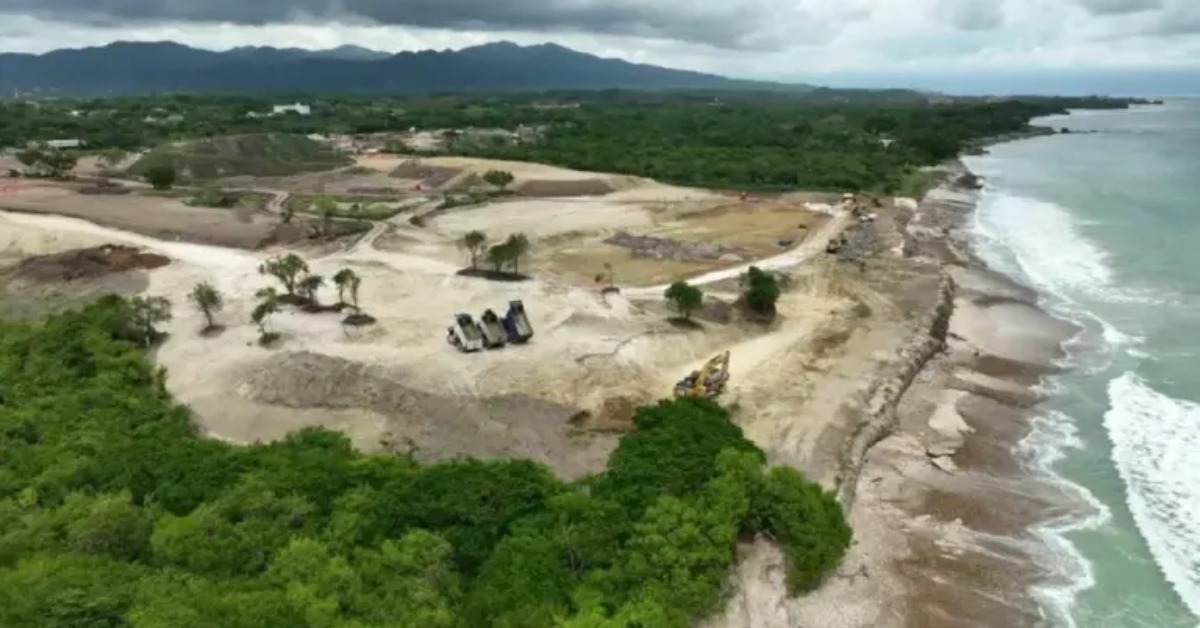
A luxury tourism project near Playa Las Cocinas has entered a new phase of scrutiny after documents tied to its municipal approval pointed back to an environmental authorization from 2009. The question is not only whether the project has permits, but whether an old environmental review still reflects today’s coastline, beach-access rules, turtle nesting concerns, and development pressure in Punta de Mita.
Punta de Mita Project Permit Questions
A major tourism and residential development near Playa Las Cocinas in Punta de Mita is facing new questions after municipal approval for the Pendry and Montage complexes was linked to an environmental authorization issued in 2009.
The issue has added another layer to an already tense dispute in Bahía de Banderas. Residents and beach users have been pressing authorities over public access, coastal works, turtle nesting habitat, and the broader future of one of Riviera Nayarit’s most valuable stretches of shoreline.
At the center of the latest controversy is a construction license reportedly granted by the Bahía de Banderas municipal government on April 23, 2025. The license was issued to Proyecto H5 Nayarit S.A. de C.V. under file number DUXII-0600/25 and has a stated validity of 1,080 days.
The environmental support cited for that municipal license refers to a Manifestación de Impacto Ambiental, or MIA, authorized by Semarnat on December 29, 2009. That date has become the key point of concern. More than 15 years have passed since that environmental review was issued, while the coastline, land use, erosion patterns, and development pressure in Punta de Mita have continued to change.
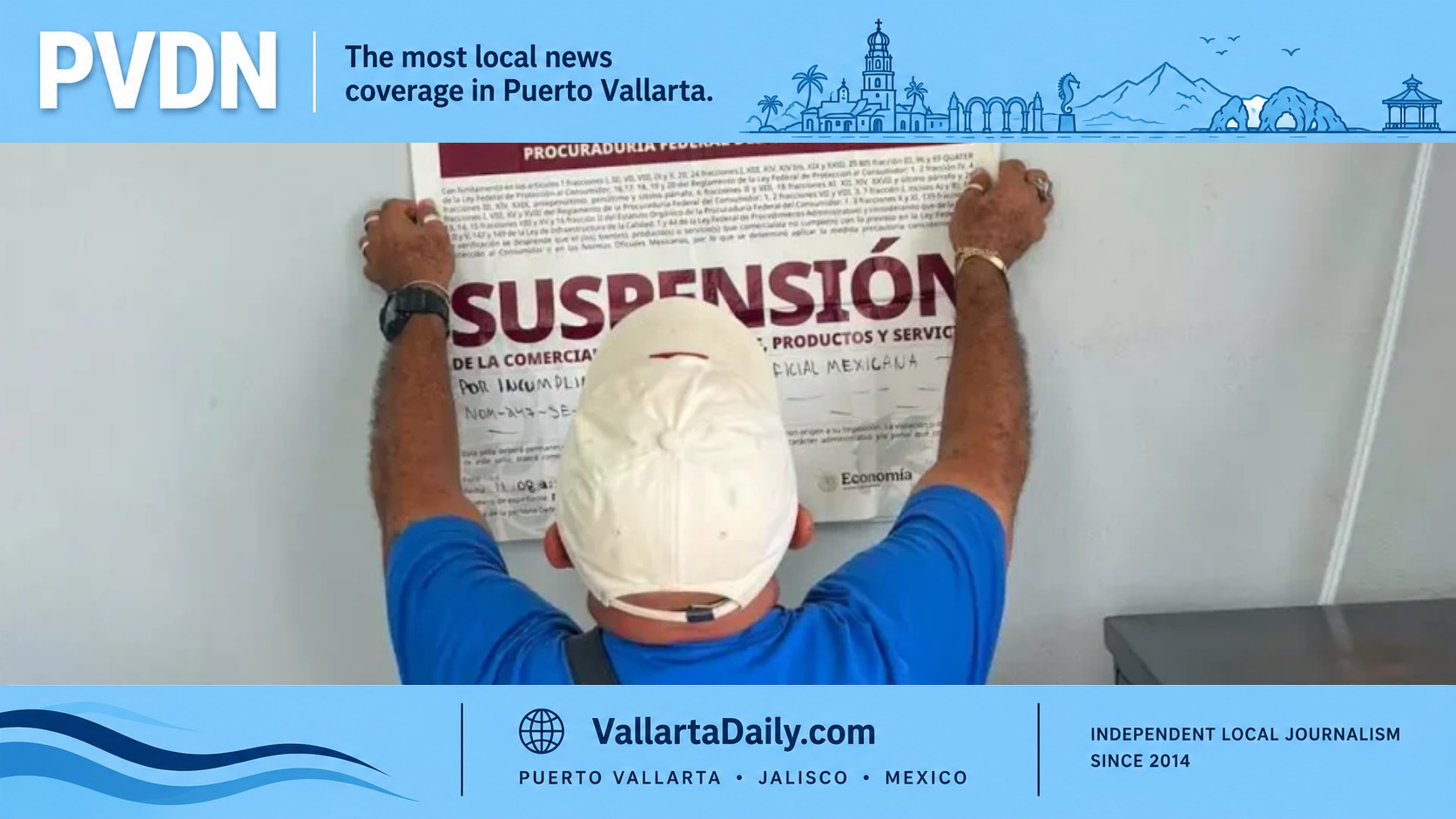
No authority has publicly ruled that the license is illegal. That distinction is important. The current dispute concerns whether the permit framework should be reviewed, updated, or clarified before the project moves forward.
What the project includes
The authorization at issue describes a large tourism and residential complex in the Ranchos Punta de Mita area. The project includes more than 58,000 square meters of construction, with hotel towers, residential villas, common areas, pools, service areas, a spa, a children’s center, and operational facilities.
The project is part of a larger luxury development push in Punta Mita. DINE announced in 2025 that construction had begun on the Montage and Pendry hotels in Punta Mita, with an investment of more than 10 billion pesos. The company said Montage Punta Mita would include more than 140 rooms and more than 60 residences, while Pendry Punta Mita would include more than 120 rooms and more than 30 residences.
The company has presented the project as a major investment for the region, with hotel openings expected in 2027. It has also described the development as part of Punta Mita’s positioning as a high-end tourism and residential destination.
For local residents, however, the project is now tied to a different question: whether luxury growth is being managed with enough transparency, environmental oversight, and protection for public coastal rights.
Why the 2009 MIA matters
An MIA is the environmental impact document used in Mexico to evaluate how a project may affect land, water, ecosystems, wildlife, and nearby communities. It is not just a paperwork step. It helps determine whether a project can move forward, under what conditions, and what mitigation measures are required.
The concern in this case is the age of the environmental authorization. A 2009 review may have evaluated conditions that no longer fully match the current site. Coastlines can shift. Dunes can erode. Vegetation can change. Nearby development can increase pressure on water, traffic, and public access.
Mexican environmental rules also require attention to project changes. If a project is modified after an environmental authorization is issued, Semarnat may need to determine whether the existing authorization still applies, whether conditions must be changed, or whether a new environmental filing is required.
That does not automatically mean the older MIA is invalid. A project may have extensions, amendments, transferred rights, or additional filings that keep an authorization active. But those documents need to be clear, current, and publicly understandable, especially when the project sits near a contested coastal area.
For many residents, the immediate demand is simple: show the full permit chain and explain how a 2009 environmental review supports construction starting many years later.
Playa Las Cocinas and the beach-access dispute
The permit question is unfolding alongside the conflict over Playa Las Cocinas, a beach near Punta de Mita that residents describe as a public coastal area used by local families, fishers, and beachgoers.
The dispute intensified after residents alleged that work near the coast was altering the Zona Federal Marítimo Terrestre, commonly called ZOFEMAT. That is the federal maritime zone next to Mexico’s beaches. Under federal law, where a coastline has beaches, the ZOFEMAT generally includes a 20-meter strip of firm, walkable land next to the beach.
Mexico’s federal property law also states that access to beaches and the adjacent federal maritime zone cannot be inhibited, restricted, obstructed, or conditioned except as permitted by regulation. In practical terms, Mexico does not treat beaches as private property in the way some foreign residents may understand from other countries.
That legal principle is one reason the Las Cocinas case has drawn attention beyond Punta de Mita. The issue is not only whether people can technically reach the sand. It is whether access remains real, safe, and usable after construction, security controls, rock barriers, landscaping, or private development layouts reshape the shoreline.
Residents have also raised concerns about whether works near the beach could narrow public passage or change the way people move along the coast.
Turtle nesting adds another layer
The Las Cocinas dispute also raises environmental concerns because residents and activists have described the area as important for turtle nesting.
Mexico has a specific federal standard, NOM-162-SEMARNAT-2012, for the protection, recovery, and management of sea turtle populations in nesting habitats. That rule is relevant because coastal work can affect turtles through lighting, sand compaction, machinery, barriers, altered slopes, and disturbance during nesting season.
That does not mean every project near a nesting beach is prohibited. It does mean environmental review and enforcement need to be precise. Developers, local authorities, and federal agencies must be able to show what works are authorized, how they protect nesting habitat, and what monitoring will be used.
For international residents who live near the coast, this part of the story is familiar. Riviera Nayarit and Puerto Vallarta market nature as part of their appeal. At the same time, those same ecosystems are under growing pressure from tourism construction, shoreline hardening, and higher land values.
Earlier federal concerns over coastal works
The Las Cocinas conflict did not begin with the latest municipal license question. Federal environmental authorities previously intervened in related coastal works.
In 2025, Profepa temporarily closed the works being carried out by Cantiles de Mita S.A. de C.V. at Playa La Cocina in Punta Mita. The agency said the works were in the federal maritime zone and did not have the required Semarnat environmental authorization for the activities observed.
Those works reportedly included the relocation of trees, the construction of stone containment walls, and protective works on the sand. Semarnat had also ordered a suspension and requested more information before Profepa inspectors found that work was continuing.
More recent accounts of the administrative record say Semarnat did not accept an emergency-work notice as sufficient authorization for new interventions. The agency reportedly determined that the proposed works involved changes to the federal maritime zone, including rock placement, anti-scour systems, sediment handling, and vegetation relocation.
The developer’s side has argued that coastal erosion is a serious issue and that protective works are needed to stabilize the shoreline. The company has also cited erosion, storm risk, and climate-related impacts as reasons for intervention.
That defense is not unusual in coastal development. Many beachfront properties face erosion. The harder question is whether protective works are emergency maintenance, environmental restoration, or a more substantial modification of the coast that requires a full authorization process.
A public process now matters more than a private answer
The Las Cocinas case now sits between several authorities. The municipal government issued the construction license. Semarnat oversees federal environmental impact authorizations. Profepa handles environmental inspection and enforcement. The federal government also has authority over public beach access and the federal maritime zone.
That divided responsibility can make coastal disputes hard for residents to follow. One permit may apply to land construction. Another may apply to environmental impact. A separate concession may apply to the federal zone. A municipal license may not answer questions that belong to federal authorities.
That is why the permit chain matters. Residents, buyers, hotel guests, workers, and business owners all need to know which authority approved what, when it was approved, and what conditions apply.
The federal government has already said access to Playa Las Cocinas must be guaranteed under the law. It has also opened dialogue involving federal environmental agencies, state officials, the company, and residents. Those talks may reduce tension, but they will not resolve the broader issue unless the documents and boundaries are clarified.
The most immediate question is whether the project’s environmental authorization still matches the current scope and conditions of the site. The next question is whether any work connected to the beach itself has separate and valid authorization.
Development pressure is testing Riviera Nayarit
Punta de Mita is one of Mexico’s most valuable coastal areas. It attracts luxury hotels, private residences, golf tourism, and international buyers. That investment has brought jobs and business opportunities, but it has also increased friction over beaches, roads, water, and public space.
The Las Cocinas dispute shows how quickly local trust can erode when residents believe development is outpacing oversight. In communities near high-end tourism zones, people often support jobs and investment. What they resist is losing access to places they have used for generations.
For foreign residents and visitors, this is not only a local political fight. Beach access, environmental enforcement, and permit transparency affect the long-term stability of coastal communities. They also affect the public character of places, making people want to live and travel in Mexico.
For now, the project has not been declared unlawful by authorities. But the use of a 2009 environmental authorization for a 2025 municipal construction license has placed the Pendry and Montage development under closer public review.
The outcome will likely depend on whether authorities can show that the permit framework is current, complete, and consistent with today’s coastal conditions. If they cannot, Las Cocinas may become another example of a wider problem along Mexico’s coast: development moving forward while the public waits for answers.