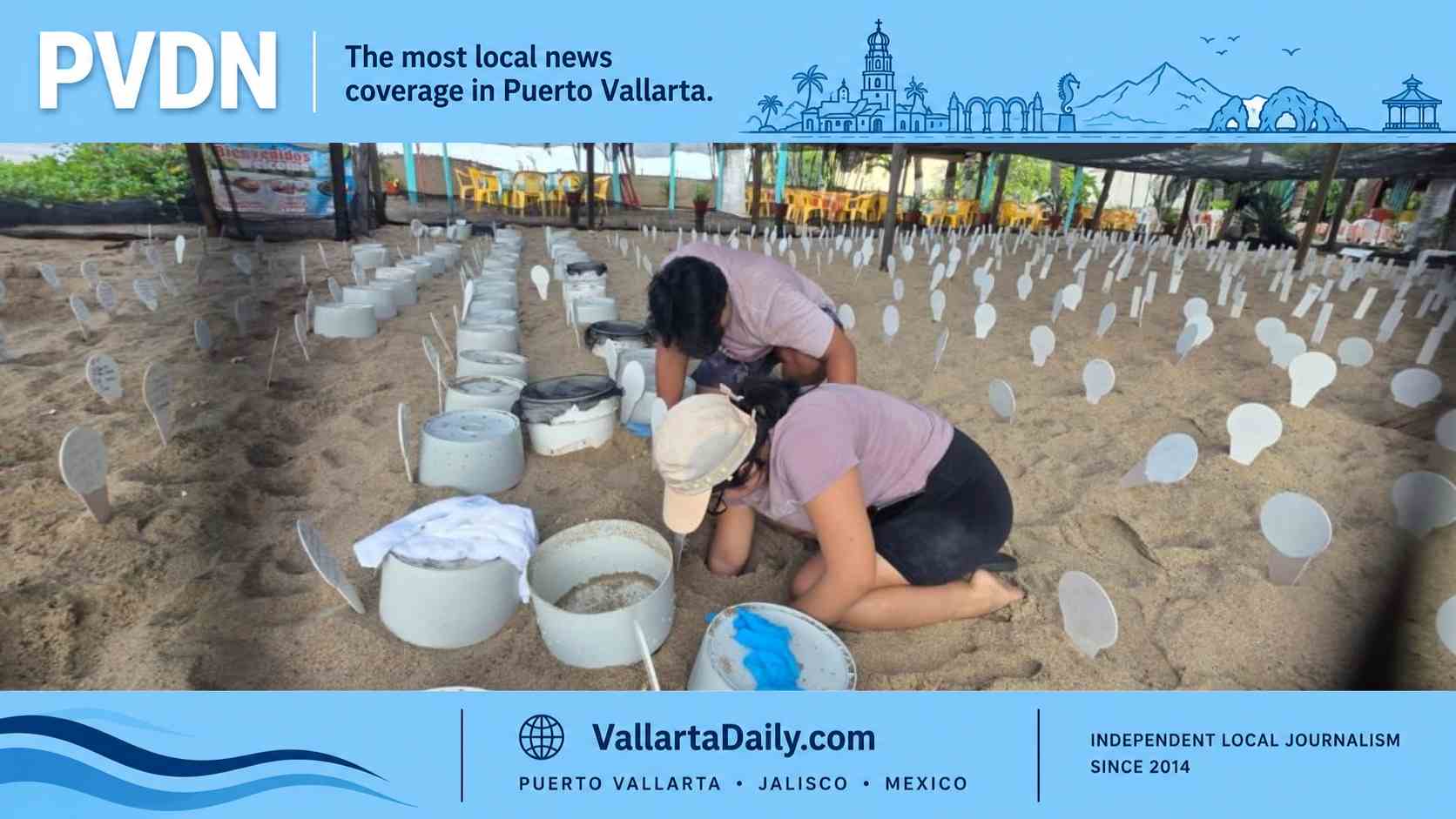
Puerto Vallarta, Jalisco, July 3, 2026 – Puerto Vallarta crews are preparing the sea turtle incubation pen at Playa del Holi ahead of the 2026 nesting season, setting aside a protected space for nests on a beach that already faces heavy public use and documented erosion pressure.
The municipal Dirección de Sostenibilidad Ambiental said in a public update that teams are working daily with Infrastructure and Public Works Director Eng. Andrés Abundis to leave the pen ready before nesting activity increases. The city said the space will be used to protect nests and give hatchlings a better chance of reaching the sea after incubation.
The beach, named in Spanish-language notices as Playa del Holly, is commonly written as Playa del Holi, the stretch near the mouth of the Río Pitillal and the Hotel Zone. That location makes the work more than a routine seasonal setup. In June, CUCosta researchers at the University of Guadalajara reported that Playa del Holi has lost more than 13,000 square meters of effective recreational area in just over a decade, a reduction of more than 30 percent. The same study identified the beach as located between the mouth of the Río Pitillal and Arroyo Los Tules and described it as one of the municipality’s busiest beaches.
That shrinking public space creates a practical problem once nesting begins: turtle patrols, beach vendors, hotels, swimmers, dogs, lights, chairs, trash and storm runoff all converge on the same strip of sand. A fenced or marked incubation area can remove nests from the highest-risk spots, but it does not eliminate the need to keep the surrounding beach clear at night.
Mexico’s NOM-162-SEMARNAT-2012 regulates protection, recovery and management of sea turtles in nesting habitat. The rule is the framework for the authorized handling of nests, eggs, and hatchlings. It is also why people who encounter a turtle or nest should leave the work to trained teams rather than trying to move eggs, guide hatchlings or take close photographs.
CONANP visitor rules for turtle nesting areas are clear: do not touch, harass, or damage turtles; do not use flash; avoid unauthorized lights; keep your distance until nesting is complete; remain quiet; and follow the instructions of trained personnel. Those rules are especially relevant along Puerto Vallarta’s urban beaches, where late-night foot traffic and beachfront lighting are constant during summer.
The city has not released the dimensions of the Playa del Holi pen, a projected number of nests, or a public schedule for hatchling releases. Puerto Vallarta’s nesting activity is typically tied to the summer and fall months, with public releases often promoted later in the season once eggs have incubated.
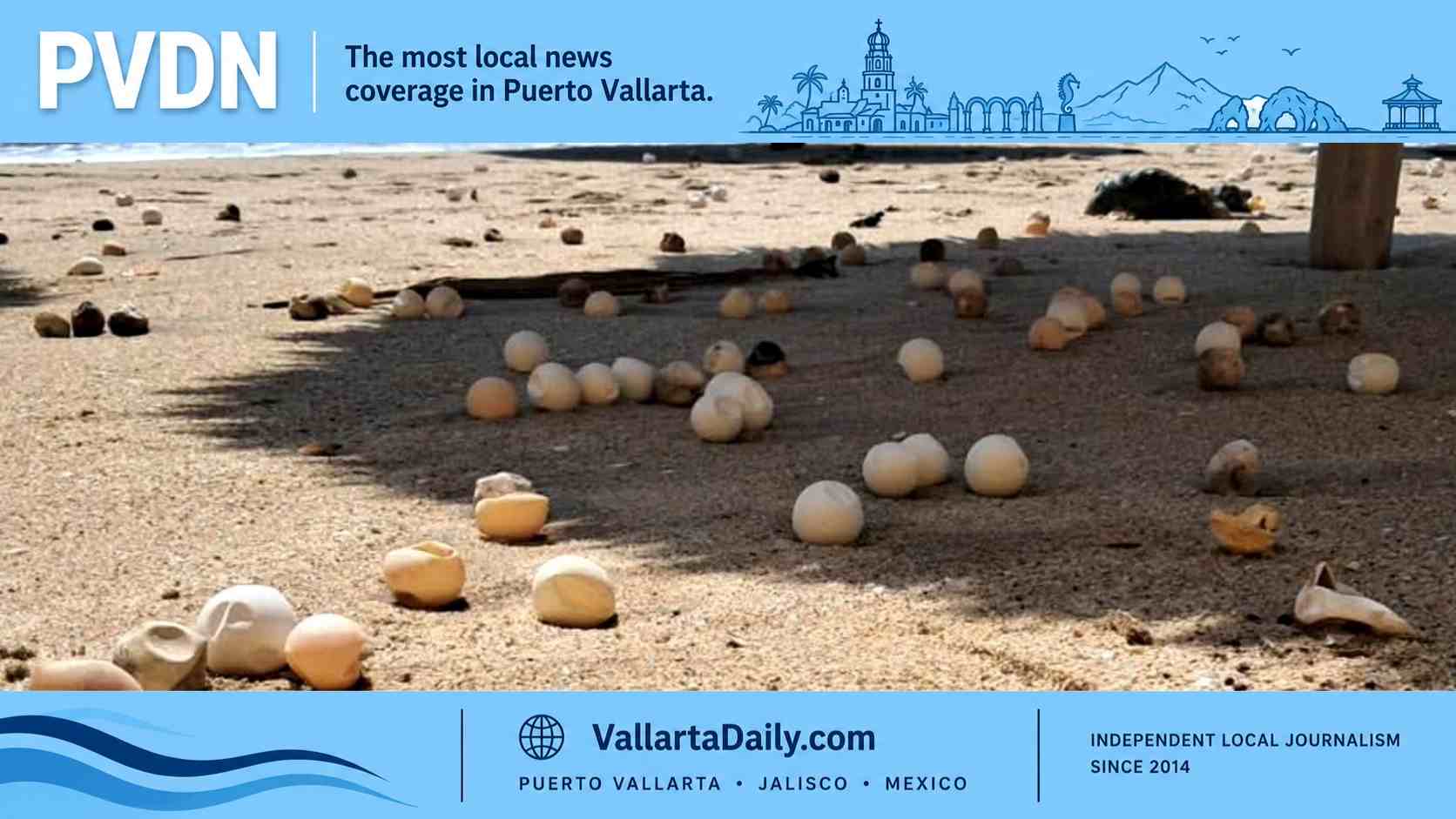
PVDN recently published a Sea Turtle Nesting Season in Puerto Vallarta guide with background on the local season and the difference between nesting and hatchling releases. The coming season will also be watched closely after the Boca de Tomates turtle camp reported heavy nest losses last year when Hurricane Priscilla’s surf damaged hatchery areas north of the city.
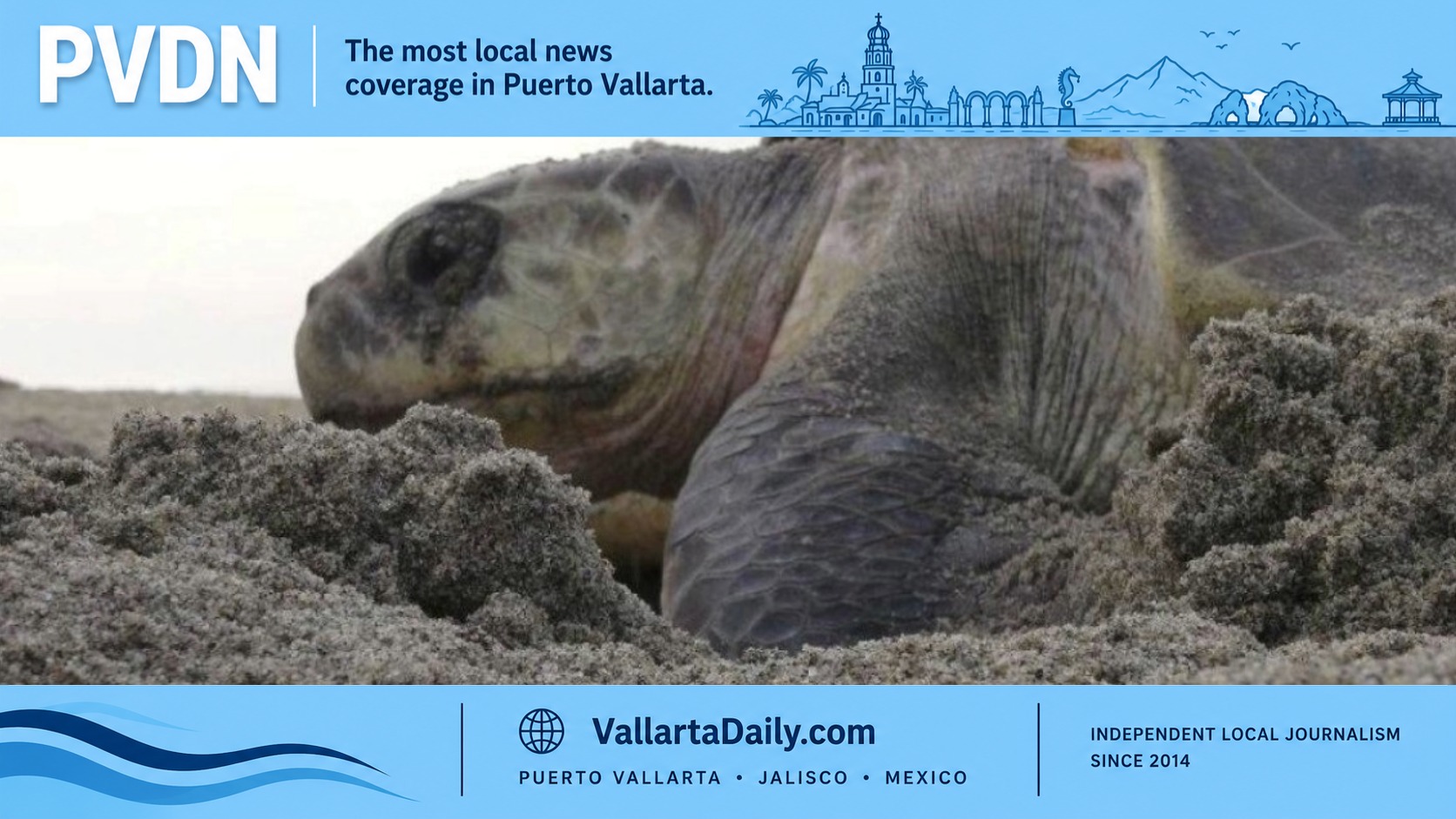
Anyone who sees a turtle on the sand should keep people and pets away, turn off phone lights, avoid flash photography, and give the animal space to nest or return to the water. If eggs or hatchlings are visible, the safest course is to alert municipal environmental staff or lifeguards rather than handle them.