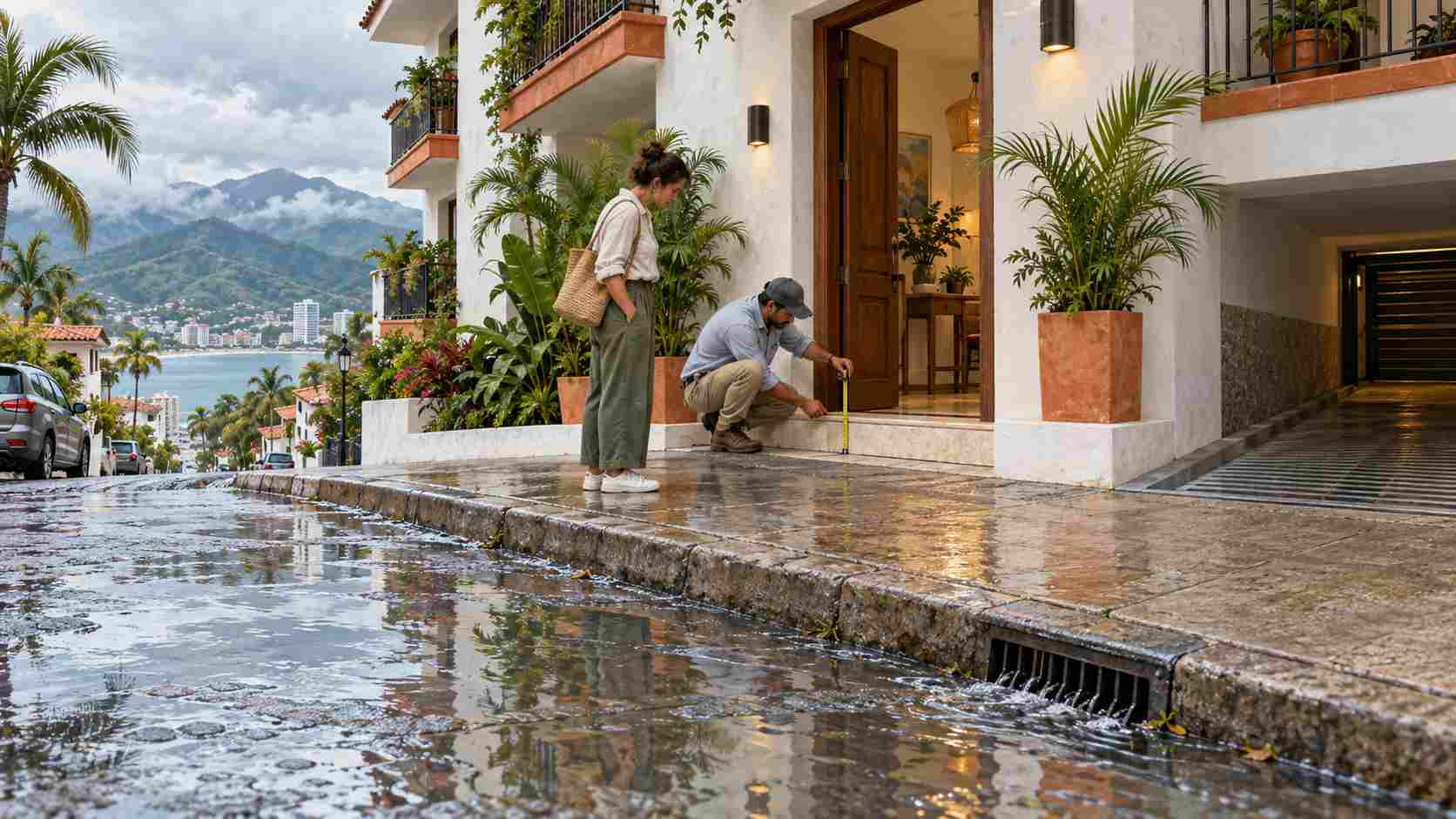
Puerto Vallarta is heading into several days of rain risk, with the strongest downpours most likely early in the week. At the same time, a new garbage collection schedule begins Wednesday, sewer work continues in Marina Vallarta, and the end of the school year could bring a noticeable increase in domestic visitors by the weekend.
None of these issues alone should upend the week. Together, they could make everyday errands, airport trips and cross-town drives take longer than expected.
Here is what we are watching for you.
Plan around the rain, especially after lunch
The first half of the week looks unsettled. The National Meteorological Service’s extended forecast shows the potential for 50 to 75 millimeters of rain in parts of western and southern Jalisco on Monday and Tuesday, followed by lower but still significant totals Wednesday and Thursday.
That does not mean every neighborhood will receive the same amount of rain. Storms around Banderas Bay can be highly localized. One side of the city may see only a brief shower while another gets enough water to flood intersections within minutes.
For your own plans, the practical window this week is likely to be the morning. Shopping, appointments, and longer drives will be easier before clouds begin to build over the mountains. Late-afternoon and evening plans may need more room for adjustment.
Pay particular attention if your route includes Francisco Medina Ascencio, Avenida México, Francisco Villa or streets near rivers and arroyos. These are the places where a strong storm can quickly turn normal traffic into a slow crawl. Our earlier coverage of Puerto Vallarta’s recurring flood trouble spots may be worth keeping handy if you are still learning which routes to avoid.
Waves along the Jalisco coast may also reach 2 to 3 meters Tuesday. Even when the rain has stopped, runoff can affect water quality near river mouths, while surf and currents may remain stronger than they appear from shore. Check beach flags before swimming and give the Cuale, Pitillal and Ameca river outlets extra space after heavy rain.
The tropics are active, but there is no direct threat yet
Two areas of disturbed weather in the Eastern Pacific deserve attention this week, although neither was forecast to approach Puerto Vallarta directly as of Sunday evening.
The National Hurricane Center gave one system south of Mexico a high chance of developing while moving west-northwest away from the coast. A second system may form later in the week.
For now, this is a monitoring situation rather than a storm warning. The reason we are watching is that offshore systems can still increase moisture, surf, and rainfall along the coast even when the center remains far from Banderas Bay.
We will be paying more attention to the direction of movement than to the name or category. A shift northward would matter locally. A continued westward track would mainly add rain and rougher ocean conditions.
Marina Vallarta may test your patience
Marina Vallarta remains one of the more frustrating places to drive through right now.
SEAPAL’s sewer and treated-water work includes Albatros Street between Pelícanos and Paseo de la Marina Norte, with work extending toward Medina Ascencio and Gaviota. The existing Marina Vallarta construction delays are already affecting access, and wet weather may slow crews or narrow usable lanes further.
Give yourself extra time if you have a restaurant reservation, medical appointment, hotel pickup, or airport run involving the marina. The biggest mistake this week will be assuming that a familiar 15-minute drive will still take 15 minutes.
Rain may also expose new pavement damage around active work zones. Drive slowly through standing water, particularly where construction has altered drainage or lane markings.
Watch for water and power problems after storms
Puerto Vallarta’s water system remains vulnerable to electrical interruptions.
SEAPAL and CFE have been trimming trees near power lines that supply wells and pumping stations, following previous outages that contributed to widespread water disruptions. That preventive work is useful, but it does not remove the risk entirely.
A short power outage during a storm may be followed by low water pressure several hours later, especially in elevated colonias where storage tanks take longer to refill. If your neighborhood has experienced repeated interruptions, keeping a modest household water reserve this week would be sensible.
This does not need to become emergency preparation. It is simply easier to fill a few containers before the rain than to discover after dinner that pressure has disappeared.
Check your garbage day before putting bags outside
The city’s new garbage collection calendar begins Wednesday, July 15.
The main change is the day of collection, not necessarily the hour. Tourist areas and neighborhoods that produce higher volumes of waste are expected to retain daily service, while many other colonias will move to four collections per week.
This is the developing issue we will be watching most closely.
The city is making the change while Public Services remains short of drivers and collection workers. El Gavilán landfill is also operating under environmental restrictions, with the possibility of further enforcement if the municipality fails to complete the required corrections.
The first few days of the new schedule will show whether the routes are genuinely more efficient or whether missed pickups simply move from one neighborhood to another.
Check your colonia’s assigned days before leaving bags on the sidewalk. With rain in the forecast, garbage left overnight can quickly block drains or spread into the street.
Airport delays may build later in the day
Puerto Vallarta International Airport is not facing a scheduled closure or major operational problem this week. The risk is weather.
Afternoon storms can delay incoming aircraft before they reach Vallarta, even when conditions at the airport appear calm. A flight may depart from Guadalajara, Mexico City, Dallas, or Los Angeles late due to weather elsewhere, then encounter another delay as it approaches the bay.
If you are flying, picking someone up or arranging transportation, check the daily Puerto Vallarta airport report before leaving home. For afternoon arrivals, check again shortly before departure for the airport.
Drivers should also remember that airport traffic can back up quickly when rain coincides with several arrivals.
Next weekend will feel busier in specific places
Jalisco’s school year officially ends Wednesday, which could bring more domestic families to the coast beginning Thursday and Friday.
Overall hotel occupancy entered the summer below tourism-sector expectations, so this may not feel like a major holiday weekend across the entire city. The crowds are more likely to be concentrated around beaches, shopping centers, the Malecón and scheduled events.
The final weekend of the Vibra Jalisco Fan Zone will be one of those pressure points. The event closes Sunday near the Sheraton Buganvilias and the Agustín Flores Contreras sports complex in the North Hotel Zone.
A free Rabiosos del Norte concert is scheduled Friday night, followed by Save the Rabbits on Saturday. Sunday’s World Cup final should attract the largest crowd of the weekend. Expect tighter parking and heavier traffic near Playa Camarones, the stadium and surrounding Hotel Zone streets.
If you are not attending, this is an area to avoid around the main event times. If you are going, arriving early will be easier than trying to find parking once the crowd has settled in.
Cruise traffic should not add much pressure. The port’s July arrivals calendar shows no cruise ships scheduled between July 13 and 19. That means fewer tour buses around the Maritime Terminal and less cruise-driven traffic toward Centro and the south shore.
For most of us, the week comes down to timing: errands in the morning, flexibility after lunch, extra travel time through Marina Vallarta, and a quick check of the garbage schedule before Wednesday.
We will be watching the tropical systems, collection routes, and rainfall totals closely, especially if conditions begin affecting water service, airport operations, or the roads you use every day.