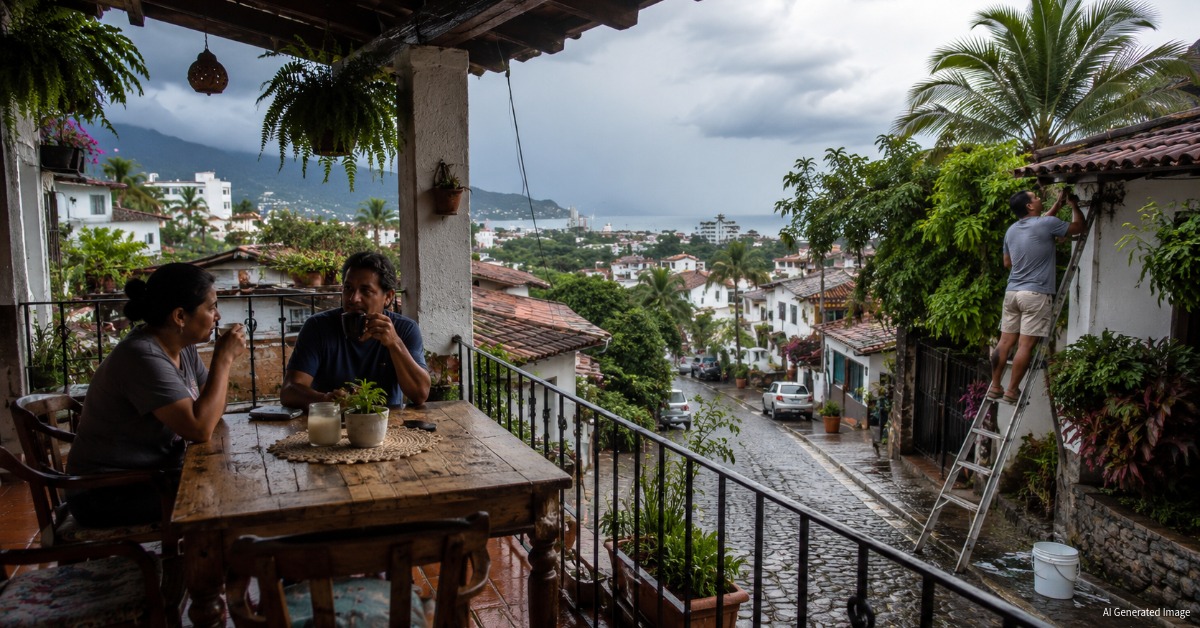
The first real rains do more than cool the streets for a few hours. In Puerto Vallarta, they change where people meet, when chores get done, which repairs can wait no longer, and how the body handles heat, humidity, and darker afternoons. The shift is easy to miss in travel coverage built around high season. Yet the wet months explain much of the city’s quieter, more private rhythm, from morning errands to roof repairs and indoor dinners.
Puerto Vallarta’s rainy season reshapes life
Puerto Vallarta does not simply get wetter during the rainy season. It changes tempo.
By June, the air feels heavier before the weather pattern becomes steady, and afternoon clouds start building over the mountains. A clear morning can turn into a dark, loud evening, then reopen at night as streets steam after a downpour. Hillsides turn green, the ocean stays warm, and plans begin to depend on what the sky is doing after lunch.
This is the seasonal reset many guides skip. High-season coverage usually follows whale watching, beach weather, restaurant openings, and the winter rush, while the wet months ask quieter questions. Where can people meet without getting trapped by rain? Which roof leak must be fixed before the next storm? How does a quieter city affect mood, energy, and routine?
The rainy season in Puerto Vallarta generally runs from June through October, with the wettest stretch often landing later in the summer. The Eastern Pacific hurricane season runs from May 15 through Nov. 30, placing the city inside the region’s broader storm calendar. That does not mean daily danger, since most days are still ordinary summer days: humid mornings, hot afternoons, and rain that often arrives later.
The change is more personal than dramatic. Rainy season changes the social clock, the maintenance calendar, and the emotional rhythm of daily life. A separate look at heat, humidity, and the first storms explains why the early transition can feel unsettled before regular rains arrive.
Social life moves with the clouds
Time is usually the first adjustment.
Morning becomes the dependable part of the day, so walks, errands, markets, laundry, beach time, and outdoor exercise make more sense before the heat peaks. By late afternoon, plans start to feel conditional, especially when river crossings, taxi availability, and flooded corners can turn a short trip into a longer one.
Outdoor life does not stop during the wet months; it moves indoors, under roofs, and closer to home. People meet earlier, choose places with covered seating, and become less casual about crossing town for a quick drink. A favorite open-air table may lose its appeal once lightning starts over the bay, while restaurants with airflow, fans, and solid rain protection suddenly feel more useful than places chosen only for a view.
Neighborhood life can also feel more local. Fewer winter visitors mean less crowd pressure in some familiar areas, even when summer vacation travel brings families from other parts of Mexico. Rather than an empty city, the result is a different city, with softer weekdays, busier domestic vacation periods, and sudden bursts of activity when the rain clears.
This rhythm rewards flexible plans. A lunch invitation may work better than a late dinner, and a beach afternoon may become a morning swim. Evening plans often need a nearby backup, not because the season is unsafe, but because water changes the math of moving around town.
Repair season starts before the first leak
Rainy season exposes what dry weather hides.
A roof that seemed fine in March may drip in July, while a cracked seal around a window can stain a wall after one hard storm. Patio drains clogged by leaves, dust, and construction debris can turn a small terrace into a shallow pool. Air conditioners work harder in humid heat, and mold can appear in closets, behind furniture, or inside rooms with weak airflow.
The smartest maintenance happens before the pattern settles in. Roofs, drains, gutters, window seals, exterior paint, fans, dehumidifiers, and screens all deserve attention before the strongest storms arrive. That work is not glamorous, but it shapes the season because a home prepared for water feels calmer when thunder starts.
Street-level preparation follows the same logic. Canals, rivers, and drainage points become part of the city’s rainy-season routine, and local crews often focus on clearing waterways before heavier storms arrive. For a closer look at that work, see how Vallarta races to clear canals before heavy rains arrive.
Private repairs and public maintenance are connected by the same reality. Water finds weak points: the clogged drain, the loose roof tile, the low crossing, the unsealed window, and the street where trash slows runoff. Dry season lets those details fade into the background, but rainy season puts them back on the calendar.
Humidity changes the body’s routine
The first rains can feel like relief, especially after May heat, until the air gets heavier.
Humidity affects small choices all day. Clothes dry more slowly, towels stay damp, a short walk can feel longer, and pets need cooler pavement for outdoor time. Food can spoil faster when power flickers or refrigeration becomes inconsistent, while sleep may suffer when nights remain warm and sticky.
That physical drag can be mistaken for laziness or a bad attitude, although it is often the body responding to heat, moisture, and interrupted rest. The season asks for a different pace: earlier errands, lighter meals, more water, shaded routes, and fewer back-to-back obligations. None of that makes the weather disappear, but it can make the wet months feel less punishing.
The city’s natural beauty is real during this period, but the body does not live inside a postcard. A green hillside does not cancel the weight of humidity in a small room with weak airflow. Even a dramatic sunset does not fix a week of poor sleep. Both things can be true.
Mood follows the season, too
A quieter city can feel peaceful at first. It can also feel isolating.
High season brings a built-in social structure as visitors arrive, events multiply, restaurants fill, and service work moves faster. During the wet months, that outside energy thins. Friends travel, some businesses reduce hours, outdoor plans become harder, and a person can go from overbooked to under-stimulated within a few weeks.
Mood shifts during seasonal changes are not unusual. Medical guidance on seasonal affective disorder describes recurring seasonal patterns that can affect energy, sleep, concentration, appetite, and interest in normal activities. A rainy-season slump is not automatically depression, but a pattern that lingers beyond a passing bad day deserves attention.
In Puerto Vallarta, the wet-season version is often tied to heat, humidity, less predictable movement, and fewer easy social defaults. Someone who feels fine in February may feel restless in August, while another person may welcome the quieter months and then feel boxed in after several stormy evenings. Neither reaction is strange.
Planning helps because it turns the season from something that happens to you into something you live with. Morning walks, indoor dinners, Spanish classes, gym time, book groups, home projects, and short mountain escapes can give the wet months structure. Staying busy every minute is not the goal; keeping weather from making every decision is.
The local year has two speeds
Puerto Vallarta’s rainy season is often described through visitor math: lower prices, fewer crowds, and greener views. That is useful, but incomplete.
The deeper story is how the city breathes between cycles. Winter and spring bring movement, money, houseguests, events, and full calendars. Summer and early fall bring heat, water, repairs, quieter weekdays, and a stronger pull toward home. By October and November, the climb back toward busier months begins as storms ease and the social calendar starts filling again.
People who understand that rhythm plan better. Roof work gets scheduled before the downpours. Indoor projects wait for August. A rainy night stops feeling like a failed plan. Friendships become less dependent on beach weather, and checking the forecast becomes a habit rather than a source of anxiety.
For weather planning, the Puerto Vallarta Hurricane Season Guide is worth keeping separate from ordinary rainy-season expectations. A normal stormy evening and a tropical system are different situations, even when both arrive with heavy rain.
The wet months are not a pause in local life. They are one of its organizing forces, shaping when people meet, what gets repaired, how homes are cared for, and how much quiet a person can handle. Once that becomes clear, the rainy season stops looking like the part of the year to explain away and becomes part of the city’s real calendar.