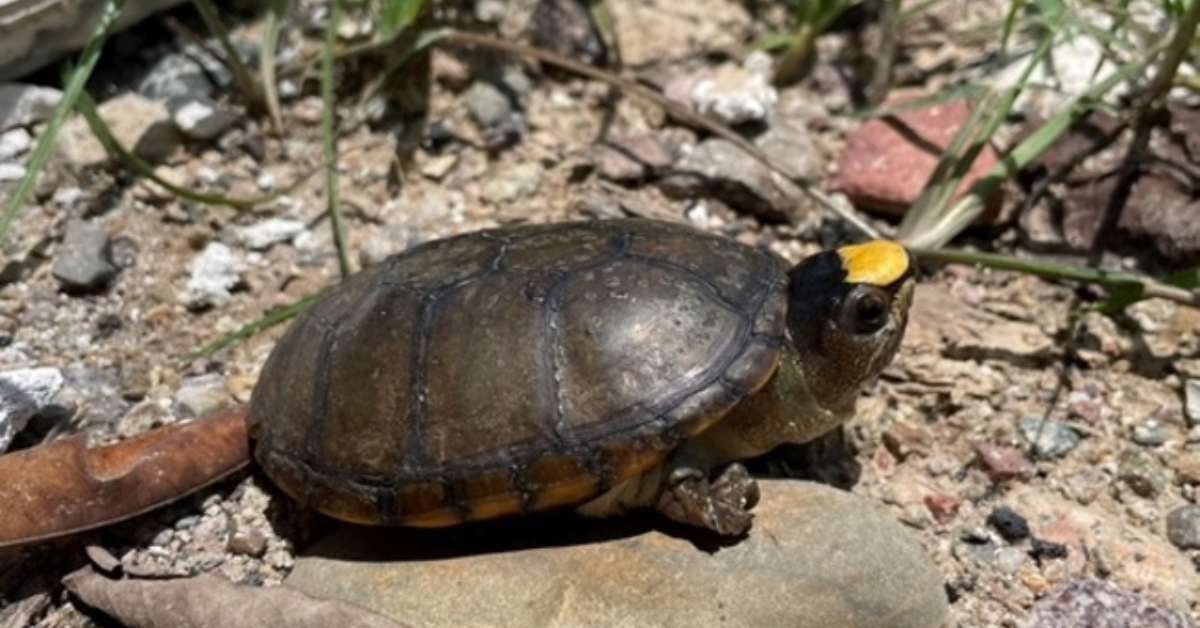
A federal inspection in Puerto Vallarta found clearing, land-use changes, and activities affecting habitat associated with the tortuga casquito, a small freshwater turtle with a narrow local range. Profepa’s temporary closures covered roughly 5.37 hectares, while a citizen environmental committee turned over 90 traps found in other habitat areas. The case offers a broader look at how local development pressure affects creeks, vegetation, and protected wildlife before many people notice the damage.
A turtle case becomes a land-use case
Profepa ordered temporary, total closures of two Puerto Vallarta properties after inspectors found clearing, land-use changes, and other activities within habitat associated with the tortuga casquito, a small freshwater turtle associated with the Bahía de Banderas region.
The inspection identified impacts on roughly 5.37 hectares of vegetation, including low deciduous forest and medium subperennial forest. Inspectors also found two brickworks operating in the area, piles of sand and rubble, and impacts to an intermittent arroyo along the edge of the property.
The agency said the properties did not present authorization from Semarnat for environmental impact matters. That point makes the case larger than the turtle itself. It places the issue at the center of Puerto Vallarta’s long-running tension over construction, land clearing, drainage corridors, and the legal steps required before natural areas are altered.
What inspectors found
The federal inspection took place on May 12 in two properties identified as part of the turtle’s habitat and nesting area. According to the findings, inspectors observed changes in land use, clearing, and removal in terrain described as having forest vegetation.
The temporary closures were imposed as precautionary safety measures. In plain terms, that means the authority moved to stop the activities while the case is reviewed through the administrative process.
Separately, the Comité de Vigilancia Ambiental Participativa de la Tortuga Casquito Vallarta turned over 90 traps to Profepa. The committee reported that the traps had been found and disabled in other areas that form part of the turtle’s habitat.
The number is important because it shows two pressures at once. One is pressure on the land itself. The other is pressure on the species in places where it is still being found.
How permits fit into the case
In Mexico, projects that remove vegetation, change land use, or affect areas with environmental value can trigger federal review. When forest vegetation is involved, a project may need authorization for a change of land use in forest terrain. If the work may affect ecosystems, wildlife habitat, waterways, or other environmental conditions, it may also require environmental impact authorization.
Those permits are not paperwork after the fact. They are supposed to be reviewed before work begins, because the review determines what can be cleared, what must be avoided, what mitigation is required, and whether a project can proceed under the proposed conditions.
The Puerto Vallarta case shows what happens when the inspection comes after activity is already visible on the ground. Profepa’s closures may stop work, but they do not automatically restore vegetation, water flow, or habitat conditions. That is why enforcement timing becomes a public issue.
The turtle and the habitat
The tortuga casquito, known scientifically as Kinosternon vogti, is closely tied to freshwater habitat in western Mexico. Scientific and conservation references identify it as a highly restricted species associated with the Bahía de Banderas area in Jalisco and Nayarit.
Its small range is part of the concern. When a species depends on a limited habitat, damage in one area can carry more weight than it would for a species spread across a wide region.
In Puerto Vallarta, that habitat is not separated from daily urban pressure. It can overlap with properties, drainage areas, vacant land, small waterways, and places where informal or formal activity has expanded over time. That overlap makes enforcement difficult and makes local land-use decisions more visible.
Water channels are part of the story
The reported impact on an intermittent arroyo should not be treated as a side detail. In a coastal city, seasonal channels help move rainwater through land that may be dry for part of the year and active during storms.
When vegetation is removed or rubble is placed near these channels, the effects can extend beyond a property line. Water may shift, slow, back up, or carry debris into nearby areas. That can affect habitat, roads, homes, and downstream public spaces.
This is one reason environmental review looks at the site as a system. A small patch of vegetation, a seasonal arroyo, and a nesting area can be connected even when they appear separate on a map.
What the case leaves unresolved
The temporary closures do not settle the broader question of what will happen to the affected area. They mark a point in the enforcement process.
The next issues are whether the responsible parties can prove they had the required authorizations, whether additional sanctions or restoration measures are imposed, and whether the habitat receives sufficient monitoring after the initial inspection.
For Puerto Vallarta, the case also raises a familiar planning question: how early local authorities, federal regulators, and citizen groups identify environmental conflicts before clearing begins. Once inspectors arrive after land has already been altered, the discussion is no longer only about permits. It is also about what can still be repaired.