Puerto Vallarta and Mexico News

Puerto Vallarta and Mexico News

Cancún Airport Loses 150,000 Passengers in First Quarter

Rising Fuel Costs Hit U.S. Flights to Mexico Resorts

Airlines are starting to pull back on some Mexico routes just as summer travel approaches. The cuts do not mean travelers are avoiding Mexico altogether, and Los Cabos remains connected to major U.S. markets. But higher jet-fuel costs, route profitability, and concerns tied to recent security headlines are changing the math for carriers. For travelers and residents who depend on reliable air links, the shift could mean fewer nonstop options, tighter schedules, and higher fares on some routes.

See our Mexico tourism news hub for routes, trends, and safety.

U.S. flight cuts reach key Mexico tourism routes

U.S.-Mexico air service is entering a new period of adjustment, with flight cuts to Mexico now affecting major tourism routes, including Los Cabos, Cancún, Puerto Vallarta, and Mexico City.

The most direct impact for Los Cabos comes from Delta Air Lines’ planned changes out of Seattle. Delta says its Seattle-to-Los Cabos service will operate only on Saturdays in June. The route is then scheduled to pause from July 1 through November 8, with service expected to resume on November 9.

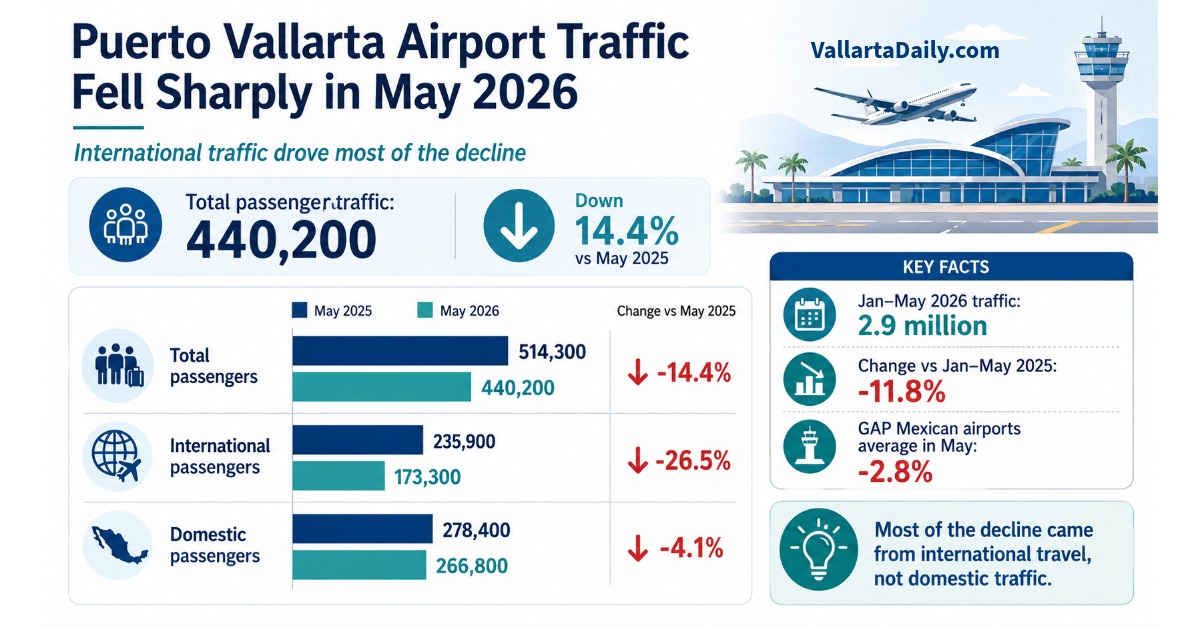
Delta also plans to pause Seattle to Cancún from June 2 through November 8. Its Seattle-to-Puerto Vallarta service is scheduled to pause from October 6 through November 8. The airline says affected passengers will be contacted about alternate options.

For travelers, this is not an airport closure or a sign that Mexico routes are disappearing. It is a capacity adjustment. Airlines are cutting or reducing routes they see as harder to justify under current costs and demand.

Fuel prices are changing airline decisions

The biggest pressure point is jet fuel, which has risen sharply in recent weeks. Fuel is one of the highest variable costs for airlines. When prices jump, long leisure routes become harder to operate profitably, especially if demand softens at the same time.

Delta has already told investors it is reducing capacity growth and trying to recover higher fuel costs. The airline’s June quarter guidance assumes an all-in fuel price of about $4.30 per gallon. Industry pricing data showed the Argus U.S. Jet Fuel Index at $4.56 per gallon on April 29.

That matters because airlines do not only look at whether a plane is full. They look at what each seat earns after fuel, crew, airport fees, maintenance, and aircraft use. If a route needs lower fares to fill seats, it becomes more vulnerable when fuel rises.

For beach destinations in Mexico, this can make seasonal routes less secure. Nonstop flights from U.S. cities are attractive for visitors, but they must compete with other leisure markets, including the Caribbean, Florida, Hawaii, and domestic U.S. vacation cities.

Demand has not collapsed, but weak spots are showing

The broader picture is more mixed than the headline suggests. Mexico is not seeing a uniform collapse in international tourism demand. Still, airlines are seeing weak spots in certain leisure markets.

Delta has pointed to softer leisure demand in Mexico after security incidents affected Puerto Vallarta earlier this year. That does not mean every Mexican destination faces the same conditions. But airlines often respond to broader demand signals, especially when one market affects traveler confidence in the wider region.

Industry estimates cited in Mexican business coverage place the drop in U.S. carrier seat-mile capacity to and from Mexico at about 10 percent for the next three months. Cancún appears to be among the most affected airports, with several U.S. carriers trimming capacity for the May-to-July period.

Los Cabos is in a different position. It remains one of Mexico’s strongest international tourism markets, especially among U.S. and Canadian visitors. But it is not immune to the airline math now driving schedule decisions.

Los Cabos remains resilient, but not untouched

Airport data shows Los Cabos International Airport has seen softer passenger traffic in early 2026, though international demand has held up better than domestic traffic.

Grupo Aeroportuario del Pacífico reported that Los Cabos passenger traffic fell 6.9 percent in March compared with March 2025. For the first quarter, total traffic was down 2.0 percent. International passenger traffic was down only 0.7 percent for the quarter, while domestic traffic fell 6.1 percent.

That split is important. Los Cabos still has a relatively stable foreign visitor base. The bigger weakness comes from domestic travel and from airline decisions about which routes to keep during a high-cost period.

The Delta cut from Seattle does not erase Los Cabos’ U.S. connectivity. Travelers can still reach the destination through other Delta hubs and other carriers. But fewer nonstop seats from one U.S. market can still affect fares, convenience, and travel planning.

Security perception is part of the airline equation

Security concerns are also part of the current travel environment, though they should be read carefully.

Baja California Sur, where Los Cabos is located, remains under the U.S. State Department’s Level 2 advisory, which means exercise increased caution. The advisory lists no specific travel restrictions for U.S. government employees in Baja California Sur.

That is different from stronger warnings applied to some other Mexican states. It also means travelers should avoid treating all Mexico security headlines as if they apply equally to Los Cabos.

Still, perception matters. If travelers become nervous about Mexico as a whole, airlines can see bookings soften before a destination itself sees a major decline. Airlines then move aircraft to routes they believe will produce stronger returns.

That is why a security issue in one destination can still affect capacity planning elsewhere. Airlines operate networks, not isolated routes.

What travelers may notice next

For travelers, the most likely effects are schedule changes, fewer nonstop options from some U.S. cities, and possible fare pressure on popular travel dates.

Residents and frequent visitors should watch airline emails closely. Schedule changes may not always look dramatic at first. A nonstop flight may become a connection. A morning departure may be moved later. A same-day connection may become less convenient.

Travelers booking Los Cabos flights for late summer or fall should compare refundable and changeable fare options. It may also be worth checking nearby departure cities when possible, especially for those traveling from the western United States.

The current cuts are not a reason to avoid booking travel. But they are a reason to avoid assuming schedules will stay fixed. Airline schedules can change again if fuel prices ease, demand improves, or carriers decide to protect market share.

A warning sign, not a tourism crisis

The flight cuts are best understood as a warning sign for Mexico’s tourism economy, not a crisis.

Mexico remains a major leisure destination for U.S. travelers. Los Cabos remains one of the strongest high-value resort markets in the country. But airlines are becoming more selective. Routes that looked attractive when fuel was cheaper now face tougher scrutiny.

For Los Cabos, the near-term challenge is keeping air access competitive while reassuring travelers that the destination remains stable and accessible. The region’s international numbers suggest it still has a strong base. The question is whether airlines will keep enough seats in the market to support that demand through a more expensive operating season.

For travelers, the practical advice is simple. Recheck flight schedules, leave room for changes, and avoid waiting too long on peak travel dates. The planes are still flying, but some of the easiest routes may be harder to find.

Related Posts

Posadas Plans 1,000 Rooms for Riviera Cancún

Posadas Plans 1,000 Rooms for Riviera Cancún

Grupo Posadas plans a 1,000-room Riviera Cancún complex, adding another major resort project to Mexico’s...
NASA Data Shows Mexico City Sinking Faster Than Expected

NASA Data Shows Mexico City Sinking Faster Than Expected

New NASA satellite data shows parts of Mexico City sinking more than 2 cm per...
CJNG Recruiter Arrested as Michoacán Violence Persists

CJNG Recruiter Arrested as Michoacán Violence Persists

Authorities say “Comandante Giro” recruited people for crimes and homicides in Michoacán, where cartel pressure...
Vallarta weighs beach access plan to keep shores public

Puerto Vallarta Redraws Its Federal Beach Zone

Puerto Vallarta updated federal beach-zone maps to clarify concessions, reduce disputes and improve ZOFEMAT fee...