
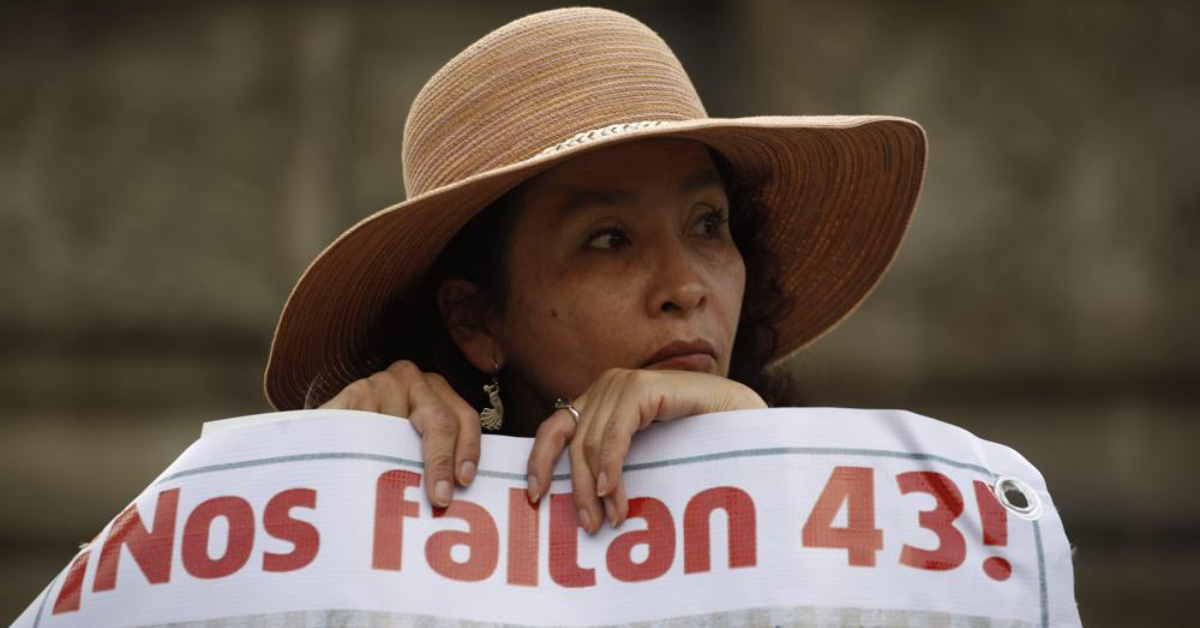
MEXICO CITY (AP) — The Truth Commission established to clear up the 2014 disappearances of 43 students in southern Mexico said Thursday the army was responsible at least for not stopping the abductions because a soldier had infiltrated the student group and the army knew what was happening.
On Sept. 26, 2014, local police from the town of Iguala, members of organized crime, and authorities abducted 43 students from buses. The students were from a rural teachers’ college called Ayotzinapa elsewhere in Guerrero state and they periodically commandeered buses for their transportation.
The administration of then-President Enrique Peña Nieto presented as the “historic truth” that the students were turned over to a drug gang who killed them, incinerated their bodies at a dump in nearby Cocula, and tossed the burnt remains into a river.
Investigations by independent experts and the Attorney General’s Office, and corroborated by the Truth Commission, have since dismissed the incineration at the Cocula dump, although recovered burnt bone fragments have been used to identify three of the missing students.
Interior Undersecretary Alejandro Encinas, who leads the commission, said Thursday it was a “state crime,” in which officials from all levels of government were involved.
He said the army is responsible, “for action, omission or negligence.”
One of the abducted students was a soldier who had infiltrated the school and yet the army did not search for him even though it had real-time information about what was happening, he said. Encinas said the inaction violated army protocols for cases of missing soldiers.
The defense ministry did not immediately respond to a request for comment.
Encinas also said the highest official implicated in the case, Tomás Zerón, had been offered a deal in exchange for his cooperation.
Zerón is accused of torture and forced disappearance and is considered a fugitive while he resides in Israel. Zerón, who oversaw the criminal investigation agency of the Attorney General’s Office and also its forensic work in the case, is considered the author of the Peña Nieto administration’s version of events.
Eight years in, there has been no evidence that the students could still be alive.
Encinas also revived the hypothesis that the origin of the abductions was tied to the region’s active drug trafficking. He said a bus that night had passed through 16 federal security checkpoints without being stopped, despite intercepted communications discussing “merchandise” that it was carrying. “And the merchandise is either drugs or money,” he said.
A 2016 investigation by independent experts found that federal police had taken students off the so-called “fifth bus” and then escorted it out of Iguala. Investigators suspected the bus was part of a heroin trafficking route from the mountains of Guerrero to Chicago and that the students had unknowingly hijacked it and its illicit cargo triggering the episode.
The families of the disappeared have kept up pressure on the government over the years, demanding the investigation be kept open and expanded to include the military, which has a large base in Iguala yet did not intervene.