Puerto Vallarta’s new garbage collection schedule took effect Wednesday, July 15, shifting neighborhoods into morning routes beginning at 6:30 a.m. or evening routes beginning at 7 p.m. Depending on the area, pickup is now daily or four days a week. City Hall is asking households and businesses to put waste outside only during their assigned window, a practical change after months of missed pickups, overflowing corners and repeated complaints.
The revised neighborhood schedule is the most visible municipal action of the past seven days. The official announcement was posted through the municipal government’s public channels. The real test begins after the maps and graphics disappear from social media: whether trucks arrive consistently, whether residents receive clear notice when routes fail and whether City Hall enforces the schedule evenly.
Trash complaints brought a second response
Municipal crews also removed discarded furniture, appliances and other bulky waste from 30 locations in 5 de Diciembre, Centro, Alta Vista, Canoas, Paso Ancho and Paso del Guayabo. The weekend cleanup targeted informal dumping points that can block drainage, hold standing water and spread debris during heavy rain. VallartaDaily’s report on the 30-site cleanup shows the difference between regular collection and “cacharros,” which often require a separate crew and cannot simply be left beside household bags.
That distinction will matter under the new routes. A truck arriving on schedule does not solve illegal dumping, abandoned mattresses or construction debris. City Hall says the bulky-waste operations will continue, but residents still need a reliable way to request removal before a corner becomes a permanent dumping site.
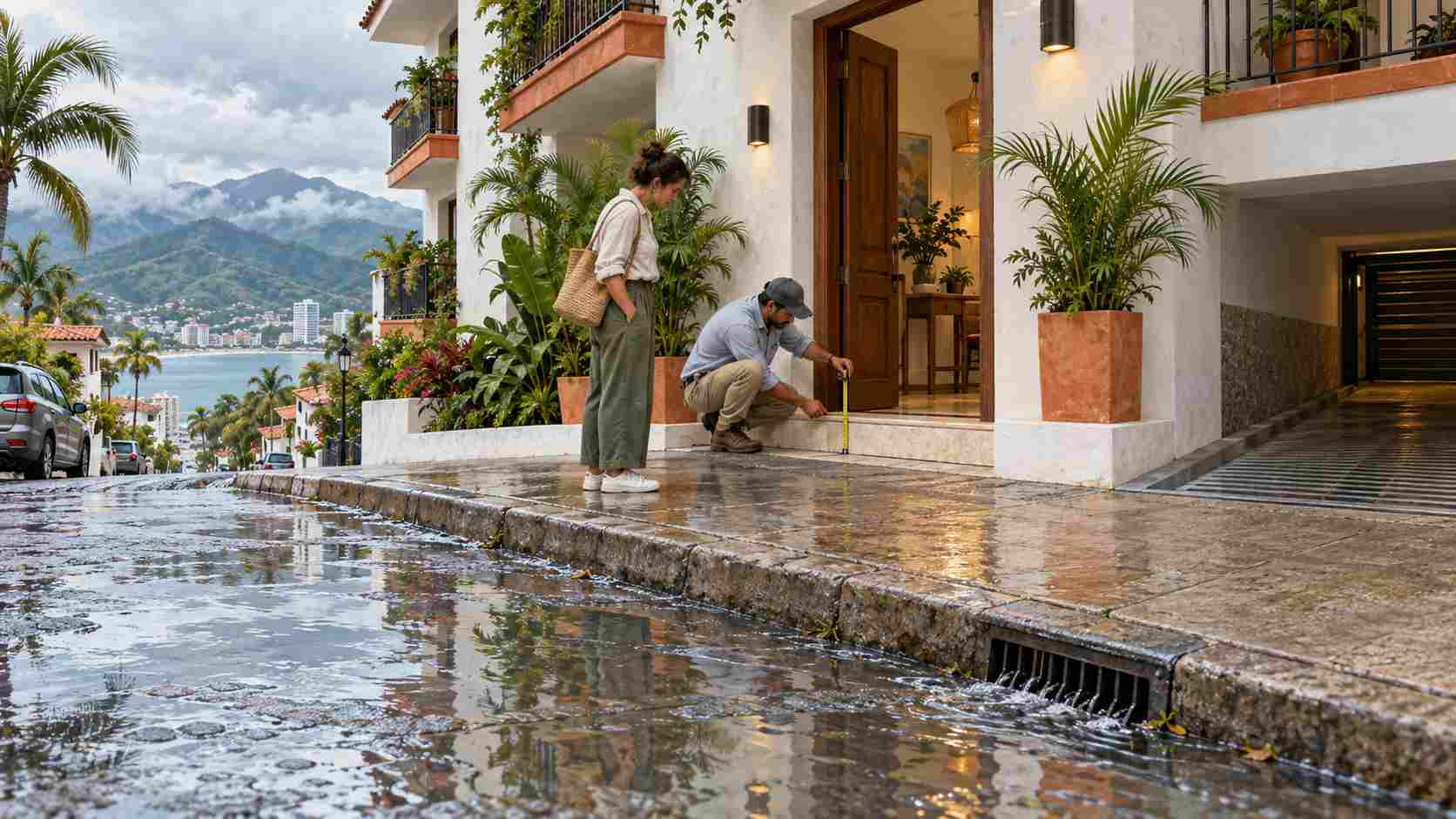
Water work moved above and below the street
SEAPAL spent the week dealing with immediate failures while adding equipment intended to reduce larger problems later. A citizen report led crews to replace a deteriorated six-meter section of 20-inch sanitary pipe at Aldama and Morelos in Centro. Morelos was temporarily closed, traffic was diverted through Juárez, and the agency said the cobblestone surface would be restored after the underground repair settled.
Elsewhere, sewer work in Marina Vallarta continued to bring traffic disruption in a district where aging lines have required repeated intervention. SEAPAL and CFE also agreed to trim vegetation near power lines serving wells and pumping facilities, especially around the Río Ameca radial well and Playa Grande, because an electrical outage can quickly become a water outage.
On July 13, SEAPAL placed the first of two new blowers into service at the Norte II wastewater treatment plant. The equipment supplies oxygen needed in the biological treatment process, helping the plant remove contaminants more efficiently. It is the kind of public work most people never see, but it directly affects wastewater quality, odors and the system’s ability to keep pace with urban growth.
City planning remains harder to follow
The week also exposed a gap between active construction and public oversight. Municipal records document new vertical-development licenses and payments for additional buildable area, yet the public record does not provide a clear neighborhood-by-neighborhood account of the added homes, traffic, water demand or drainage load.
The council committee responsible for planning, public works and land use did not meet in June and had last posted an April 29 session before a new meeting was scheduled for July 17. The beaches committee also skipped June and was scheduled for July 17. Those meetings are where permits, public-space rules, coastal access, and infrastructure obligations should be subject to public discussion. When committees do not meet, decisions may still move through departments, but residents lose a regular window into how those decisions are being tested.
That concern extends to Centro. The unresolved structural warning at the Río Cuale Municipal Market remains a public-space management problem involving vendors, shoppers, Civil Protection and the city’s responsibility for a municipal property. A repair plan matters only when the affected area is secured, funded and completed.
Tourism spending is also a local service choice
Public spending drew fresh scrutiny after records showed Puerto Vallarta’s tourism trust approved up to US$290,000, roughly 5.8 million pesos, to participate in the 2026 Michelin Guide process. The guide ultimately recognized two local restaurants. The Michelin agreement is tourism policy expressed through a budget: officials chose international gastronomic promotion at a time when residents are measuring City Hall through trash pickup, street conditions, water reliability, and unfinished repairs.
These funds do not all come from the same account, and tourism promotion funds cannot automatically be transferred to every municipal service. Still, the spending choices belong in the same civic conversation because they reveal what the government is prepared to fund, document and defend publicly.
For the coming week, the useful measures are concrete: whether the new garbage routes hold, whether disturbed streets are properly restored, whether the July 17 committees meet as posted, and whether public records show clearer action on permits, beaches and municipal properties. Residents reporting missed pickups, leaks, potholes or blocked public space should keep dates, photos and folio numbers; VallartaDaily’s city complaint guide explains where those reports should go.