Cancún officials are looking beyond shoreline rakes and tractors as early sargassum arrivals test the city’s hotel-zone beaches. The new idea is to use offshore barges to collect the algae before waves push it onto the sand. Officials say some stretches are too rough for fixed barriers, so they are weighing mobile options. Supporters say open-water work could cut heavy cleanups that pull sand with seaweed. What would the system look like, where would it work, and how soon could visitors notice a difference?
Offshore collection under review
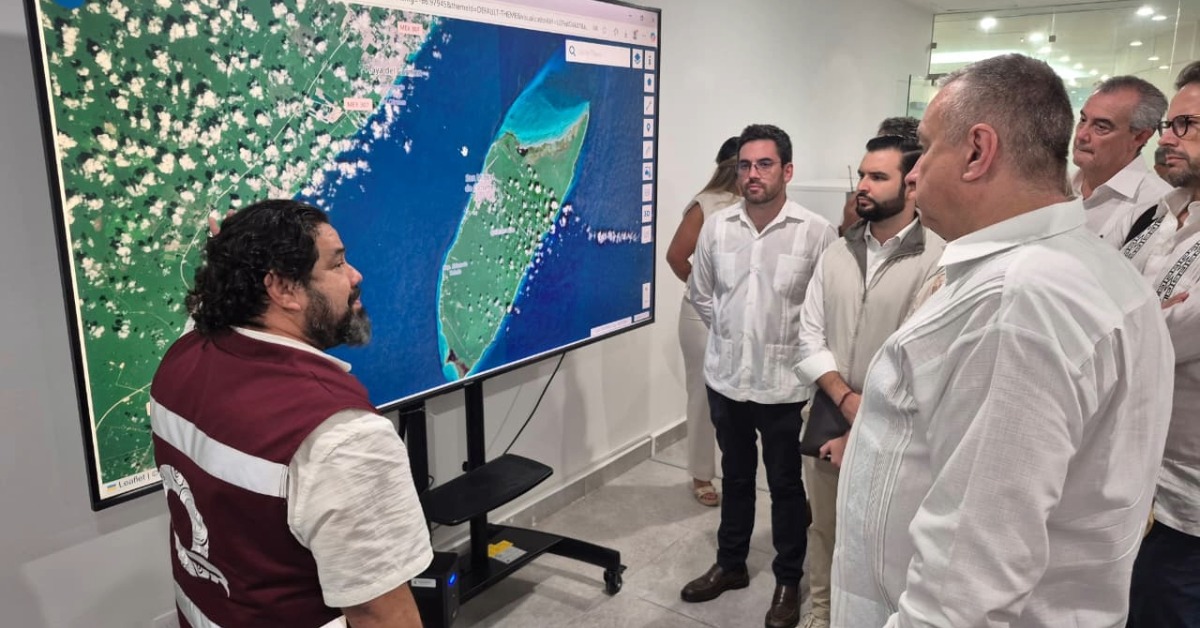
Cancún is considering a shift in its sargassum response. Officials want to collect more algae offshore before it reaches the shoreline. The Benito Juárez municipal government is evaluating offshore barges that can gather floating mats in open water. The city could buy the equipment or contract it. The goal is to reduce the amount of seaweed that piles up on the sand. Once it lands, removal becomes slower and more disruptive. Mayor Ana Paty Peralta said crews face limits with fixed containment systems in parts of the Hotel Zone. Under the concept, collection would happen seaward of breaking waves. That targets the algae while it remains a surface layer. While the review continues, teams from Servicios Públicos and Zofemat are maintaining daily cleanups. Officials have not announced a budget or start date for new equipment. They say the priority is beach access and lower impacts during the season. The proposal would not replace beach cleaning. It could reduce the volume reaching the surf line.
Where barriers fall short
Containment anti-sargassum barriers remain part of the broader strategy. But they are not workable on every stretch of coast. State environmental officials are reviewing a barrier of up to 1.5 kilometers for Playa Coral. That beach sits at kilometer 25 of the Hotel Zone and is certified as pet-friendly. Across Quintana Roo, 6,600 meters of barriers are already in the water in several municipalities. More barrier material is being distributed ahead of peak season. In Cancún, the municipality says some segments are difficult to anchor and keep stable. Officials point to the corridor from Playa Ballenas to Playa Chac Mool. Wave energy and coastal morphology can complicate the deployment of fixed infrastructure there. The city wants to intercept sargassum before it reaches the surf line. Even when barriers hold, they need constant monitoring and quick collection. Otherwise, seaweed can pass under the line or move around the ends. Barges are one option under review for that gap.
Why shoreline cleanup can cost sand
The push to intercept sargassum at sea is tied to what happens once it lands. Large arrivals can force rapid removal to keep access open and reduce odor. On busy beaches, that work often uses mechanized raking and hauling. Those methods can remove sand with the seaweed. Research on the Mexican Caribbean links sand loss to a higher erosion risk. UNAM specialists have noted that cleanup can take significant amounts of sand. In some operations, sand has been estimated to account for about 30% of the volume removed. Disposal creates another set of risks. Decomposing seaweed can release gases, and leachates can seep into the ground. That matters on karst terrain, where water can move quickly underground. Offshore collection is intended to reduce the amount of material reaching the beach. It also aims to shorten the time seaweed sits at the surf line. If it works, fewer loads would need to be dragged across the sand and staged on land.
What happens next
For now, the offshore barge idea is still an evaluation, and several details remain open. City officials have framed the option as either acquiring vessels or contracting specialized services. Any system would need clear operating zones and safe transfer points. It would also need a plan for what to do with the collected material. It must work under real sea conditions, including days with higher surf. Coordination matters because the wider response includes state programs, maritime support, and authorized disposal sites. Quintana Roo says it is strengthening both sea and land operations as early arrivals appear. More intensive work is expected to begin in March, with crews deployed across coastal municipalities. In the long term, state officials are promoting projects to process sargassum using a circular-economy model. Cancún has not said when it will decide on the barges or what capacity to add. For residents and long-stay visitors, the near-term picture is continued daily maintenance in the Hotel Zone. In the meantime, the municipality says cleanup brigades will continue in the most affected areas.