Puerto Vallarta, Jalisco, July 17, 2026 — Puerto Vallarta is entering the more consequential half of the Pacific hurricane season with El Niño already established and now given an 81% chance of becoming a very strong event during the closing months of the year.
The latest El Niño diagnostic discussion from the U.S. Climate Prediction Center says the ocean-atmosphere pattern strengthened during June and is expected to continue intensifying through the end of 2026. Forecasters place the probability of El Niño persisting into early spring 2027 at 97%.
That outlook sharpens an existing concern for Mexico’s Pacific coast. Warmer water and reduced disruptive winds can create a broader area where tropical systems form, remain organized, and sometimes intensify rapidly.
The phrase “Super El Niño,” used in recent commercial forecasts and local reporting, is not a separate type of storm and does not mean that a hurricane is heading toward Puerto Vallarta. It is an informal description for an exceptionally strong El Niño, generally associated with equatorial Pacific temperatures reaching about 2 degrees Celsius above normal.
A strong El Niño can make the eastern Pacific more favorable for hurricanes across the basin, but it cannot predict where an individual storm will travel months in advance. Neither Mexico’s Servicio Meteorológico Nacional nor NOAA has issued a location-specific landfall probability for Puerto Vallarta.
Mexico’s official 2026 cyclone-season forecast calls for 18 to 21 named systems in the eastern Pacific. Nine or 10 are expected to remain tropical storms, five or six could become Category 1 or 2 hurricanes, and four or five could reach Category 3 or higher.
AccuWeather’s Pacific hurricane outlook is similar, projecting 17 to 22 named storms, nine to 13 hurricanes and four to eight major hurricanes. Its forecasters estimate that six to nine systems could produce direct effects somewhere in Mexico or Central America, a definition that includes flooding, tropical-storm-force winds, significant storm surge or a track within 60 miles of the coast.
Those numbers cover thousands of kilometers of coastline. They should not be read as a forecast of six to nine landfalls, much less as a prediction that Puerto Vallarta will be struck.
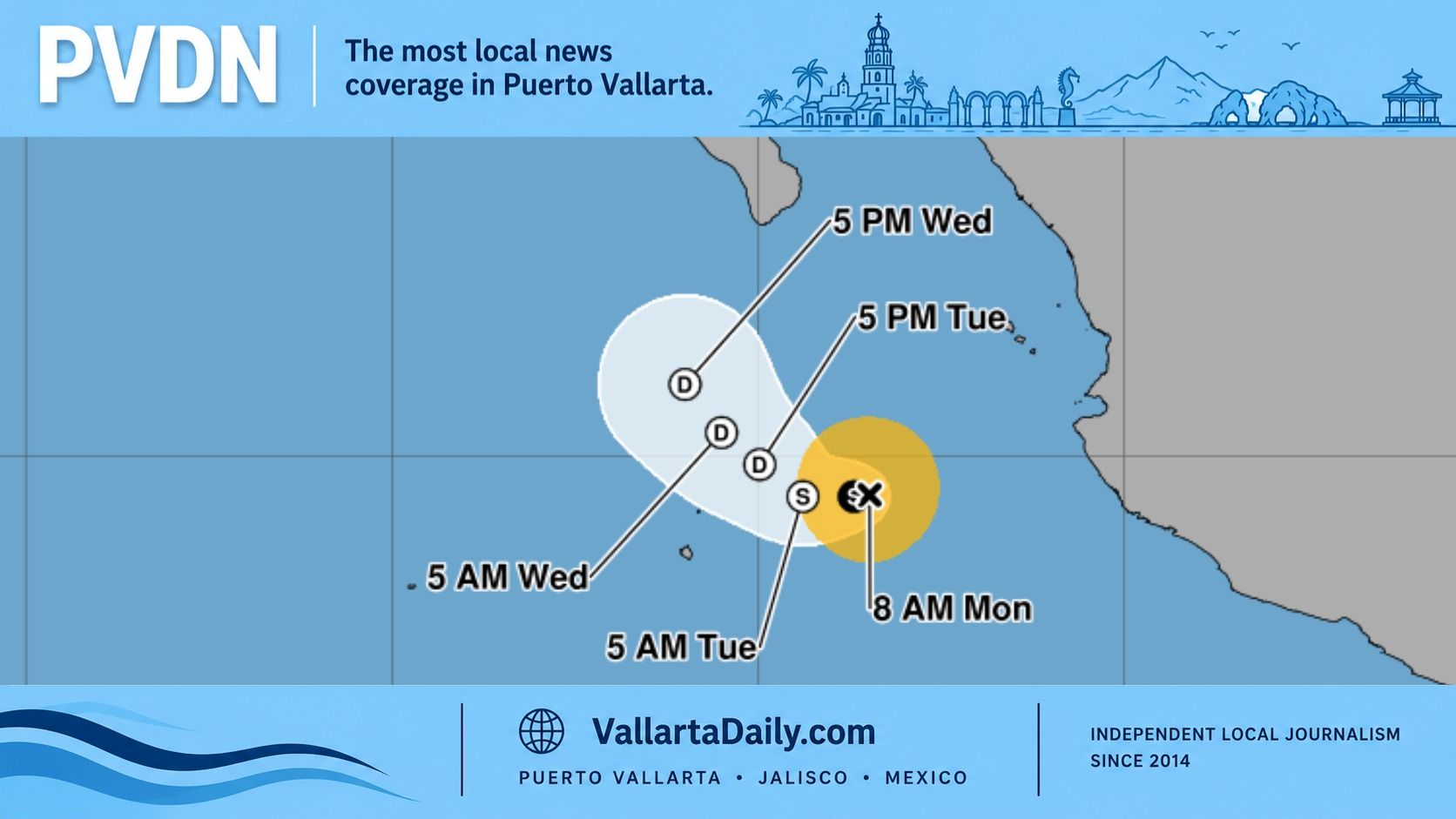
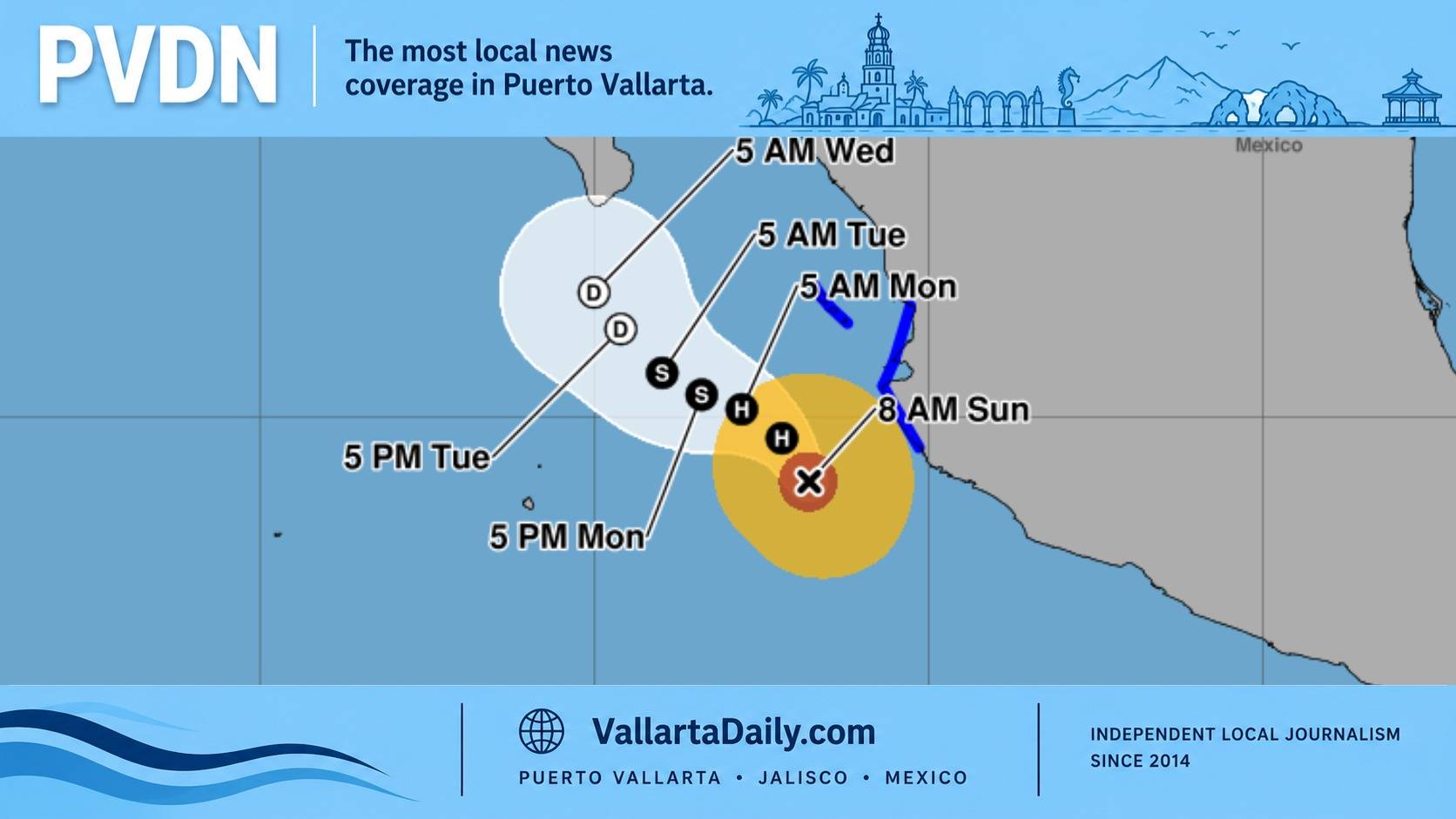
There was no immediate tropical threat to the city Friday morning. Tropical Storm Elida was approximately 1,325 kilometers west-southwest of the southern tip of Baja California, moving farther into the Pacific. The National Hurricane Center’s morning advisory reported no coastal watches or warnings, although Elida could briefly become a hurricane before weakening.
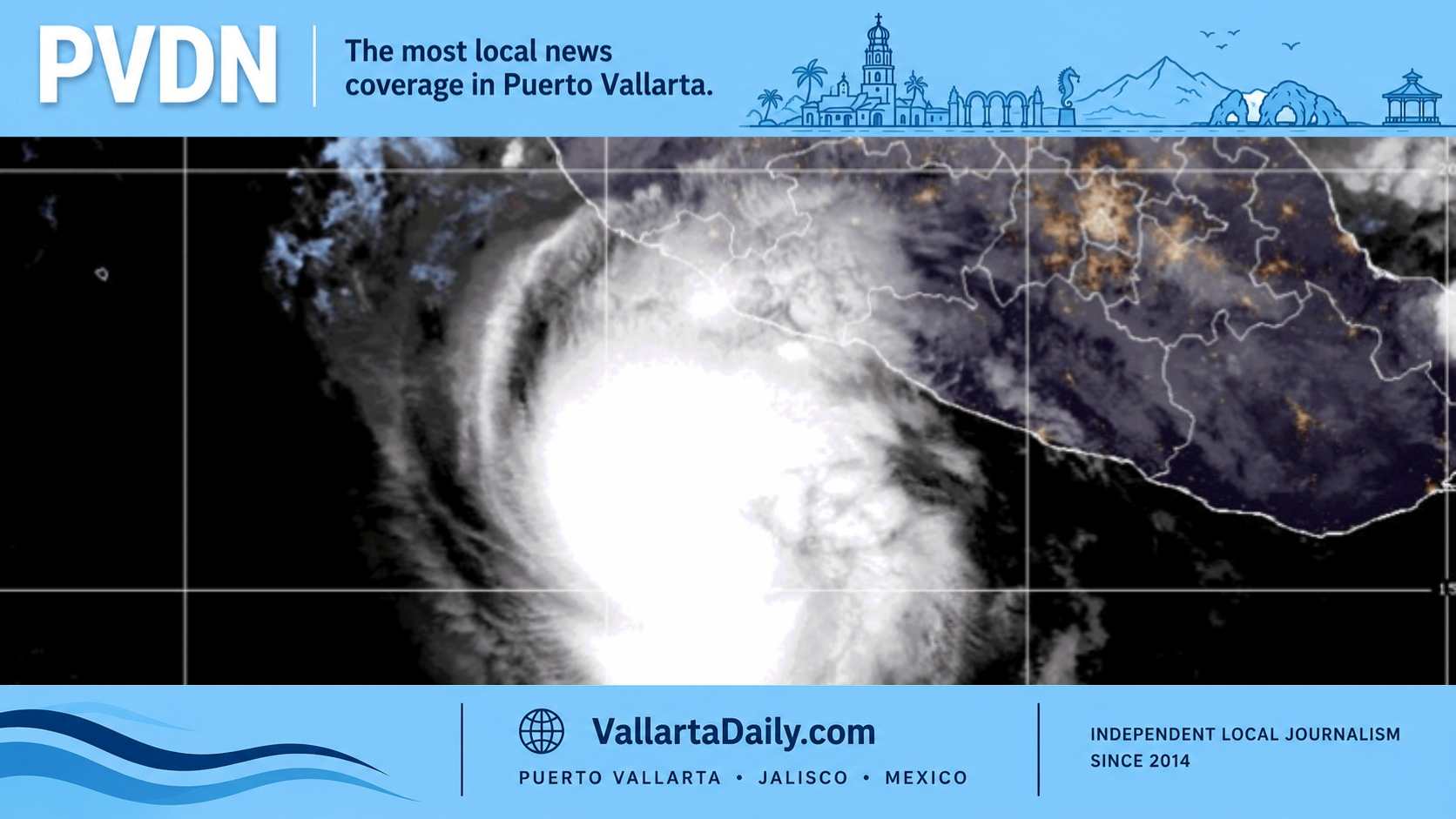
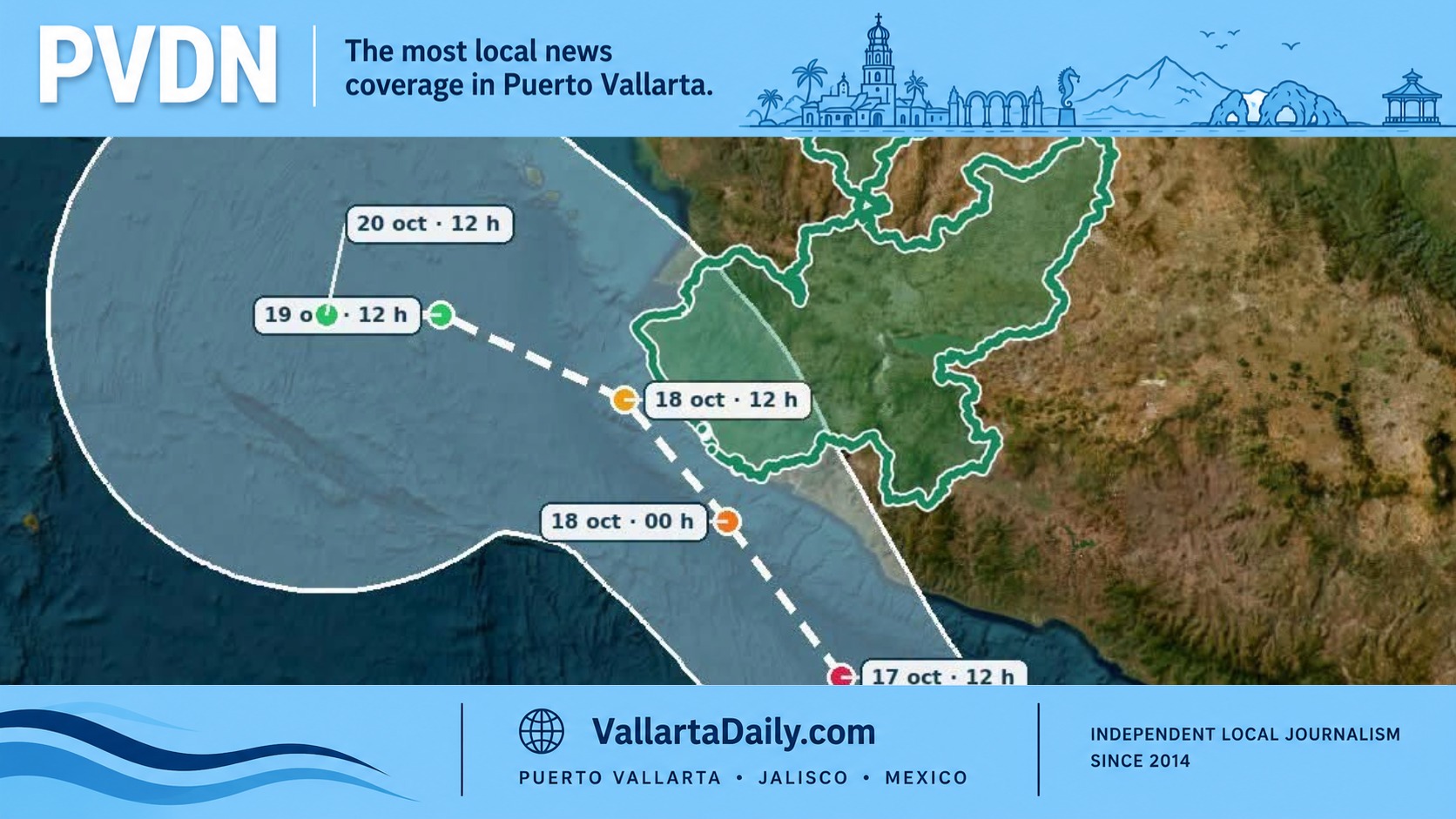
For Puerto Vallarta, the local danger is not limited to a hurricane’s eye crossing the coastline. A system passing offshore can send prolonged rain into the Sierra Madre, raise the Cuale and Pitillal rivers, trigger slope failures and overwhelm drainage in low-lying streets. Large swells can also close the maritime terminal or halt smaller boats before damaging winds reach land.
That pattern was visible during Hurricane Nora in August 2021, when the Cuale and Pitillal rivers overflowed and serious damage extended through the river corridor. In October 2023, Hurricane Lidia brought another round of destructive winds, fallen trees, utility failures and flooding, followed by a lengthy municipal recovery operation.
Lidia’s October arrival is especially relevant to the current forecast. AccuWeather expects the strengthening El Niño to become a larger influence during late October and November, when many households and businesses may assume the most dangerous portion of the rainy season has passed.
Puerto Vallarta had already begun preparations for an active 2026 cyclone season before El Niño became established. The new outlook does not require panic or travel cancellations. It does give property managers, hotels, boat operators and households more reason to review evacuation arrangements, protect documents and medication, clear drainage areas and confirm backup power before a storm enters the regional forecast.
Once a system approaches western Mexico, local decisions should be based on bulletins from the Servicio Meteorológico Nacional, Puerto Vallarta Civil Protection and the official status of Mexican ports, rather than seasonal storm totals or long-range computer tracks.
NOAA’s next full El Niño assessment is scheduled for August 13. That update may provide a clearer measure of how quickly the event is strengthening, but Puerto Vallarta’s actual risk will still depend on the formation, route, and intensity of each individual cyclone.