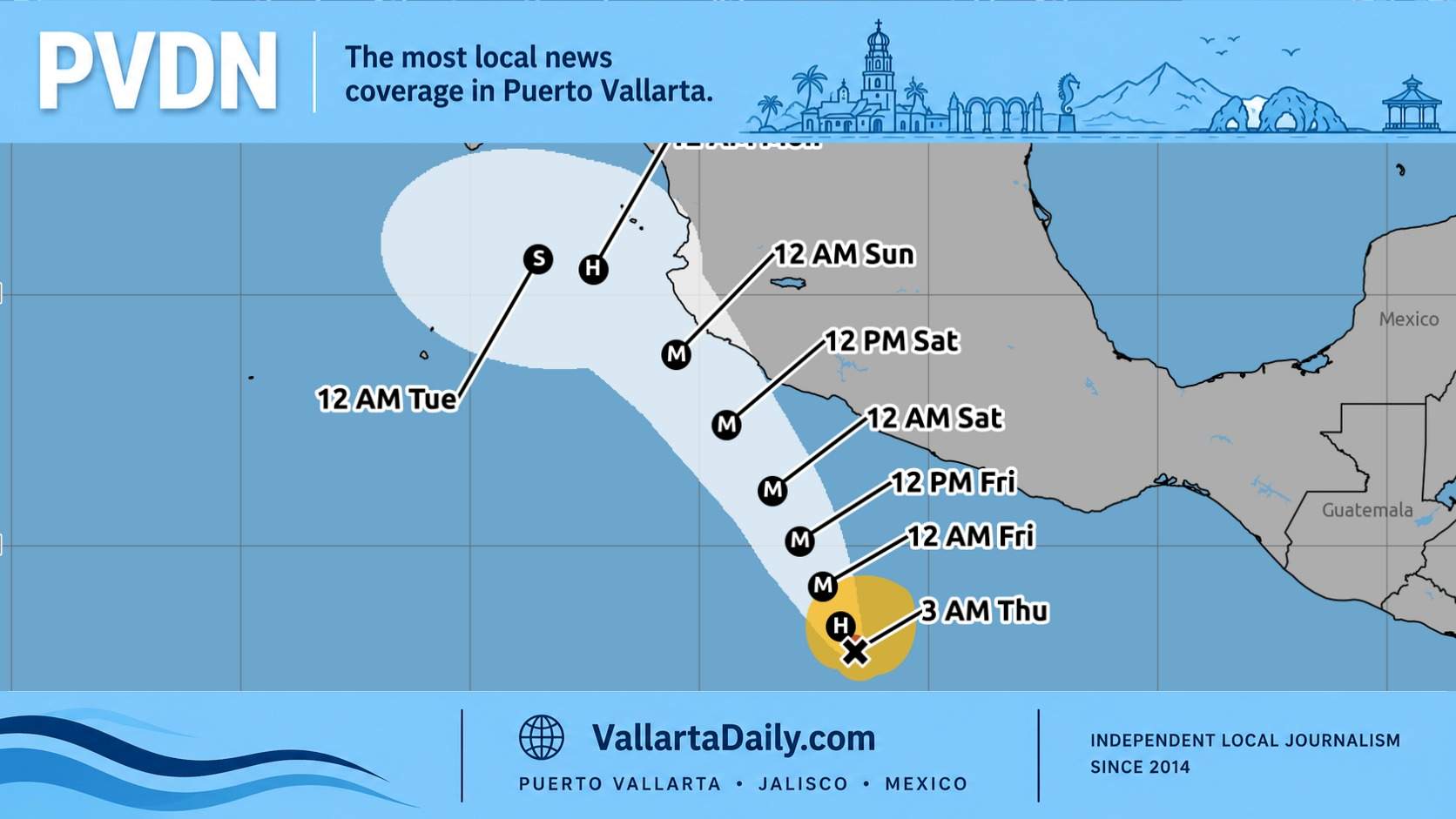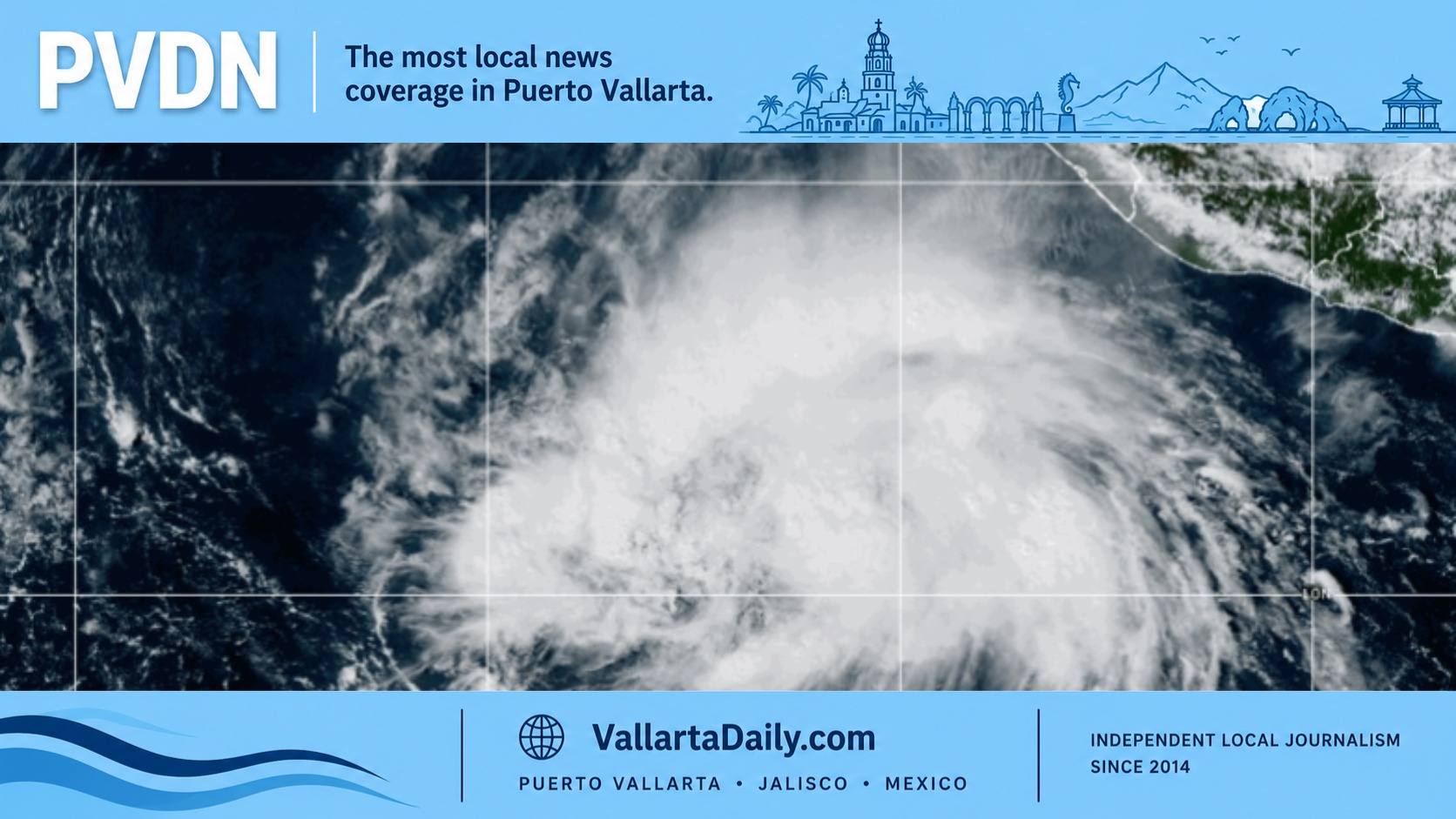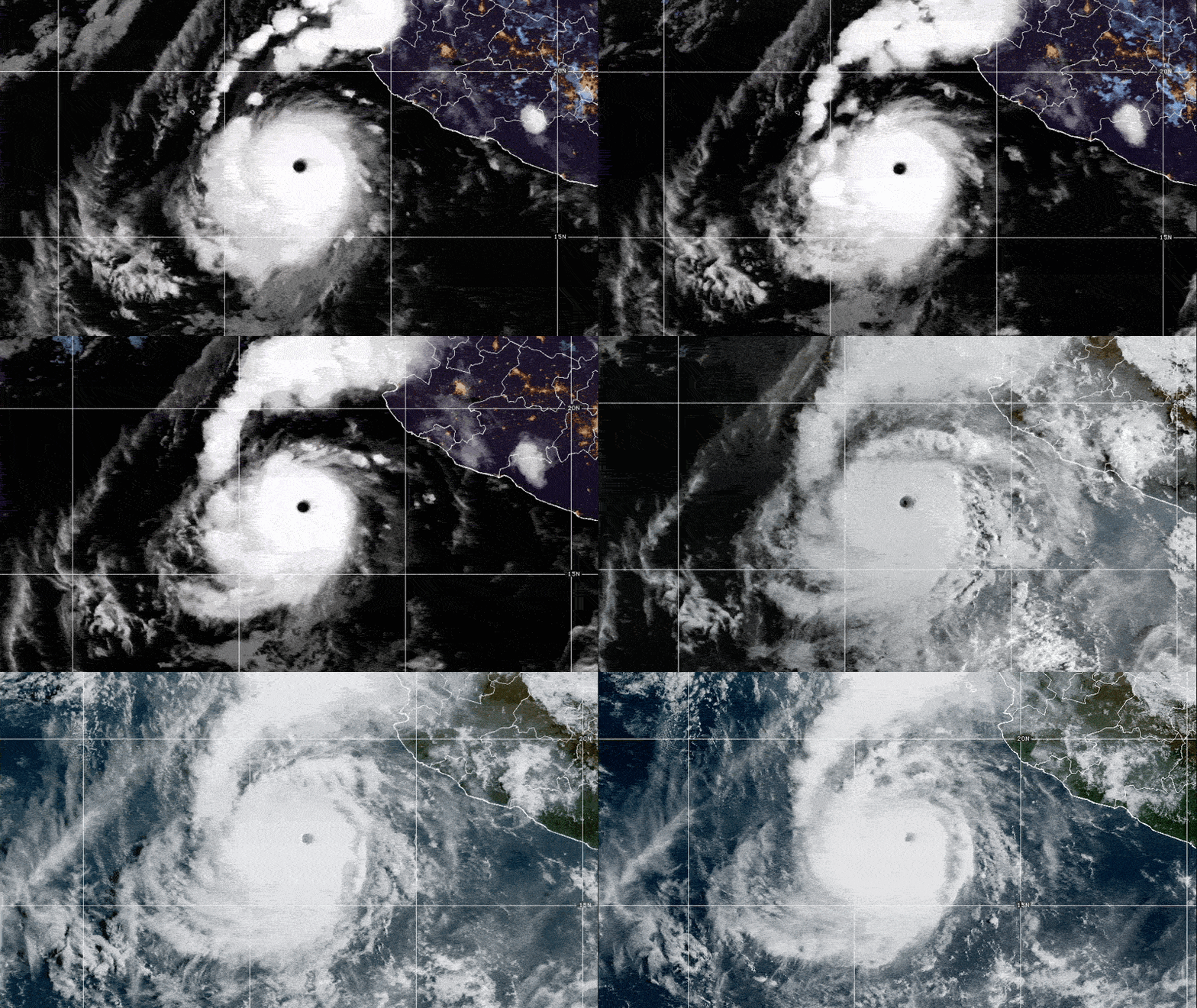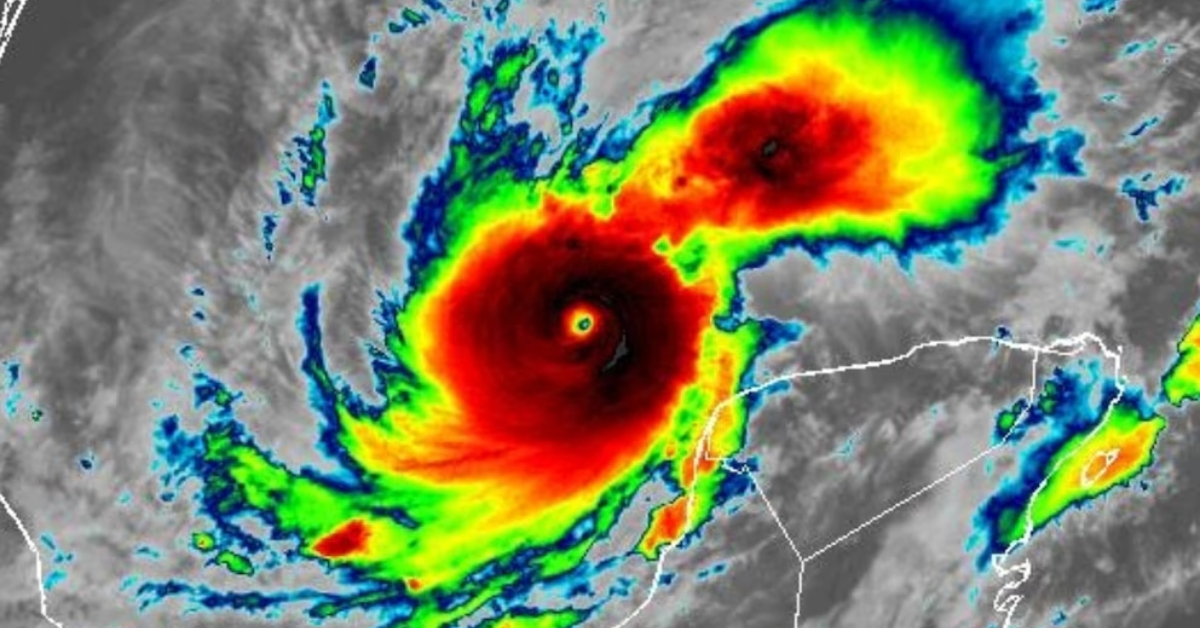
Mexico’s weather authorities are projecting an active Pacific hurricane season in 2026. The official forecast calls for 18 to 21 systems in the basin. Of those, 9 to 10 are expected to remain tropical storms. Another 5 to 6 could strengthen into Category 1 or 2 hurricanes. The most serious part of the forecast is the expectation that 4 to 5 systems could reach major hurricane strength.
For Puerto Vallarta readers, this is best understood as an early warning to pay attention, not as a prediction of a direct hit. A seasonal forecast measures expected activity across the eastern Pacific, not what will happen in one city. Even so, West Coast communities in Mexico watch these outlooks closely because storms do not need to make local landfall to cause problems. Heavy rain, rough surf, swollen rivers, and transport disruptions can all reach the coast well before the center of a storm does.
What a major hurricane really means
The phrase major hurricane matters because it refers to the strongest end of the scale. These are storms that reach Category 3, 4, or 5. They carry much stronger winds and a higher destructive potential. But the forecast should not lead readers to focus only on the biggest storms. Lower-category hurricanes and even tropical storms can still produce dangerous flooding, damaging surf, power cuts, and landslides.
That distinction matters in Banderas Bay and along the wider Jalisco coast. In this region, water is often as important as wind. A storm that stays offshore can still dump rain into hillsides, arroyos, and low-lying neighborhoods. Roads can be cut off. Small craft can be restricted. Beach conditions can turn dangerous in hours. For residents and foreigners unfamiliar with Mexico’s coastal weather, the main risk is often assuming that no direct strike means no real threat.
Why Puerto Vallarta should pay attention now
The eastern Pacific season officially begins on May 15 and runs through November 30. That leaves a short runway for households and businesses to prepare before the first storm watches start to dominate the news cycle. In a city with tourism, marinas, hillside neighborhoods, and heavy coastal traffic, timing matters. Preparation done in April is easier than preparation done when a storm is already moving up the coast.
For many readers in Puerto Vallarta, practical readiness is not dramatic. It is basic. It means reviewing emergency contacts, checking roofs and drains, knowing where official updates will appear, and keeping important documents easy to reach. It also means understanding that local restrictions can come fast. Ports can close. Beach flags can change. Boat operators, day trippers, and drivers on coastal highways may all feel the effects of a storm system before the public thinks of it as a local event.
This is also a story about recent memory
Preparedness stories can seem repetitive until a season produces a fast-moving disruption. Puerto Vallarta and the wider Jalisco coast have seen how tropical systems can affect navigation, beaches, roads, and day-to-day routines even without the kind of catastrophic landfall that dominates national headlines. That is why officials push early-season awareness every year. The goal is not to alarm people. The goal is to reduce the scramble that comes once warnings begin.
For foreign residents and long-stay visitors, that message carries extra weight. Many still judge hurricane risk through the lens of other countries, especially the Atlantic and Gulf coasts. Mexico’s Pacific side works differently in important ways, but it is not low-risk simply because direct strikes are less common in a given place. The smarter approach is to treat the seasonal forecast as a planning tool. It tells people the basin may be active. It tells them to get ready before they are tired, rushed, or relying on social media rumors.
What comes next
The next markers will be the first named systems of the season and any updated guidance from civil protection agencies. In the Pacific, the naming list begins with Amanda, followed by Boris and Cristina. Those names are not important on their own. What matters is the reminder that the season is close, the forecasts are already in place, and the time for basic preparation is now.
For Puerto Vallarta, the most useful takeaway is simple. There is no immediate storm emergency today. But the official outlook says the broader Pacific season could produce several powerful hurricanes. In a coastal city, that is enough reason to pay attention early.