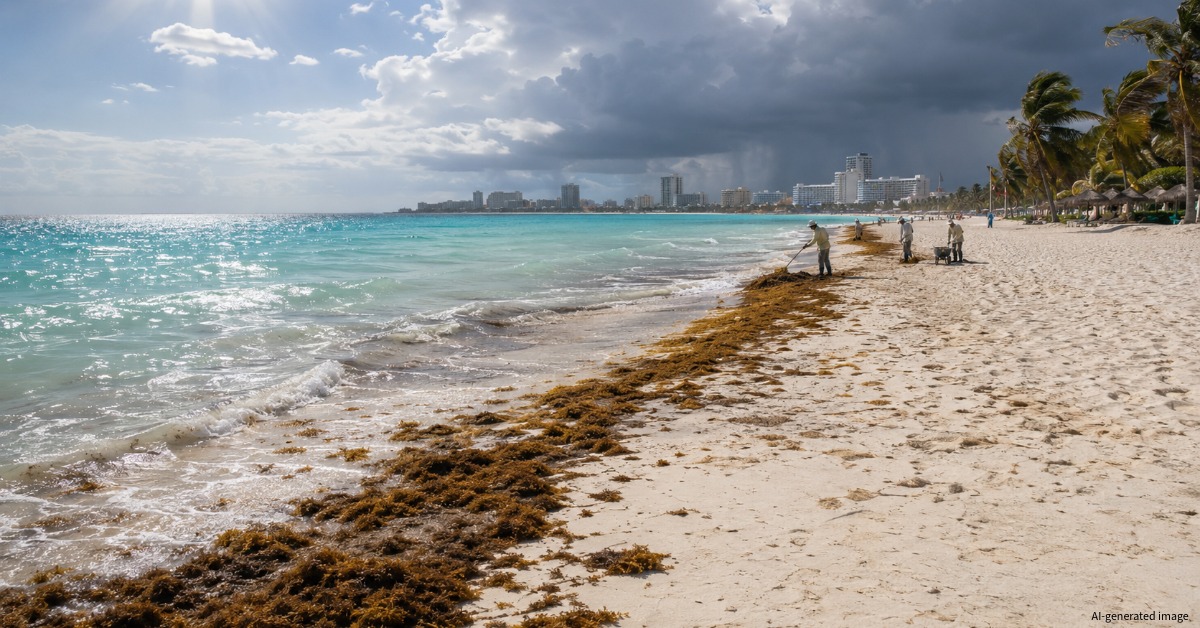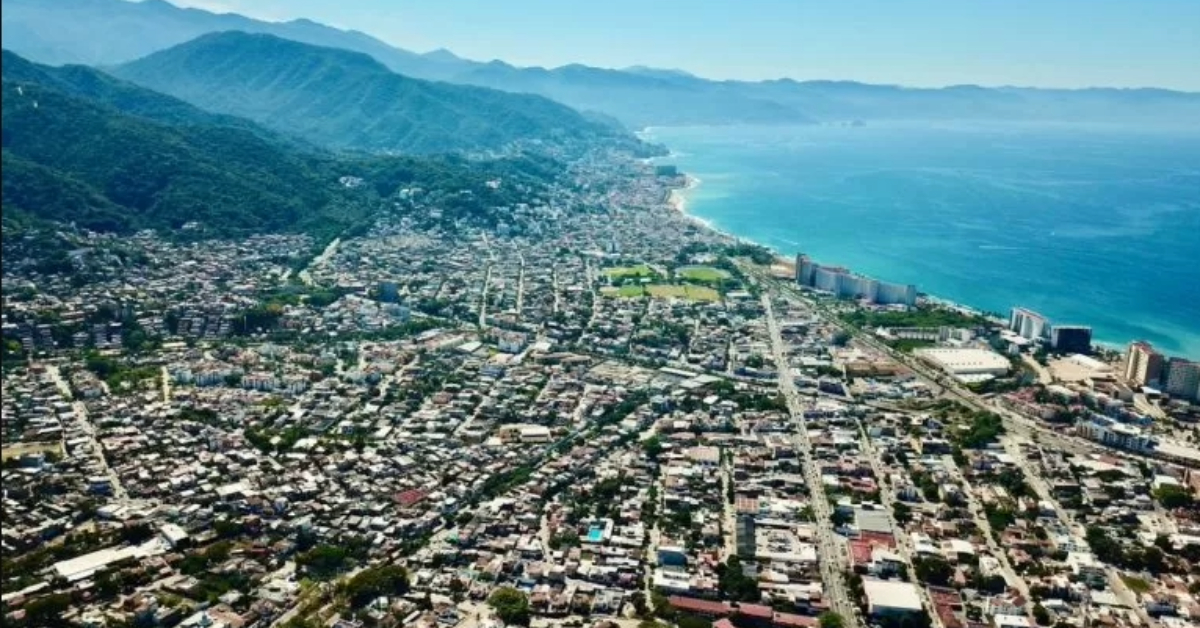
Puerto Vallarta’s expansion is no longer limited to the hotel zone or downtown. Inland communities, rural tourism corridors, ejido land, coastal developments, and beach-access fights are now part of the same larger question: who gets to shape the future of the bay?
Who Gets to Shape Puerto Vallarta as the City Expands?
Puerto Vallarta is growing in more directions than many visitors see.
The city is not only adding hotels, condos, and restaurants near the beach. Its inland communities are also becoming more tied to tourism, municipal services, and land-use decisions. At the same time, disputes over beach access and coastal construction continue to test the limits of local, state, and federal authority.
Two recent examples help explain the bigger picture.
El Jorullo, a rural community south of Puerto Vallarta, was officially elevated to the city’s eighth municipal delegation after approval by the Ayuntamiento. Local reporting described the move as the result of years of requests from residents and ejidal authorities, citing population growth and tourism activity in the area.
Across the bay, in neighboring Bahía de Banderas, the Playa Las Cocinas dispute in Punta de Mita has become another example of how coastal development can turn into a fight over public beach access, environmental impact, and federal land rules. The company behind the project says it has the necessary permits and that public access will remain intact, while residents and environmental groups have challenged the works and raised concerns about the federal maritime zone and turtle nesting areas.
Together, the two cases point to a broader question: as the bay changes, who actually gets a say?
Growth is moving inland, not just along the beach
For years, Puerto Vallarta’s growth was easy to see along the coast: hotels, towers, restaurants, beach clubs, and real estate projects. That part of the story is still active, but it is no longer the whole story.
Communities such as El Jorullo show how inland and rural areas are becoming part of the city’s development map. Rural tourism, adventure tours, river corridors, ejido land, and road access now matter more than they once did. When a place like El Jorullo becomes a formal municipal delegation, it is a sign that the city recognizes the area as more than an outlying village.
A delegation does not become its own municipality. It remains part of Puerto Vallarta. But the designation can give a community more formal representation inside the municipal structure. In practical terms, a delegation can help connect residents with city services, administrative decisions, public works requests, and local needs.
That matters because growth creates everyday problems before it creates official plans. Roads need maintenance. Water and drainage become more urgent. Trash collection has to reach farther. Businesses open. Tour operators arrive. Land values rise. Residents begin asking whether the rules are keeping up with the pace of change.
El Jorullo’s new status places it alongside Puerto Vallarta delegations, including Las Juntas, Las Palmas, Las Mojoneras, Ixtapa, El Pitillal, El Colorado, and Mismaloya.
That list also tells a story. Las Juntas and Ixtapa are tied closely to the city’s northern and inland expansion. Mismaloya represents the older south-coast tourism corridor. El Jorullo now reflects another layer of growth: rural tourism and inland development.
What does a municipal delegation actually do?
A municipal delegation is best understood as a local administrative link between a community and the city hall.
It does not have the power of the full Ayuntamiento. It does not replace the mayor, city council, or municipal departments. But it can make local government feel closer to communities that are physically or socially farther from the urban center.
For residents, that can matter in basic ways. A delegation can help channel requests for public services, report problems, coordinate with municipal departments, and give a community a clearer point of contact.
For city officials, delegations can make territorial management easier. A fast-growing municipality needs a way to organize communities that have different needs. El Pitillal is not Mismaloya. Ixtapa is not El Jorullo. A rural tourism area does not face the same pressures as a dense urban neighborhood.
The key issue is whether the delegation becomes a real channel for community priorities or simply another administrative label. That depends on how the city hall uses it, how residents participate, and how much power the local representative actually has.
Ejidos remain central to the future of the bay
Any serious discussion of Puerto Vallarta’s expansion must include the ejidos.
An ejido is a form of social land ownership in Mexico. In simple terms, land is tied to a community or agrarian group, not just to a private owner in the usual real estate sense. Mexican agrarian law recognizes different types of ejidal land, including land for human settlement, common-use land, and parceled land.
That makes ejidos important in places where rural land becomes attractive for tourism, housing, roads, or commercial development.
Ejidos can protect community control over land. They can also become part of development deals. Decisions may involve assemblies, ejidatarios, outside investors, public agencies, and legal procedures that are not always easy for the public to follow.
This is one reason growth debates around Puerto Vallarta are rarely simple. A project may involve municipal permits, state infrastructure, federal environmental review, private investment, and ejidal land decisions all at once.
For residents, the concern is often whether local communities benefit from growth or simply watch land values rise around them. For developers, ejidal or rural land can represent an opportunity. For the city hall, the issue is how to bring these areas into planning without losing control over services, density, and environmental impact.
El Jorullo’s elevation to the delegation does not answer those questions. It makes them more visible.
The coast brings in a different set of rules
If El Jorullo shows the inland side of expansion, Playa Las Cocinas shows the coastal side.
Playa Las Cocinas is in Punta de Mita, in the municipality of Bahía de Banderas, Nayarit, not Puerto Vallarta. But it belongs to the same regional development system around Banderas Bay. What happens there matters because the same pressures appear across the bay: beachfront land, luxury development, public access, environmental permits, and residents who fear being pushed away from places they have long used.
The Las Cocinas dispute has centered on coastal works linked to a luxury development. El País reported that an escollera, or rock-protection structure, was completed despite weeks of protests by residents and environmental groups. The developer, Cantiles de Mita of Grupo Dine, has said the work was authorized, stayed within permitted limits, and does not block free transit. Residents and activists have disputed the project’s impact and raised concerns about the beach, the federal zone, and turtle habitat.
That is the basic pattern of many coastal conflicts in Mexico. The developer says the paperwork is in order. Residents say legal access or environmental protection is being weakened in practice. Local governments may say the issue is federal. Federal agencies may enter through environmental permits, concessions, or inspections.
The result is confusion for the public, especially when construction continues while disputes remain unresolved.
What is the 20-meter federal maritime zone?
Mexico’s beaches are not private property in the way many foreigners might assume.
The Zona Federal Marítimo Terrestre, commonly called Zofemat, is generally understood as the 20-meter strip of land next to the beach. It is federal property. It can be conceded for certain uses, but a concession is not the same as ownership.
In the Las Cocinas coverage, El País described Zofemat as a 20-meter strip next to the beach and a public-domain area that cannot be privatized. The same report noted that Zofemat concessions are legal instruments granted by Semarnat for specific uses and activities for a renewable period.
This distinction matters.
A hotel, restaurant, beach club, or developer may have a concession to use part of the federal zone. That does not mean the beach becomes private. It also does not automatically settle whether a specific work is legal, whether access is being respected, or whether environmental rules are being followed.
That is why beach-access conflicts often become federal issues. Municipal governments may manage local roads, licenses, or land-use rules, but the federal maritime zone is under federal jurisdiction. Semarnat is involved in concessions and environmental matters. Profepa is involved in inspection and enforcement related to environmental and coastal rules. Profepa describes its Zofemat work as inspection and surveillance to verify legal occupation and use of beaches and the federal maritime zone.
So when residents complain that a beach is being blocked, the question is not only “What does the municipality say?” It may also be “What does the federal concession allow?” and “Are federal agencies enforcing the rules?”
Beach access is a legal issue, but also a social one
Mexico’s legal framework states that public beach access cannot be restricted except under specific legal circumstances. In the Las Cocinas case, the Interior Ministry, Segob, said public access to the beach was guaranteed under the law and that it was working with Semarnat, the Nayarit government, residents, and the developer.
But access to paper and access in daily life are not always the same.
A beach can remain legally public while becoming difficult to reach. A path can exist, but feel controlled. A concession can allow certain activities while still creating public suspicion. A project can be technically permitted, while residents argue that the process lacked transparency.
That is why beach conflicts often become emotional. They are not only about sand. They are about whether long-time residents still feel they belong in places that are being redesigned for higher-income visitors and buyers.
For retirees and foreign residents, this can be easy to misunderstand. A beach may look open because no one is charging admission. Local residents may see something different: fewer access points, heavier security, more private branding, and a sense that public space is being narrowed little by little.
Private development has power, but not the only power
Developers shape the bay because they bring money, lawyers, technical studies, and long-term plans. They can move faster than public agencies. They can also frame projects as economic development, job creation, tourism improvement, or environmental mitigation.
Municipal governments shape growth through zoning, permits, infrastructure, public works, and political priorities. They decide where services expand and how communities are formally recognized.
Ejidos and landowners shape growth because land is the base of every project.
Federal agencies shape growth when beaches, concessions, environmental permits, protected species, or maritime zones are involved.
Residents shape growth through pressure, public meetings, legal challenges, neighborhood organizing, and media attention.
None of these actors controls everything. That is why expansion around Puerto Vallarta and Banderas Bay can feel messy. The system is fragmented by design. Different levels of government control different pieces.
The question is whether those pieces work together in the public interest.
Why El Jorullo and Las Cocinas belong in the same conversation
At first, El Jorullo and Playa Las Cocinas may look like separate stories.
One is inland and municipal. The other is coastal and federal. One is about a community gaining administrative status. The other is about a beach-access dispute in a neighboring state.
But both are really about the same regional shift.
Banderas Bay is no longer just a resort coastline. It is a connected development zone where rural land, beaches, roads, villages, ejidos, luxury projects, and local identity are all under pressure simultaneously.
El Jorullo raises questions about how rural communities are represented as tourism expands inland.
Las Cocinas raises questions about whether public beach access and environmental protections can hold when coastal land becomes more valuable.
Both cases show that growth is not just about building more. It is about deciding who benefits, who is consulted, who enforces the rules, and who gets pushed to the edge of the conversation.
What’s Next?
The most important question in El Jorullo is whether delegation status leads to better planning and services, or simply formalizes growth that is already underway.
Residents should watch for public works, road improvements, water and drainage planning, zoning changes, tourism projects, and how ejidal voices are included in municipal decisions.
On the coastal side, the key question is whether authorities clearly explain what is allowed in the federal maritime zone and whether public access is protected in practice, not only in official statements.
For Playa Las Cocinas, the public dispute has already moved beyond one construction site. It has become part of a wider debate over how much coastal development the bay can absorb and whether beach access rules are strong enough when major private interests are involved.
Puerto Vallarta’s future will not be shaped by one decision, one mayor, or one project. It will be shaped through many smaller decisions: a delegation approved, a road widened, an ejido assembly held, a concession granted, a beach path blocked or defended, a development permit issued, a protest ignored or taken seriously.
That is how cities change.