Cancún is now the starting point for a new attempt to turn sargassum from a costly nuisance into an industrial raw material.
Hotel, restaurant, and business groups in the Mexican Caribbean have launched Caribe Circular, a program designed to create a market for products made with sargassum. The model aims to link beach collection, processing, industrial buyers, and tourism businesses into a single circular economy system.
The plan comes as Quintana Roo faces another difficult sargassum season. For residents, visitors, and business owners, the issue is no longer occasional. It has become part of the yearly reality along much of the Caribbean coast.
A new business model for an old beach problem
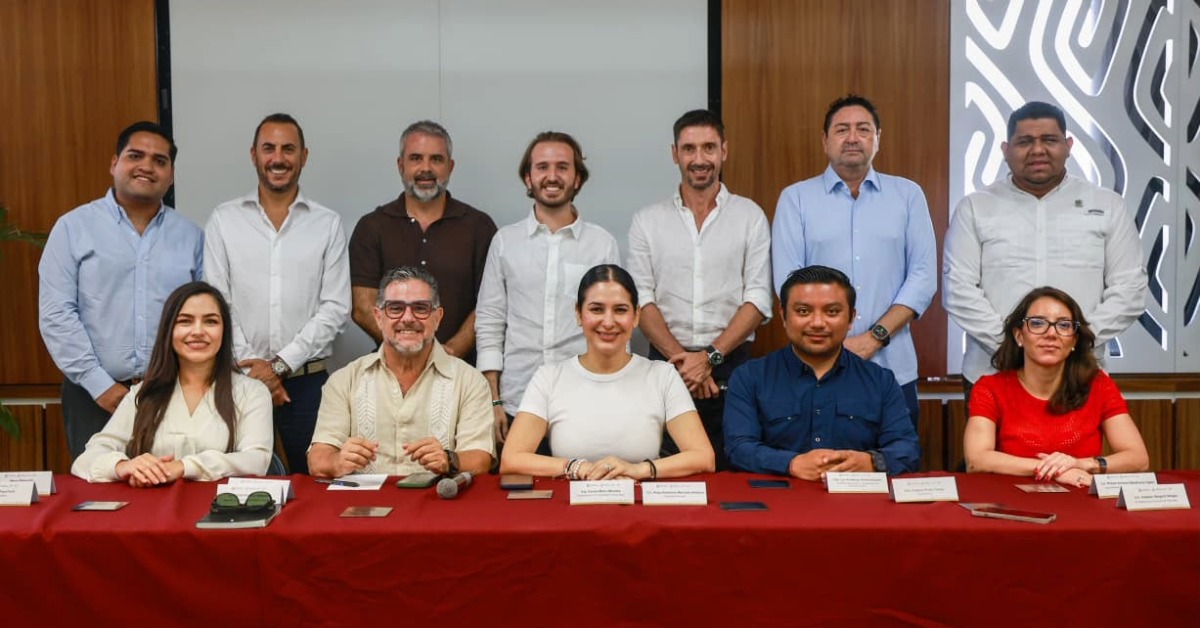
Caribe Circular is being promoted as a multi-sector alliance involving hotel groups, restaurant organizations, business associations, and federal research support.
The first groups tied to the launch include the Consejo Hotelero del Caribe Mexicano, CANIRAC, INVEROTEL, AMEXME Cancún, the Asociación de Hoteles de la Riviera Maya, and IMIPAS, Mexico’s federal fisheries and aquaculture research institute.
The program’s targets are ambitious. By the end of 2028, organizers want 80 percent of Quintana Roo hotels and 50 percent of its restaurants participating in the system.
For the 2026 launch phase, the plan calls for more than 150 hotels and 600 restaurants to join. Organizers also project 250 direct jobs and the use, or valorization, of 150,000 tons of sargassum.
By 2028, the larger target is more than 1,180 hotels and 5,900 restaurants. The program projects 3,500 jobs and the annual valorization of 2 million tons of sargassum.
How the sargassum plan is supposed to work
The central idea is simple: create buyers first, then make the collection financially useful.
Caribe Circular’s backers say past sargassum projects often failed because there was no reliable market for the finished products. Technologies existed, but demand did not always follow.
This model tries to reverse that order. It first seeks demand for products made with sargassum-based raw material. The program identifies six main uses: bioplastics, biomaterials, bio-agricultural inputs, alginates, bioenergy, and biochar.
The system also includes a proposed Sargassum Value Market, described as a mechanism to connect supply with industrial demand.
For beach hotels, the model could involve collecting, pretreating, and selling dried sargassum. Those same hotels would then buy products made with sargassum, creating a closed loop.
Hotels without beachfront access, restaurants, and other companies could participate by purchasing traceable sargassum-based products.
For readers who live in or visit the Mexican Caribbean, the practical goal is easy to understand. The project aims to move the fight against sargassum away from last-minute beach cleanup and toward a managed supply chain.
Why this matters in Quintana Roo
Sargassum is not new to the Caribbean. It is a floating seaweed that can provide habitat for marine life when it remains offshore.
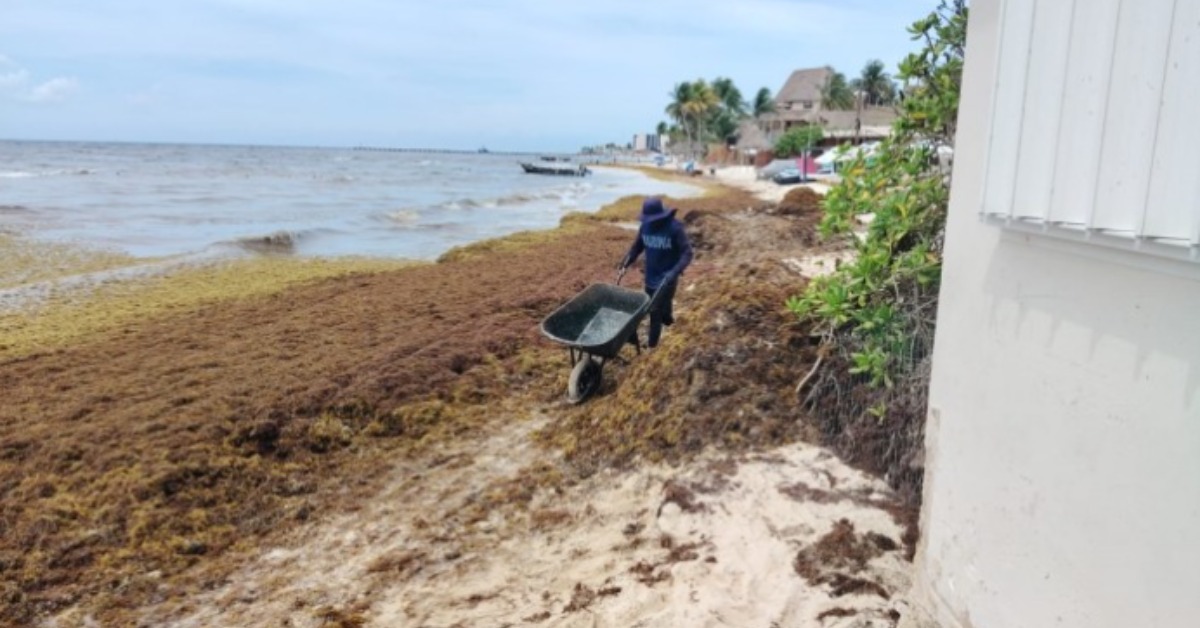
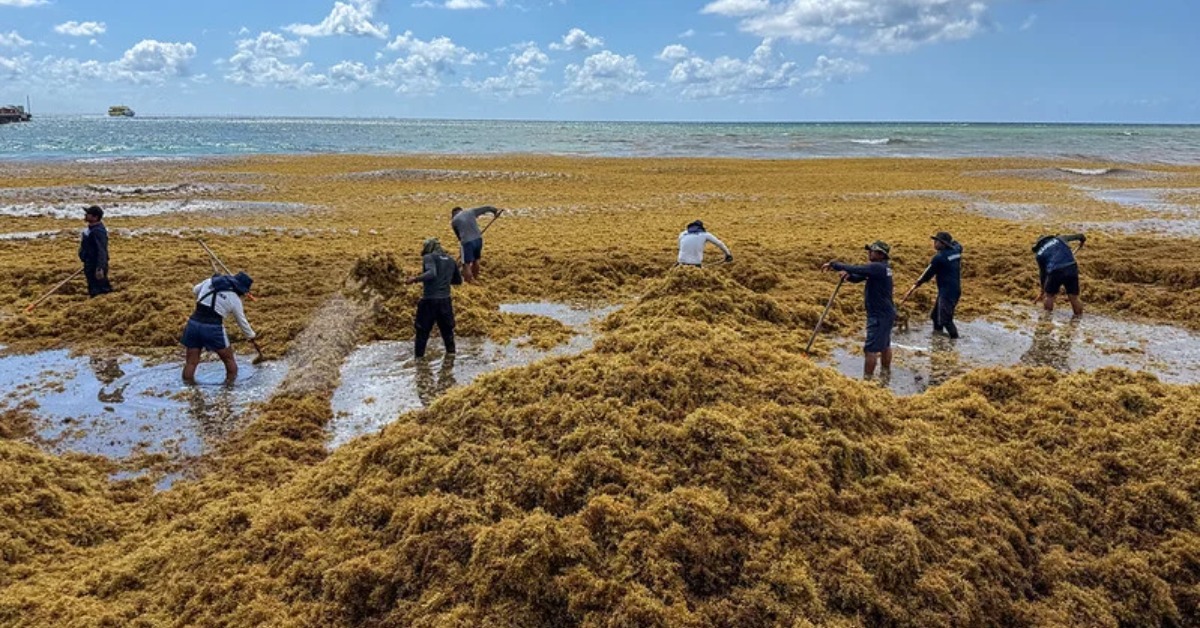
The problem begins when large mats reach the coast in heavy volumes. Once on the beach, sargassum begins to decay. It can produce a strong rotten-egg odor and release gases that may irritate people with respiratory problems.
Heavy arrivals can also affect coral, seagrass, beach access, tourism, fishing, and local cleanup budgets.
That matters in Quintana Roo because tourism is the state’s economic engine. Cancún, Playa del Carmen, Tulum, Cozumel, Puerto Morelos, and the Riviera Maya all depend heavily on beach conditions and visitor confidence.
For hotels, sargassum is also a major operating cost. Industry representatives have estimated the annual cost to the Mexican Caribbean hotel sector at more than $150 million. Much of the collected sargassum has historically ended up in landfills.
Caribe Circular is trying to change that equation. It presents sargassum as a potential resource rather than just waste.
A difficult season adds pressure
The launch also comes during a year when sargassum monitoring has pointed to a serious season.
The University of South Florida’s March 2026 outlook said sargassum continued to grow and move west. The report said most monitored regions had record-high levels in March, with beaching events reported in the western Caribbean, including the Mexican Caribbean coast.
The same outlook said 2026 is likely to be another major sargassum year and could become a record year by summer.
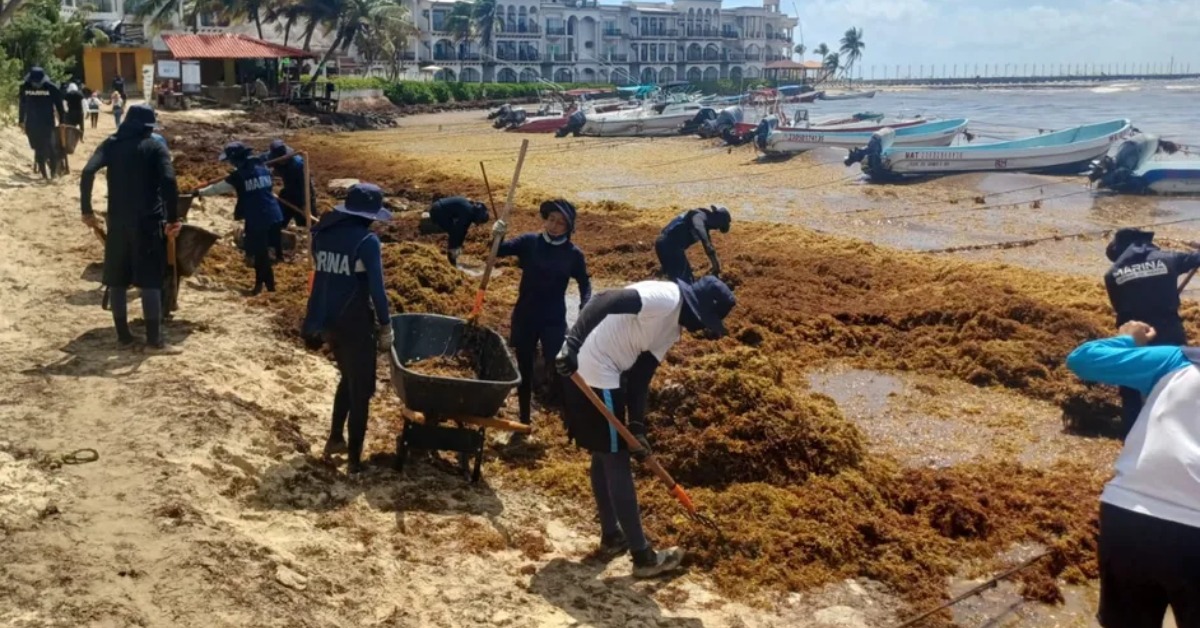
Mexican authorities have already been collecting large volumes. In early April, the Navy reported that more than 16,000 tons had been collected in Quintana Roo in 2026. The deployment included naval personnel, drones, vessels, smaller support boats, and containment barriers.
That context helps explain why business groups are looking beyond beach ranking. Cleanup is still necessary, but it does not solve the long-term problem.
The promise and the open questions
Caribe Circular’s proposal is important because it looks at demand, not just disposal. That is a practical shift.
Still, the program will have to prove it can work at scale. Turning sargassum into industrial material requires reliable collection, safe handling, processing capacity, product standards, and steady buyers.
There are also environmental questions. Sargassum can contain heavy metals and other contaminants, depending on where it is collected and how it is processed. Any product made from it will need clear controls and traceability.
The financing is another issue to watch. The wider industrial ecosystem tied to the program has been estimated at more than $1 billion. Organizers have pointed to private investment, multilateral banking, and international cooperation as potential sources of financing.
For hotels and restaurants, the key question will be whether participation is easy, affordable, and useful. If sargassum-based products cost the same as conventional products and meet quality standards, adoption could be more realistic.
What readers should watch next
The first sign of progress will be whether hotels and restaurants actually join during the 2026 launch phase.
The second will be whether products made with sargassum enter normal business use. Plates, packaging, agricultural inputs, and construction-related materials are often discussed, but the market must move beyond pilot projects.
The third will be whether the model reduces pressure on beaches. For residents and visitors, the visible measure will still be what happens along the shore.
Caribe Circular does not mean sargassum will disappear from Quintana Roo. It does suggest a different way of dealing with it.
Instead of treating the seaweed only as an emergency cleanup problem, the program is trying to build a business chain around it. If that chain works, it could give the Mexican Caribbean a new tool in a problem that is now part of life on the coast.