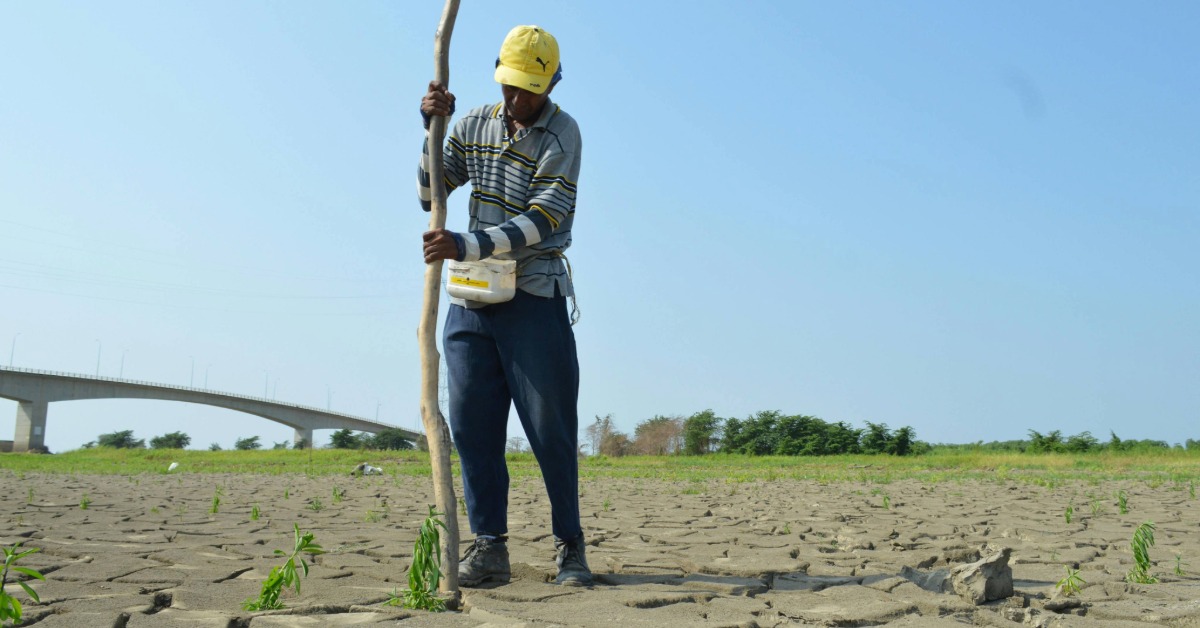
Mexico’s dry season is starting to show up on the national drought map again. After several updates showing improvement, the share of the country with dry or drought conditions rose in late April. The increase does not mean all affected areas are in severe drought, but it does show how quickly heat, low rainfall, and seasonal water stress can change conditions. For Quintana Roo and the Yucatán Peninsula, the rainfall pattern is worth watching as the hottest months continue.
Mexico drought map grows as dry season tightens grip
Mexico’s dry season has begun to push the national drought map in the wrong direction again.
The share of the country with dry or drought-affected conditions rose from 12.3 percent to 15.4 percent in the second half of April. The change followed four consecutive updates that had shown improvement.
The latest figures do not mean that 15.4 percent of Mexico is in severe drought. Most of the increase came from areas classified as abnormally dry, which is a warning category below formal drought. Still, the shift matters because it came amid heat, lower rainfall, and rising seasonal water demand.
The report also noted below-average rainfall in several regions, including the Yucatán Peninsula. That makes the update relevant for Quintana Roo residents watching heat, water pressure, vegetation dryness, and the approach of the summer rainy season.
What the 15.4 percent figure really means
Mexico’s drought monitor uses several categories to describe dry conditions. The first is D0, or abnormally dry. This is not considered drought, but it can signal areas that may worsen if rain does not return.
Formal drought begins at D1, or moderate drought. It then moves through severe, extreme, and exceptional drought categories.
At the April 30 cutoff, 11.6 percent of Mexico was listed as abnormally dry. Another 2.4 percent was in moderate drought, 1.0 percent in severe drought, 0.3 percent in extreme drought, and 0.1 percent in exceptional drought.
That means the national footprint of dryness expanded, even while the most serious drought categories remained limited. The practical message is that Mexico is not facing uniform drought across the country. Instead, dry conditions are spreading in specific regions during a vulnerable time of year.
The monitor also showed that 84.6 percent of the country remained free of drought impact at the end of April.
Heat and weak rainfall changed the map
The late-April change came during Mexico’s estiaje, the dry-season period when rainfall and runoff tend to be limited before the summer rains arrive.
During the second half of April, several areas recorded rainfall below their usual levels. These included the northwest, the south, the Gulf Coast, and the Yucatán Peninsula.
Heat also played a role. High-pressure systems in the middle layers of the atmosphere helped create warmer and drier conditions across much of the country. A heat wave during the final week of April added more stress.
That type of pattern can dry soil, reduce surface moisture, and increase pressure on water systems. It can also make mild dryness more noticeable in daily life, especially in areas where households rely on cisterns, pumps, or local delivery schedules.
The same period brought a contrast in other parts of the country. Rainfall in the northeast and central Mexico helped reduce moderate-to-extreme drought in parts of northern Coahuila, Nuevo León, and Tamaulipas.
What this means for Quintana Roo and the peninsula
Quintana Roo was not listed among the states with the largest drought footprint in the latest national summary. The important detail for the state is the rainfall pattern.
The Yucatán Peninsula was among the regions with below-average rain during the second half of April. That does not automatically mean a water emergency is developing. It does mean the region entered May with less rainfall support than usual.
In Cancún, Playa del Carmen, Tulum, and smaller communities, dry-season pressure can manifest in several ways. Residents may notice hotter afternoons, drier vegetation, more dust, and greater reliance on stored water. In fast-growing areas, even short dry stretches can put added pressure on local infrastructure.
Tourism areas also use large amounts of water for hotels, restaurants, laundry, landscaping, and pools. When seasonal dryness overlaps with high demand, local systems have less room for error.
For residents new to Mexico, timing matters. Late spring can feel harsh because the rainy season has not fully settled in. Conditions can shift quickly once tropical moisture returns, but the weeks before that can be uncomfortable and dry.
The states with the largest affected municipal shares
The national picture was uneven. Coahuila had the highest share of municipalities affected, followed by Tamaulipas, Sinaloa, and Chihuahua.
Northern Mexico has faced repeated drought pressure in recent years. Agriculture, livestock, reservoirs, and groundwater all feel those impacts differently. Some areas can improve after one or two wet periods, while deeper water stress can take much longer to recover.
This is why the drought monitor matters. It gives a national snapshot, but the local impact depends on reservoirs, aquifers, soil moisture, recent rain, and demand.
A municipality can appear on the map because of short-term dryness. Another may face more serious water stress because months or years of low rainfall have weakened its supply. The same color on a map can feel very different on the ground.
The rainy season will be the next test
Mexico’s drought outlook now depends heavily on the timing and strength of seasonal rains.
If rainfall becomes more regular in May and June, some abnormally dry areas may recover before a deeper drought develops. If heat persists and rain arrives late, more areas could move into moderate drought.
For Quintana Roo and the rest of the peninsula, the next several weeks will be important. The region often relies on seasonal rainfall to ease the heat, replenish local water systems, and reduce fire risk.
Residents should keep an eye on local weather updates, municipal water notices, and heat advisories. The national map is useful, but neighborhood conditions can change faster than a countrywide report.
The latest update is not a sign that all of Mexico is drying out at the same pace. It is a reminder that the dry season is still active, and the first rains of summer have work to do.