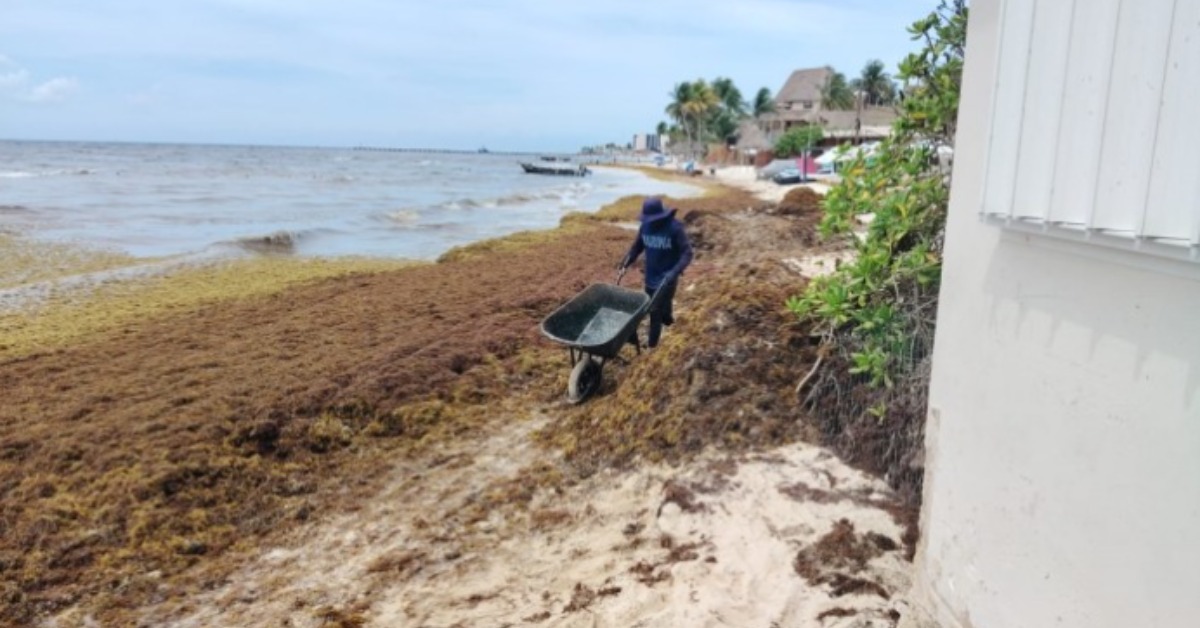
The latest sargasso report for April 14 shows a broad stretch of Playa del Carmen beaches sitting in the yellow, or moderate, category. That includes several of the better-known public and tourism-facing areas, such as Xcalacoco, Punta Esmeralda, Colosio, Shangri-La, Mamitas, Constituyentes, El Recodo, Fundadores, and Playacar Ferry. Other nearby beaches in the same general corridor, including Puerto Aventuras, Xpu-Ha, Kantenah, Parque Xcaret, and Playa Paraíso, were also listed in that same range.
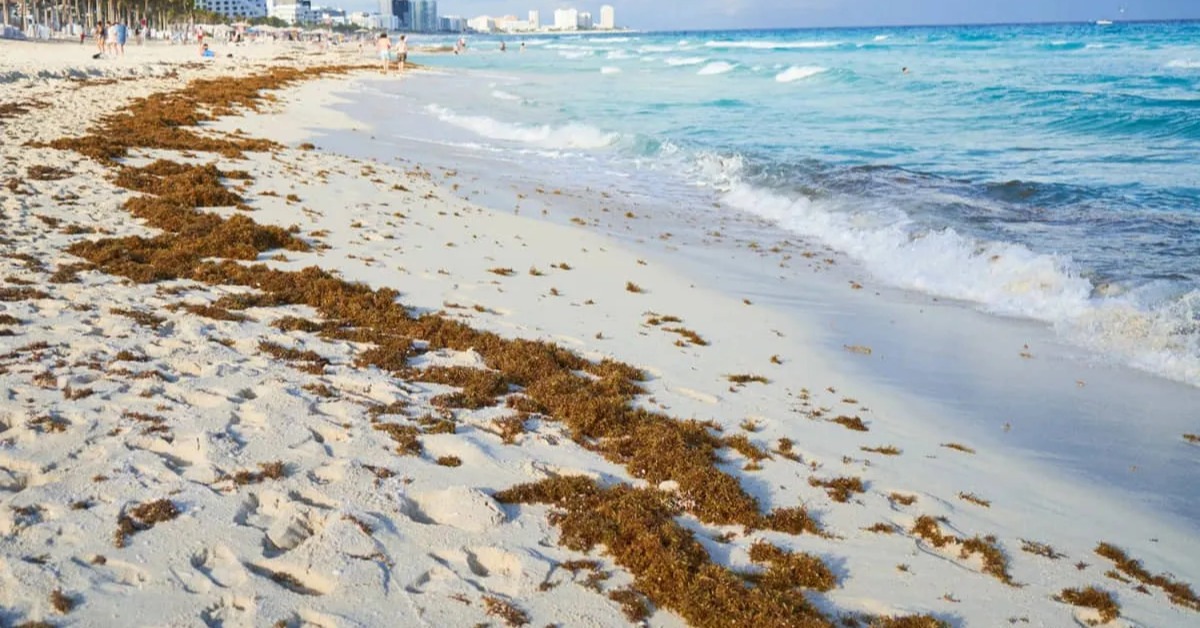
That matters because a moderate reading suggests visible sargassum arrivals, but not the kind of statewide concentration seen on the most affected beaches farther south and in other parts of Quintana Roo. In practical terms, this is not a picture of a single isolated hotspot. It is a sign that much of the Playa del Carmen coastline is experiencing a fairly uniform layer of incoming seaweed, rather than a clear split between clear beaches and heavily affected ones.
The same statewide report also shows Playa del Carmen is not in the worst position today. The more affected local stretches were Playa El Secreto and Playacar Zona Hotelera Fase 1 and Fase 2, all marked in orange, which indicates abundant recale. That creates a two-speed picture for the local coast. Much of Playa del Carmen is experiencing a steady but noticeable sargassum presence, while a smaller group of beaches is already under heavier pressure.
The local pattern fits what is happening across Quintana Roo
Today’s beach map in Playa del Carmen aligns with a broader pattern seen across the state. The latest monitoring found 140 beaches under review, with only five reporting no sargassum at all. Another 35 were classified as very low, 36 as moderate, 26 as abundant, and 38 as excessive. The overall spread shows that lighter conditions still exist, but they are limited, and much of the coast is now operating somewhere between manageable and difficult.
The regional pattern is also uneven. Conditions were generally more favorable in northern and island areas, while the center and south of Quintana Roo showed more recurring buildup. That helps explain why Playa del Carmen is seeing so many yellow markers at once. It sits in a part of the coast where currents, wind, and shoreline exposure tend to leave beaches more vulnerable as the season builds.
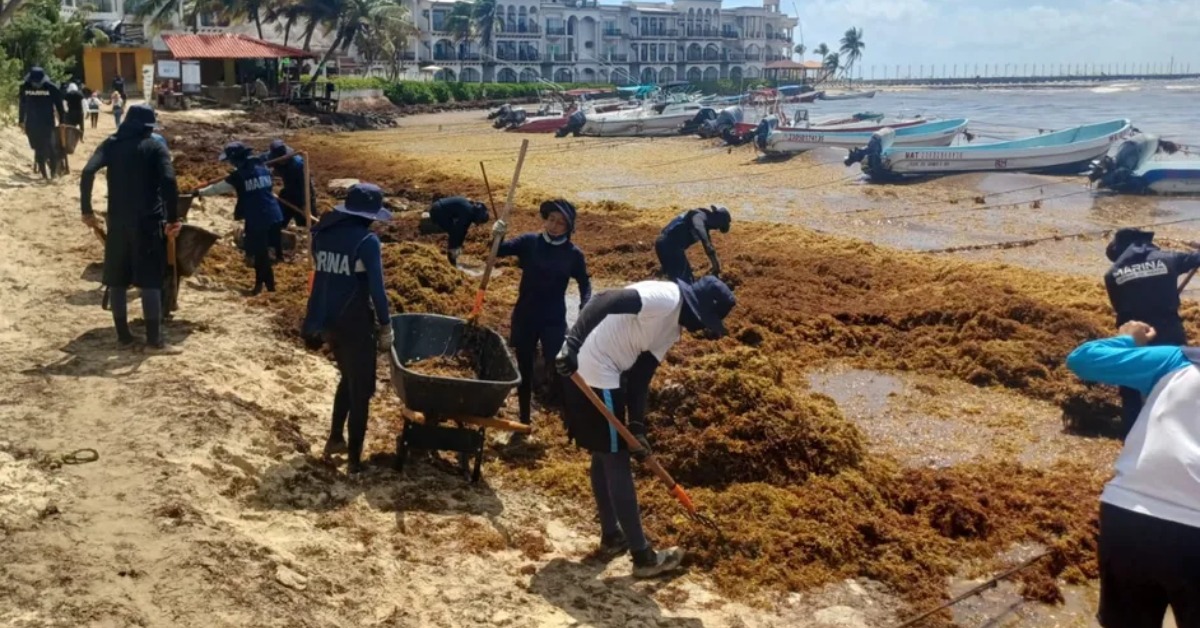
For readers trying to make sense of the report, the keyword is recale, which refers to the arrival and accumulation of sargassum on shore. It is not a long-range forecast, and it is not a final verdict on how a beach will look all day. Beach conditions can change after cleanup work, wind shifts, and wave action. Still, a report like this is useful because it shows where pressure is building first and where local beach crews may have the hardest time keeping pace.
Why this matters more in 2026
This year’s reports are drawing more attention because the 2026 sargassum season started early. Scientists and officials have been warning for weeks that this year could bring a heavier-than-usual season for the Mexican Caribbean. Instead of beginning closer to the traditional spring buildup, arrivals were already being reported in January and February.
That early start matters in Playa del Carmen because the city is entering the busier travel months with the problem already established. The challenge is not only visual. When sargassum decomposes on the beach, it can create a strong odor, reduce water quality near shore, and add pressure to the coastal environment. Researchers have also warned that persistent buildup can block the sunlight that seagrass and coral systems need, while the cleanup itself requires constant labor, equipment, and coordination.
The broader state response has become more sophisticated, with satellite monitoring, offshore collection, barrier systems, and cleanup fleets now forming part of the regular playbook. But even with that infrastructure, the daily beach map still matters because the sargassum problem remains highly localized. One beach can look manageable while another a short distance away is already facing a much heavier wash-up.
What Playa del Carmen readers should take from today’s report
The main takeaway from today’s update is that Playa del Carmen is not facing a full coastal collapse, but it is clearly in a working phase of the season. Most of the local coast is dealing with enough sargassum to be noticeable. The beaches in Playacar’s hotel zone and El Secreto are seeing a stronger impact, which may become more common in the coming weeks if the regional trend continues.
For residents, that means the daily beach picture will likely remain uneven, and one report should be read as a same-day guide rather than a fixed outlook. For local businesses and tourism operators, it is another sign that beach conditions in Playa del Carmen will need close daily management, not occasional reaction. And for international readers, the bigger point is that sargassum season in Quintana Roo is no longer a short summer inconvenience. It has become a recurring coastal issue that now starts earlier, lasts longer, and shapes how the Riviera Maya functions well before peak summer arrives.