Puerto Vallarta closed the week of April 19–25 with a mix of public service problems, tourism activity, security concerns, and new event planning.
The week started with runners on the Malecón. It ended with many residents watching water pressure, roadwork, public safety numbers, and the early-May event calendar.
For people who live in Puerto Vallarta, the week was a reminder of how closely local services, tourism, and daily routines are connected. A broken water line can affect households, hotels, and restaurants. A delayed road project can change traffic around the center. A security survey can affect residents’ feelings, even when daily life continues.
Water service became the week’s main daily-life issue
The most immediate issue was the water outage that affected more than 140 neighborhoods in Puerto Vallarta.
The problem began after a 24-inch pipeline broke on the main line between the Pozo Radial system and the Cerro del Machete water treatment plant. The pipe was reported to be about 25 years old. The failure affected parts of the hotel zone, El Pitillal, Las Juntas, Ixtapa, Versalles, Fluvial Vallarta, Aramara, Vallarta 500, and other areas.
Repair work was completed during the week, but service recovery was not instant. Water pressure often returns gradually after a major line repair, especially in higher neighborhoods.
For residents, the outage showed why tinacos, cisterns, and water storage remain part of daily planning in Puerto Vallarta. For visitors, it was also a reminder that local infrastructure can face pressure during high-demand periods.
Security perception became the week’s hardest number
Public safety also returned to the center of discussion.
New survey data showed that the share of adults who considered Puerto Vallarta unsafe rose from 32.0 percent in December 2025 to 59.9 percent in March 2026. The figure placed Puerto Vallarta much closer to the national average for perceived urban insecurity.
This number does not measure crime on its own. It measures how people feel about safety in the city where they live. That matters because perception affects daily routines, tourism confidence, and business decisions.
The rise came after the February violence that shook the city’s public image. Local and state officials have continued trying to rebuild confidence since then.
The week also brought word that President Claudia Sheinbaum is expected to visit Puerto Vallarta, after an invitation from Jalisco Governor Pablo Lemus. No confirmed date has been announced. The visit is being framed around support for the city and its recovery after the February events.
Roads and mobility remained under pressure
Infrastructure was another major thread this week.
Work continued on the Amado Nervo Bridge, the planned connection between Ixtapa and San Vicente. The project is expected to improve travel between Puerto Vallarta and Bahía de Banderas once it opens. Officials have said the bridge could reduce some travel times by up to half under normal conditions.
The La Desembocada bridge project also advanced, with work reported at about 60 percent completion. That bridge is important because it serves communities that rely on safer access during the rainy season.
At the same time, roadwork near Avenida México and the Malecón continued to frustrate drivers and businesses. The project has faced delays and is now expected to continue into May.
For residents, these projects have two sides. They can improve mobility in the long term, but they also bring traffic, detours, and slower access in the short term.
Tourism stayed active through sports and cruise traffic
Tourism did not slow down after Easter week.
The Puerto Vallarta Marathon opened the week of April 19, bringing runners through the city and along a certified route. Events like this support sports tourism and help fill restaurants, hotels, and public spaces outside the usual beach-focused travel pattern.
The wider bay region also hosted the national CONADE triathlon competition in Nuevo Vallarta. That event brought athletes and families, but also caused traffic delays in parts of the northern bay.
Cruise activity remained visible at the port. The arrival of the Brilliant Lady, along with the Royal Princess, added another layer to the week’s visitor traffic. Cruise calls remain important for local businesses that depend on short-stay visitors, especially restaurants, shops, taxis, and tour operators.
Hotel occupancy also showed the strength of the regional market after Semana Santa. Puerto Vallarta remained active, while Nuevo Nayarit reported among the strongest occupancy levels in the country during the holiday period.
A new hospital project moved forward
The week also brought movement on a long-term health project.
Construction began on the first phase of the Hospital Civil de Puerto Vallarta, a project tied to the University of Guadalajara and the state health system. The hospital is planned as a regional medical and teaching facility.
For residents, this matters beyond the construction announcement. Puerto Vallarta serves a growing population, nearby coastal communities, and millions of visitors each year. Stronger medical capacity is part of the city’s long-term infrastructure, just like roads, water, and drainage.
The hospital project will not solve health access overnight. But it signals a larger recognition that the bay needs more regional medical capacity as the population grows.
What to watch in Puerto Vallarta next week
The coming week will keep Puerto Vallarta busy.
On Sunday, April 26, the Carrera de Juventudes Kilómetros de Esperanza is scheduled to start at 7 a.m. The 5K route begins at the Unidad Deportiva Agustín Flores Contreras and may affect traffic near the route.
That same day, the city is also preparing a Children’s Day event at the Unidad Deportiva CTM. The event is expected to bring family activities, games, and entertainment.
Regional celebrations will continue north of the bay. The Fiestas Patronales in La Cruz de Huanacaxtle run into early May, adding more activity for residents who cross between Puerto Vallarta and Bahía de Banderas.
May will also bring larger public events. Puerto Vallarta is preparing for Downhill and Freestyle activities in the historic center and around the Malecón. The event is expected to draw athletes, spectators, and temporary road impacts.
The city is also moving into folklore dance festival programming, with public activities and theater presentations scheduled around early May.
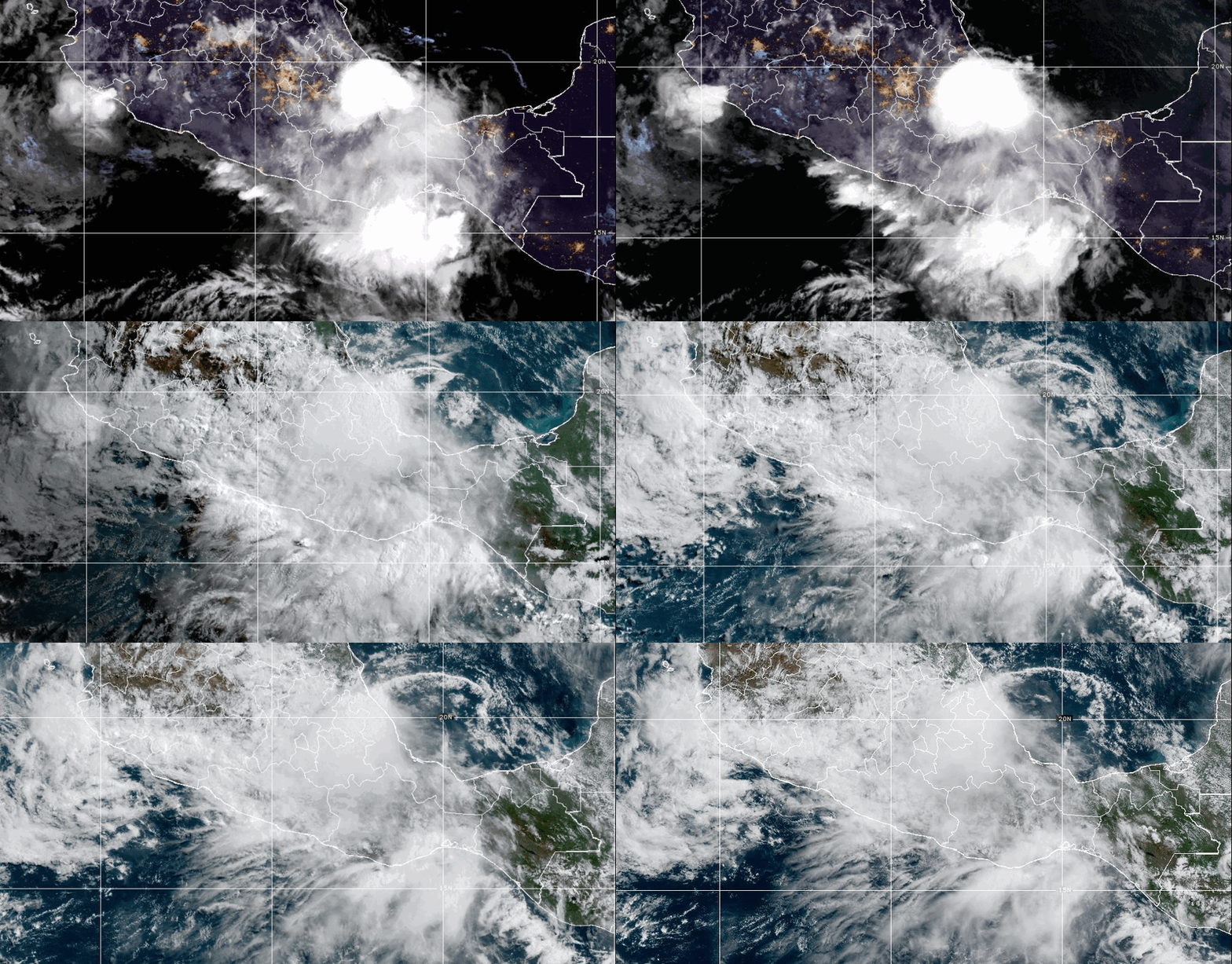
Another issue to watch is the start of hurricane season preparation. The Eastern Pacific hurricane season begins May 15. Forecasts point to an active Pacific season, with several systems expected to become hurricanes. That does not mean Puerto Vallarta will be hit, but it does mean residents should begin checking supplies, drainage, trees, insurance, and emergency plans.
The larger story from this week is not one event. It is the city’s balancing act.
Puerto Vallarta remains a tourism engine, but it is also a growing city facing real infrastructure, safety, and mobility pressures. The next few weeks will show how well local services hold up as the city moves from Easter travel into May events and the early rainy-season calendar.