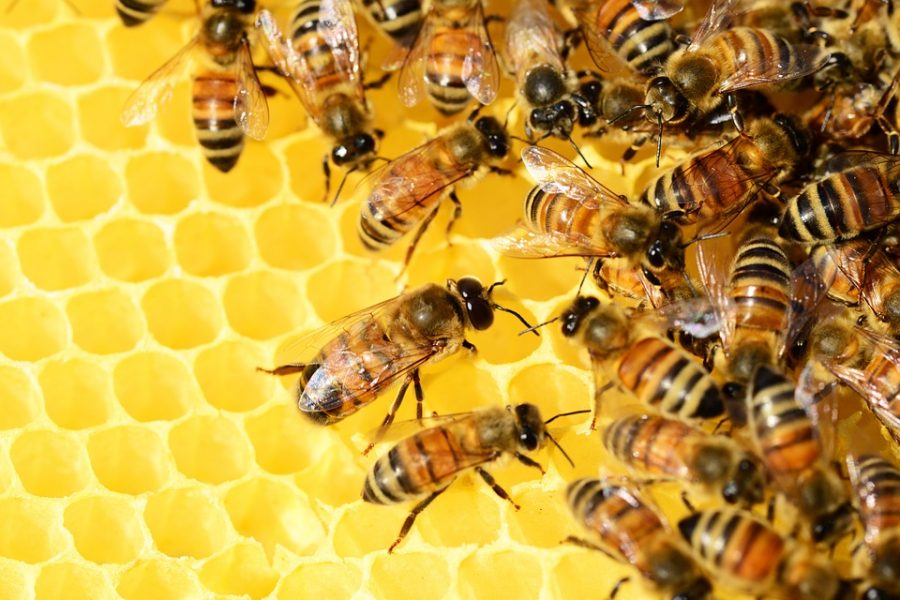
Given the mortality of bees, which in wild areas reaches 35% of their populations, mainly due to climate change, Chihuahua honey producers use flavored drinks to feed their hives and prevent them from dying.
Ludovico Palma Holguín, president of the Association of Beekeepers of Aldama dedicated to the organic production of honey explained that the drought, atypical frosts, and even late rains are factors of little production, so in some regions of the state, they have had to resort to sugar diluted with water or kool-aid in jars to save the bees, although organic producers do not see this practice as the best option to maintain the quality of honey.
In addition, sugar water does not give bees an essential protein, which they naturally obtain from pollen, so kool-aid is a short-term measure.
María Luisa Solís, beekeeper from the municipality of Aldama, said that the care of bees is demanding from the food, as they must receive protein and carbohydrate. “From what we are selling (honey) we are setting aside a percentage for feeding the bees,” explained Maria Luisa.
Most people think that bees are fed only sugar, since this represents 71% of their diet, however, they require protein, about 4% of their intake, which they naturally get from pollen.
Climate change has hit hard on bee populations, since droughts limit the growth of the flora they feed on, as well as frost, so hives produce low-quality honey and die.
One option is to feed the hives with artificial protein, which is a mixture of brewer’s yeast, soybean meal, calf’s milk, egg flour, and others. Beat with honey water or sugar syrup. Also, add vitamins.
Many beekeepers only fill them with sugar until they die, because they lack protein, just like when kool-aid is used to maintain them, as a desperate measure.
This is not very beneficial for producers of organic honey, as they say, it affects the quality of the product, which they prefer to keep 100% natural by feeding their bees in wild environments, and therefore do not enter agricultural or fruit areas.
And although organic honey is more valuable, beekeepers should look for flowering zones to install their hives. Palma Apiarios managed to have 700 beehives, currently only 300 remain. In their maximum production, they reached 20 tons.
Now they produce from 1 to 3 tons.