Puerto Vallarta residents may not see the highest temperatures in Jalisco this week, but the coast is still part of the state’s heat alert. Authorities warn that Thursday could bring the most intense conditions, with high solar radiation, dry air, and added health risks for people outdoors. For retirees, visitors, and anyone walking, working, or waiting in the sun, the issue is not only the thermometer reading. The timing, humidity, and exposure matter too.
Puerto Vallarta included as Jalisco braces for peak heat
Jalisco Civil Protection has warned residents across the state to prepare for a stretch of very hot, dry weather, with Thursday expected to bring the most intense conditions. The alert includes coastal regions, placing the Puerto Vallarta area within the zone where residents and visitors should take precautions.
The warning comes as a high-pressure system over central Mexico keeps skies mostly clear across Jalisco. That pattern can increase solar radiation, limit cloud cover, and make outdoor exposure more difficult during the middle of the day.
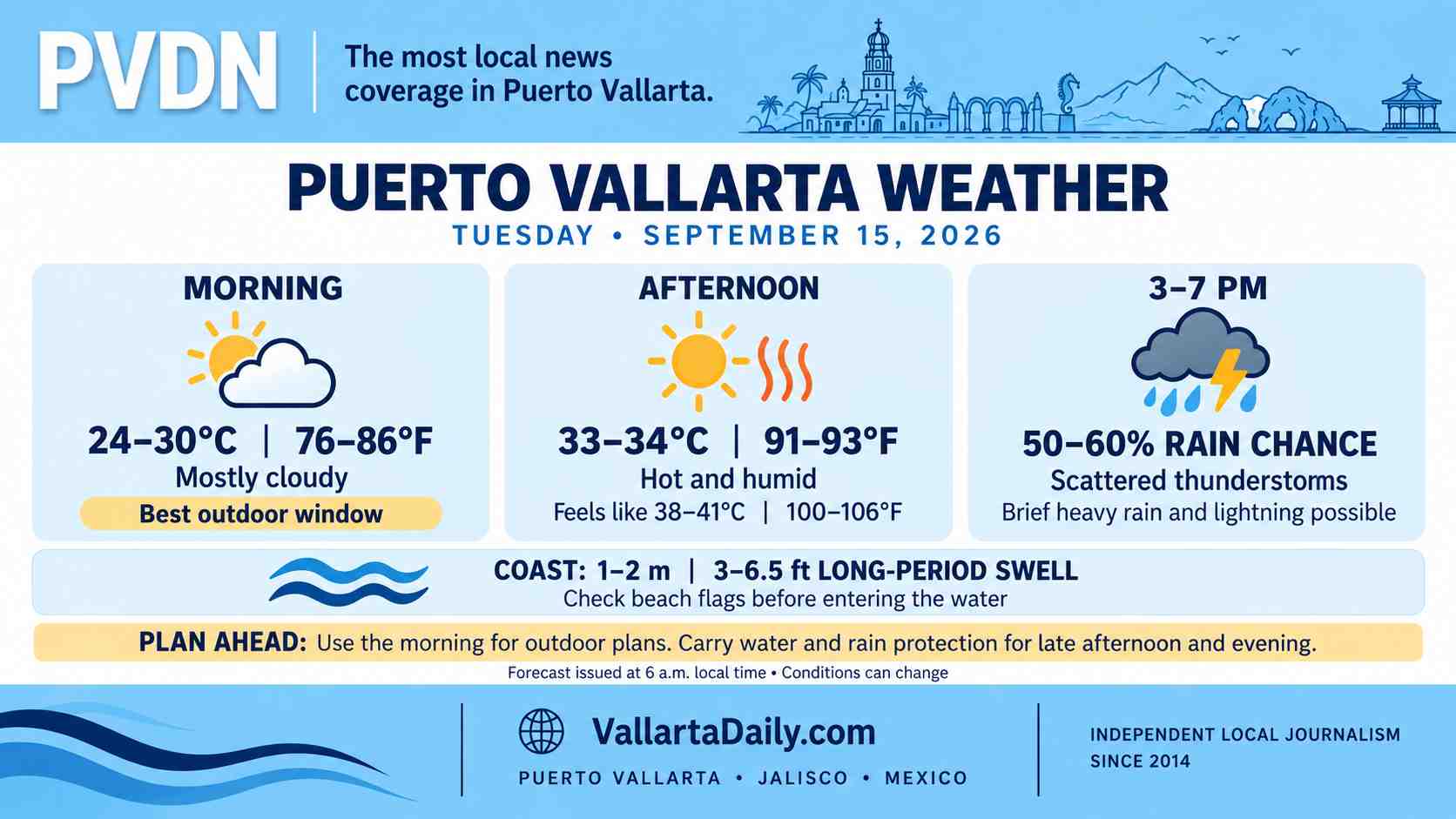
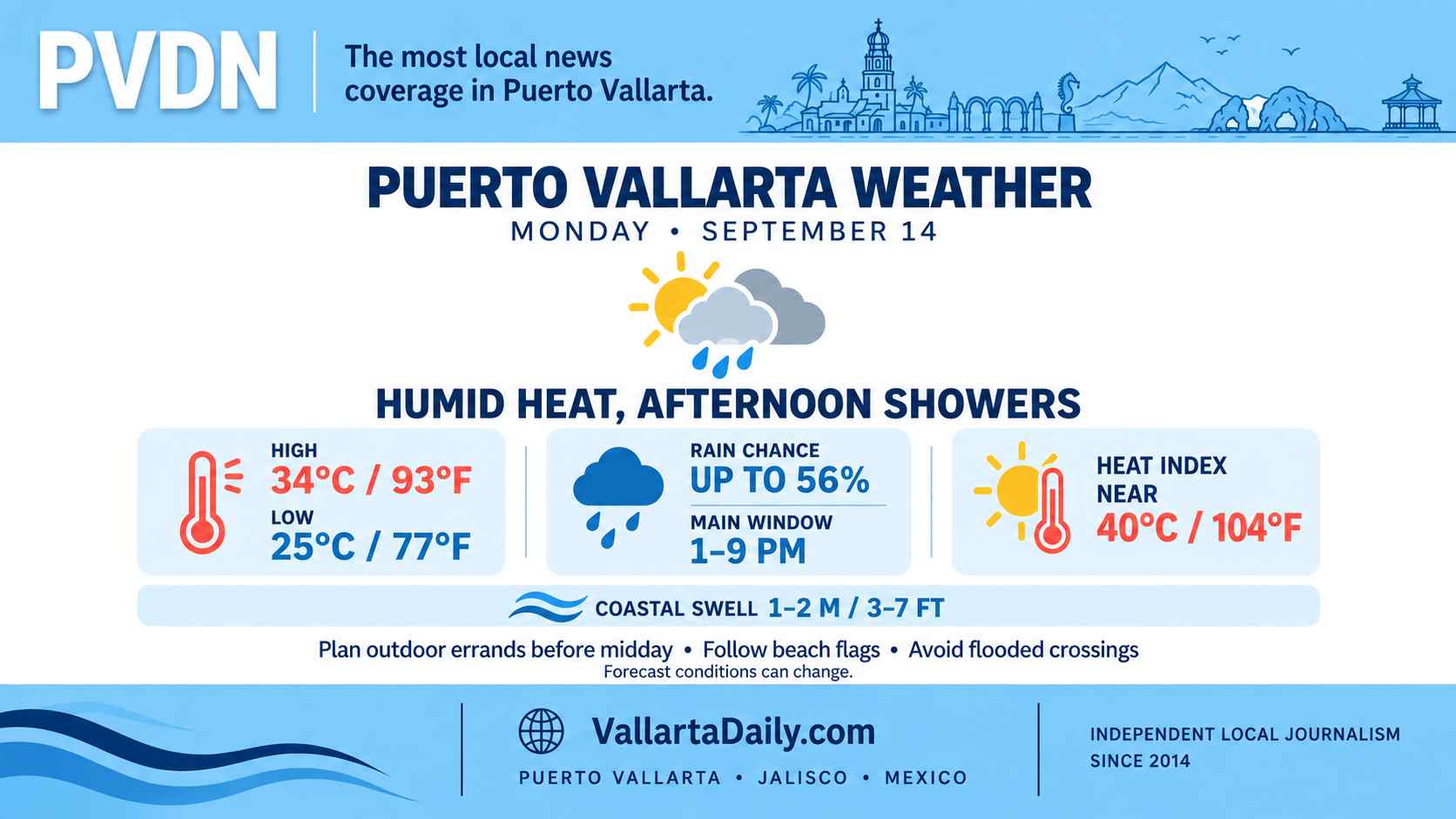
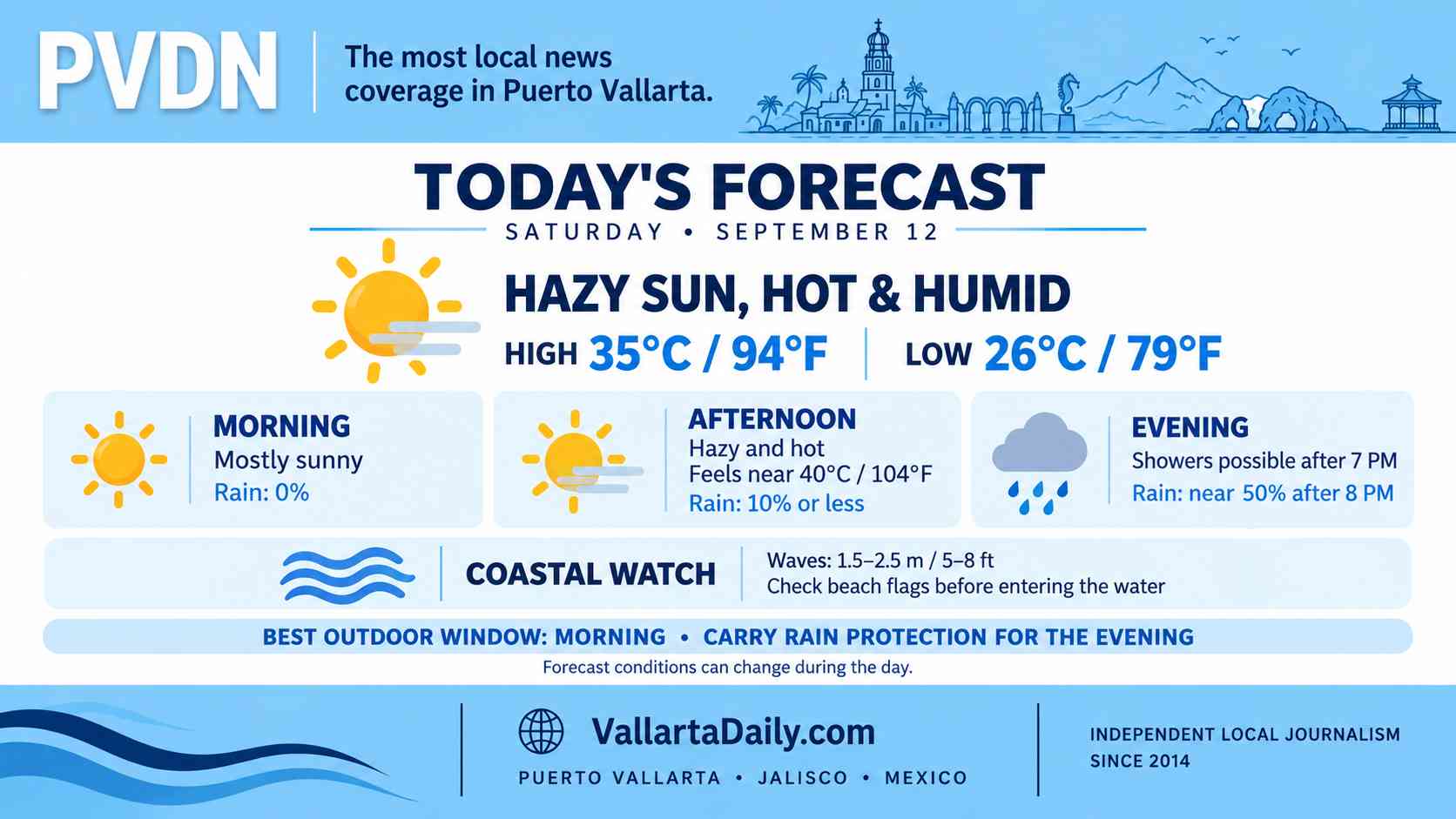
For Puerto Vallarta, the forecast does not indicate the same extreme readings as in some inland areas. State officials placed the north and south coasts near 34 degrees Celsius, while other regions of Jalisco could reach 37 to 40 degrees Celsius. Even so, coastal heat can still become a health concern, especially with humidity, sun exposure, and limited shade.
[adinserter block=”3″]
Why Thursday is the day to watch
The state alert identifies Thursday as the likely peak of the current heat pattern. Officials said conditions could favor a heat wave in parts of Jalisco, with a slight easing beginning Friday as the system weakens.
National weather officials also declared parts of Jalisco under a continued heat wave. Their forecast called for higher temperatures in the southern and southwestern parts of the state, with some areas expected to reach 40 to 45 degrees Celsius (104 – 113 Fahrenheit).
That does not mean every municipality will see those levels. Puerto Vallarta’s coastal climate often differs from inland valleys and mountain regions. But the broader pattern matters because it signals a regional heat event, not just a typical warm afternoon.
For local residents, the most practical concern is timing. The most dangerous period is usually late morning through afternoon, when sun exposure is strongest, and sidewalks, streets, and buildings hold heat.
[adinserter block=”3″]
What this means for Puerto Vallarta residents
Puerto Vallarta’s daily routines can make heat exposure easy to underestimate. Many residents walk to shops, wait for buses, run errands near the malecón, or spend time outdoors with visiting family. People may be outside longer than planned, especially in areas with little shade.
The state recommendation is to avoid direct sun between 11 a.m. and 4 p.m. That window matters for residents who schedule errands, beach time, dog walks, or exercise during the day.
For older adults, people with heart conditions, people taking certain medications, and those not used to tropical heat, symptoms can appear quickly. Visitors from cooler climates may also misjudge the risk, especially during a short walk or after drinking alcohol.
The safest approach is simple. Plan outdoor tasks early, carry water, use sunscreen, and choose shaded routes when possible. Lightweight clothing, hats, and breaks indoors can reduce the risk.
[adinserter block=”3″]
Heat illness can move faster than expected
Heat exhaustion and heat stroke are not the same, but both deserve attention. Heat exhaustion can bring dizziness, heavy sweating, weakness, headache, nausea, or cramps. These signs should be treated as a warning to stop, cool down, and drink water.
A heat stroke is more serious. Warning signs can include hot, dry skin; confusion; loss of consciousness; vomiting; difficulty breathing; or a very high body temperature. A person showing these symptoms needs urgent medical care.
This is especially important in Puerto Vallarta because people often combine heat with walking, beach time, alcohol, heavy meals, or long periods in the sun. Those factors can make the body lose fluids faster.
Pets also need protection. Pavement can become hot enough to burn paws, and animals can overheat quickly. Dog walks should be moved to early morning or evening when sidewalks are cooler.
[adinserter block=”3″]
Dry conditions also raise fire and wind concerns
The alert is not only about heat. Civil Protection also warned that dry conditions can increase the risk of forest fires, especially in areas with brush, grassland, or nearby hills.
Wind is another concern. Some parts of Jalisco may see strong gusts, especially toward Friday. Authorities warned that wind could stir up dust in dry zones and knock down branches or unsecured objects.
For Puerto Vallarta, this means residents should secure loose items on balconies, patios, and rooftops. Umbrellas, lightweight furniture, signs, and plant pots can become hazards when the wind picks up.
People should also avoid standing near weak trees, utility poles, billboards, or cables during stronger gusts. These are basic precautions, but they matter during dry and windy weather.
[adinserter block=”3″]
Why the coast can feel worse than the forecast
A coastal reading of 34 degrees Celsius may not sound extreme compared with inland Jalisco. But the way heat feels in Puerto Vallarta can depend on more than the official temperature.
Humidity can make sweating less effective. Direct sun can heat the body faster. Concrete, asphalt, and stone surfaces can hold heat and reflect it back toward pedestrians. A person walking through Centro, Emiliano Zapata, 5 de Diciembre, or along busy roads may feel more exposed than the forecast suggests.
That is why the alert should be taken seriously, even if the coast avoids the worst statewide temperatures. The risk depends on exposure, hydration, age, health, and how long someone remains outdoors.
For many foreign residents, the main adjustment is planning. A midday errand that feels normal in winter can become draining during a spring heat event.
[adinserter block=”3″]
What happens after Thursday
Officials expect the high-pressure system to begin weakening on Friday, which could bring a slight drop in temperatures. That does not mean the risk disappears immediately.
Dry-season heat often lingers, and April can bring some of the strongest sun of the year before the rainy season begins. Residents should continue to watch official updates, especially if the wind increases or smoke from fires affects air quality.
For Puerto Vallarta, the next few days call for practical caution rather than panic. The message is clear: limit midday exposure, stay hydrated, and treat heat symptoms early.
The people most at risk are often the least likely to complain at first. Older adults, outdoor workers, people living without good ventilation, and visitors unfamiliar with the climate should be checked on during the hottest hours.